
Softer, wider trolley tyres are the free winter upgrade, and the turf is what you're saving
A narrow, hard, over-inflated tyre on saturated turf is how ruts start, and ruts are how carry-only days start. Almost all of the fix costs nothing.
By Ben Marsden · Reviews Editor
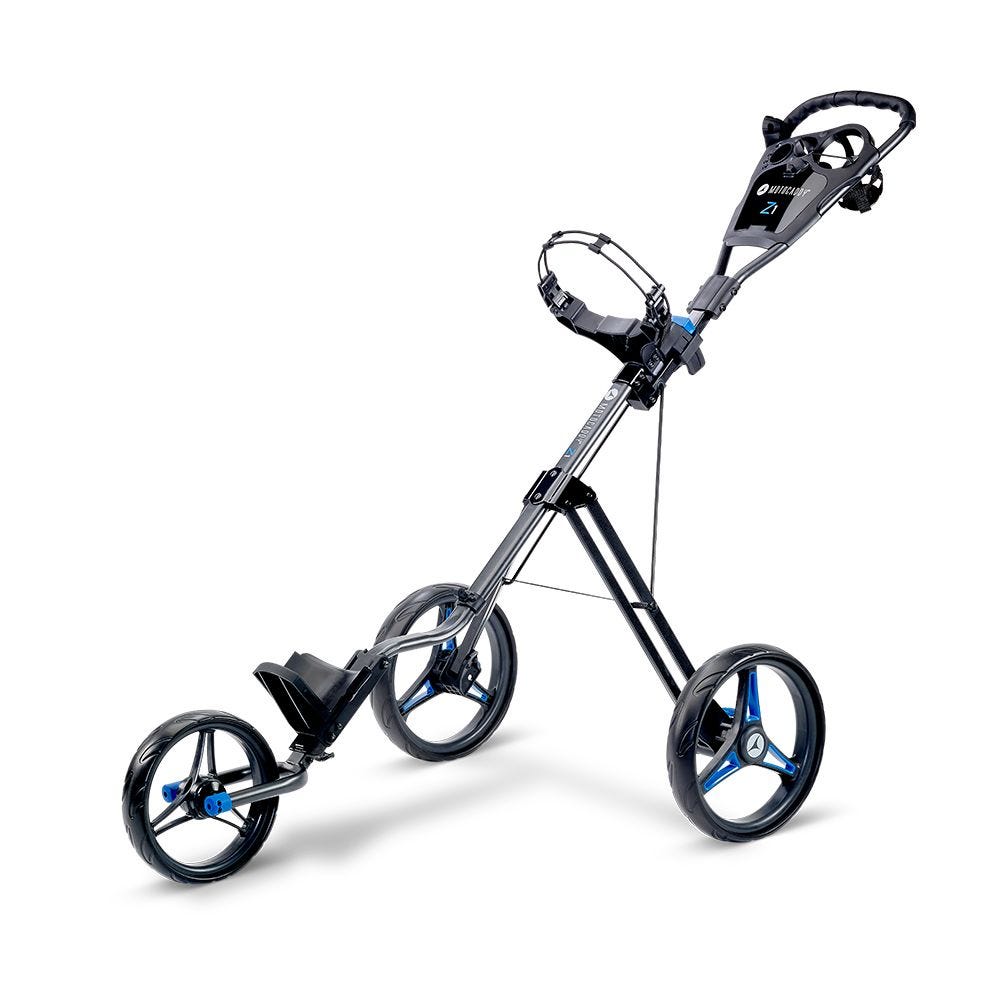
Motocaddy
Motocaddy Z1 Push Trolley
Walk off the eighteenth on a wet Tuesday in November and turn round. Two dark lines follow you back up the hole, cut into ground nobody would ever choose to walk on except that everybody does. That is not mud. That is turf that has been sheared rather than compressed, and it will still be there in March.
For most of the year a trolley is a convenience. For the next few months it is a liability, for the course and, in a way almost nobody connects, for your own round. Clubs respond to those two lines the only way they can: roped-off areas, trolley bans on the worst days, carry-only Sundays. Then golfers get annoyed about the ban, which is roughly like getting annoyed about the fire alarm.
Why it is the tyre, not the trolley
The mechanism is not complicated. The damage a wheel does is a function of the load it carries divided by the patch of ground that load is spread across. A hard, narrow, over-inflated tyre has a small contact patch, so the same bag concentrates into a much higher ground pressure. On dry summer turf that is fine, because the soil supports it. On saturated ground the soil cannot, the tyre sinks slightly, and once it is sinking it stops rolling cleanly and starts shearing the surface sideways. That is a rut. Water then sits in the rut, the ground beneath it stays wetter than everything around it, and the next hundred trolleys make it deeper.
The most common mistake is inflating trolley tyres like bike tyres. They are not bike tyres. You are not trying to cut rolling resistance on tarmac, you are trying to float a bag across wet grass. A softer tyre spreads the load, and it rolls over a bump instead of digging into it.
The fixes that cost nothing
Drop the pressure. Not to flat, and check what your manufacturer actually specifies, because trolley tyres do have a stated range. But run towards the bottom of that range rather than the top, and check it in autumn instead of assuming the summer setting still applies.
Use the wide setting or the winter wheels if your trolley has them. Plenty of three-wheel frames allow a wider rear track, and several brands sell winter wheels, fatter and softer with more tread, as a cheap accessory. They are one of the few golf purchases where the thing does precisely what it says on the box.
Take the ninety-degree rule seriously, which most golfers treat as a buggy convention rather than a trolley one. Walk down the rough or the semi and turn in towards your ball at right angles. It keeps concentrated traffic off the line everyone else is using.
And keep off the freshly hollow-cored surrounds. Aeration season is running right now across most of the northern hemisphere, and those greens and their approaches stay more fragile than they look for weeks afterwards. We went through what it does to your scoring in aeration season. A loaded trolley wheel across a surround that was cored a fortnight ago does damage a footprint does not.
None of that costs anything. All of it is the difference between a club that ropes off two areas and a club that bans trolleys for the month.
The gear point most golfers get backwards
Here is the part that runs against instinct. On soft ground, a light three-wheel push trolley is usually kinder to the course and easier on you than a heavy electric, which is the exact opposite of what people assume when they upgrade.
Weight is the whole argument. The Motocaddy Z1 is around six kilos on oversize rubber tyres, at $170. It is the lightest footprint in this piece and the one I would put on a soft course without a second thought.
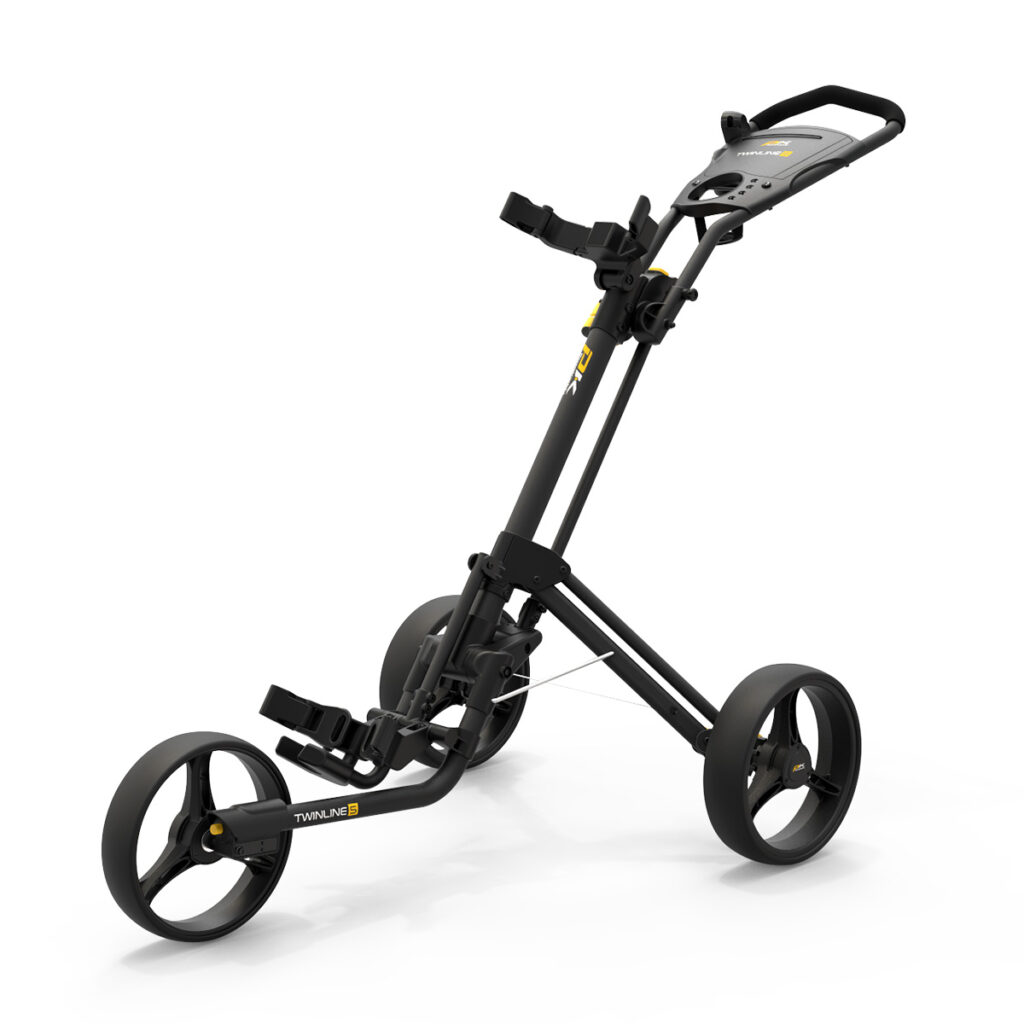
The PowaKaddy TwinLine 5 is about seven kilos at $200, and its quick-release wheels turn hosing the mud off into a thirty-second job rather than an argument with yourself in the car park. Winter kit that is easy to clean is winter kit you actually keep clean.
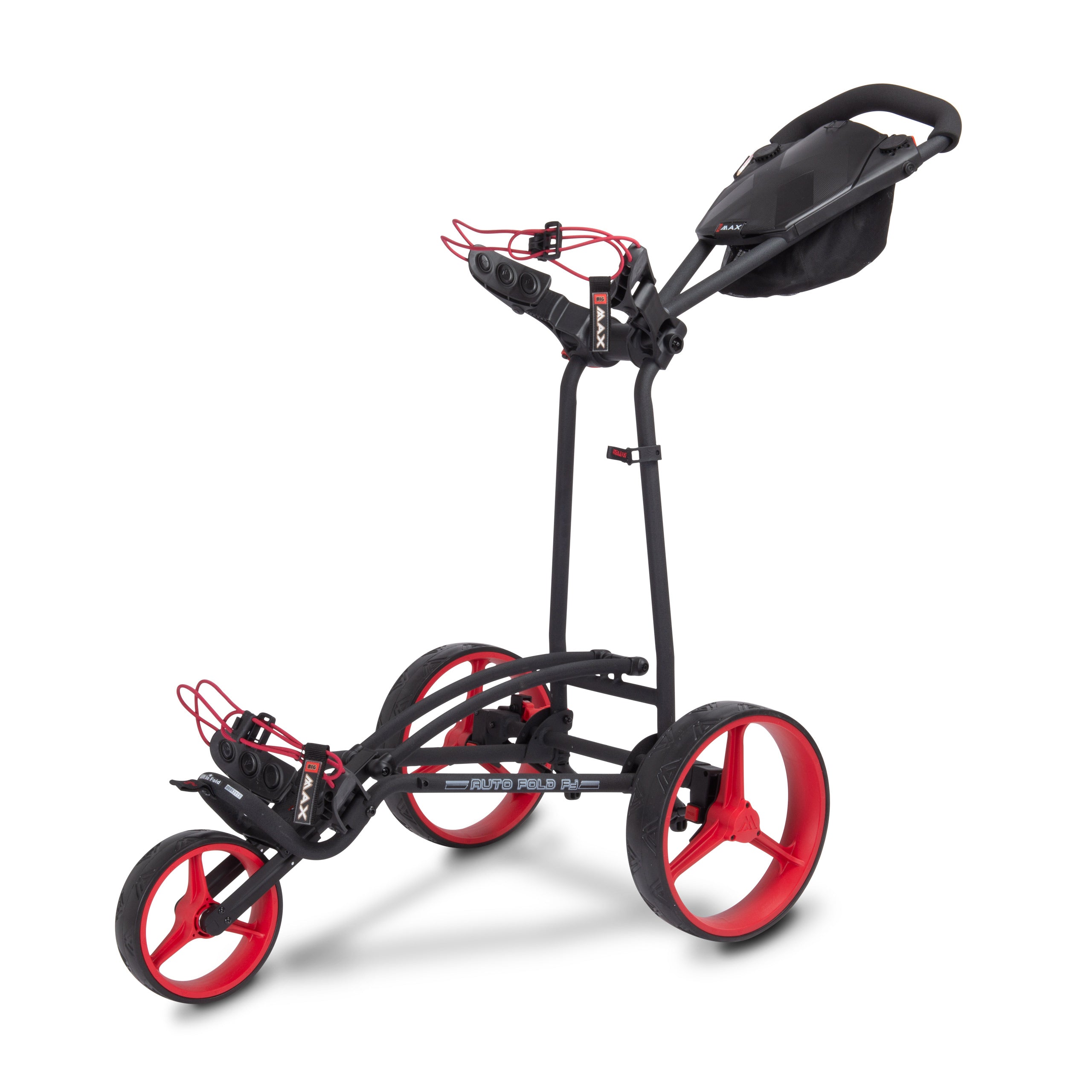
The Big Max Autofold FF is the heaviest of the three at around eight kilos and $250, but it runs wide-tread tyres and a deliberately low centre of gravity, which is the right shape for wet ground even if it is not the best number.
An electric adds a motor, a gearbox and a lithium battery to that, and then it drives the wheels. A driven wheel that loses traction on saturated turf does not roll over the surface, it scuffs it. Add the extra mass and you are back to load over contact patch, with more load. I am not claiming an electric trolley wrecks a golf course. I am saying the assumption that spending more is automatically the responsible upgrade, in these conditions specifically, is backwards.
Who genuinely should stay electric
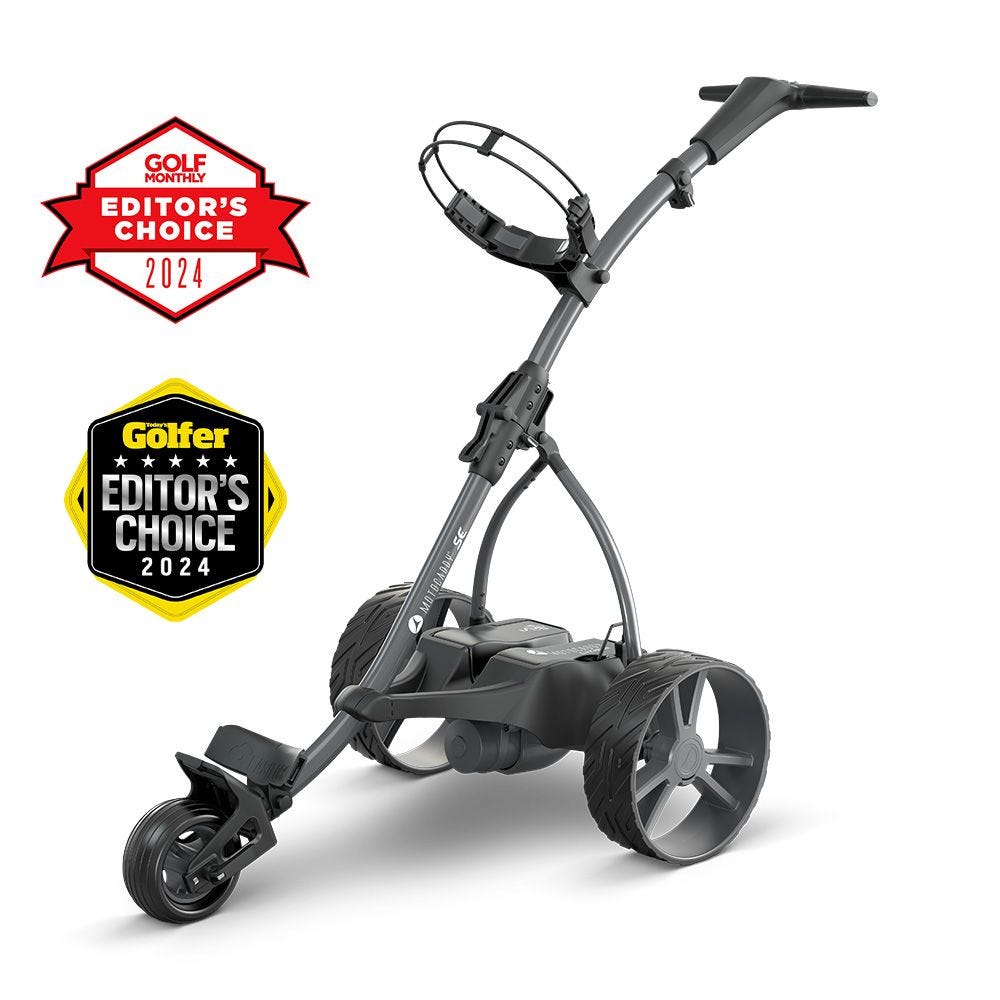
A bad back, and a hilly course. That is the honest list, and it is not a short one. If pushing seven kilos plus a bag up a wet slope is the thing that ends your winter golf, an electric trolley is not an indulgence, it is the reason you are still playing in February. The Motocaddy SE at $650 is the sensible version of that: a quiet 230W motor, nine speed settings and a cable-free battery, without paying for GPS you will not use.
The MGI E-BOOST at $600 is, for soft ground specifically, the cleverest thing here. It is a push cart in feel and footprint with a motor you engage on demand: you push on the flat and let it pull on the climb. You keep the low weight for most of the round and take the help exactly where the hill would otherwise beat you.
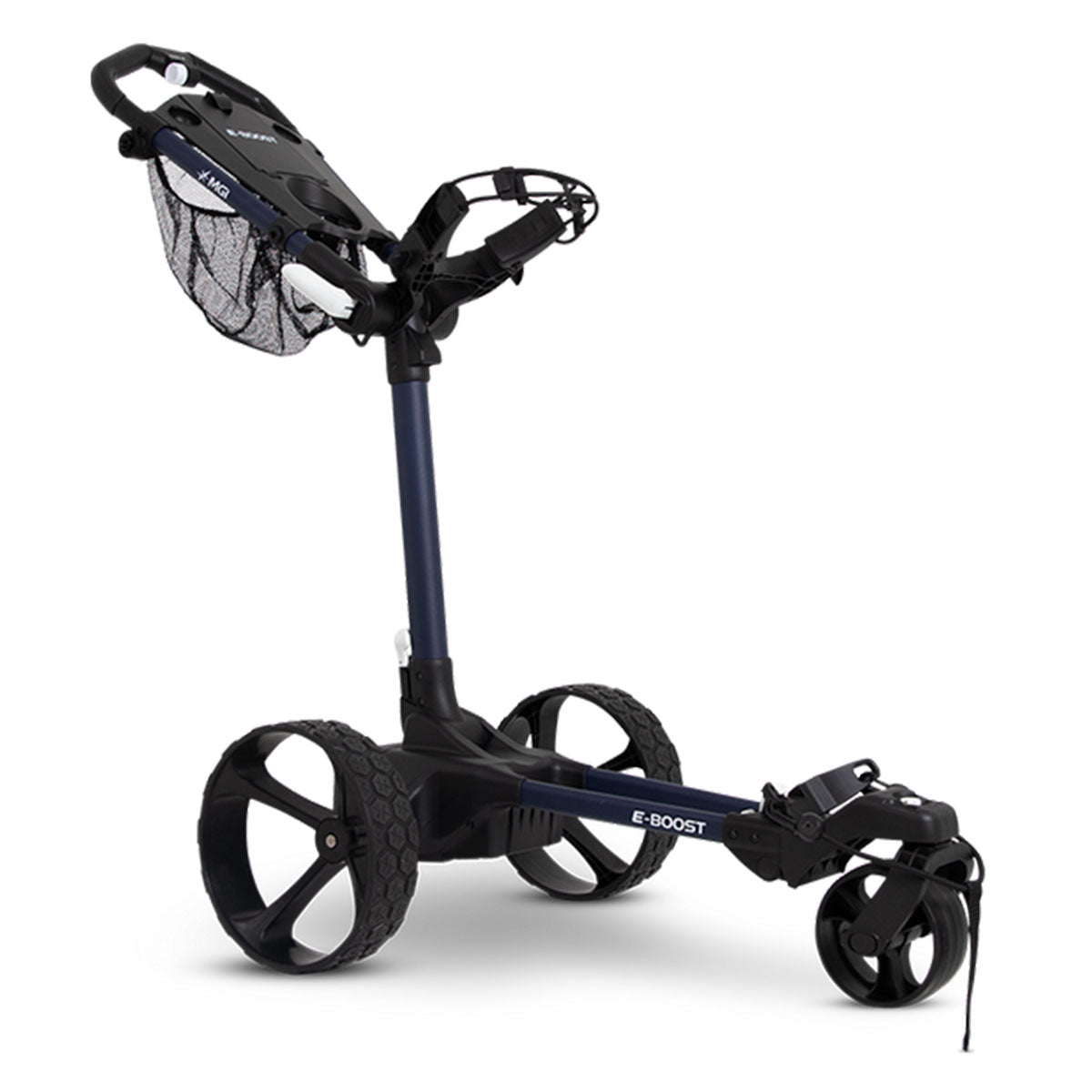
If the push-against-electric purchase is genuinely what you are weighing up, we have argued it on its own terms in push vs electric trolley and made the case for spending the money in the best money I have spent on golf. This piece is not that decision. This is about the ground.
Who is buying trouble
The golfer buying a heavy electric trolley in October, on a flat parkland course, with a functioning back, because it feels like the grown-up winter upgrade. That is the purchase that takes money, adds weight to soft ground and solves a problem you did not have. Buy a set of winter wheels and a tyre gauge instead and you will notice the difference more, for a fraction of it.
My position, and it is not a popular one in a pro shop: for the next two months the single best thing most golfers could do for their course and their own legs is check the tyre pressure against what the manufacturer actually specifies, run it near the bottom of that range, and leave the credit card alone. The clubs that end up banning trolleys are not being difficult. They are reacting to two dark lines up the eighteenth that nobody thought they were making.
Products mentioned in this article
Motocaddy
Motocaddy Z1 Push Trolley
Around six kilos on oversize rubber tyres, which is the lightest footprint here and the one I would put on a soft course without thinking about it.
Big Max
Big Max Autofold FF Push Trolley
Wide-tread tyres and a deliberately low centre of gravity, the right shape for wet ground, though at around eight kilos it is the heaviest push option of the three.
PowaKaddy
PowaKaddy TwinLine 5 Push Trolley
About seven kilos with quick-release wheels, so hosing the winter mud off takes half a minute rather than a sulk in the car park.
Motocaddy
Motocaddy SE Electric Trolley
The sensible first electric if a bad back or a hilly course means pushing is off the table: quiet motor, nine speeds, cable-free battery.
MGI
MGI E-BOOST
Push-cart weight and footprint with motor assist on demand, which is the cleverest soft-ground compromise if you only want help on the climbs.
ifrothgolf earns a commission on purchases made through these links, at no extra cost to you. It never changes what I recommend. Full disclosure.
Frequently asked
- What tyre pressure should a golf trolley have in winter?
- Check the pressure range your trolley manufacturer specifies and run it near the bottom of that range rather than the top. A softer tyre spreads the same load across a larger contact patch, which lowers the ground pressure that cuts ruts into wet turf.
- Do golf trolleys damage the course in winter?
- They can. On saturated ground a hard, narrow tyre sinks slightly and shears the surface instead of rolling over it, creating ruts that hold water and take months to recover. Lower pressures, wider or softer wheels and spreading traffic out all reduce it.
- Are winter wheels for a golf trolley worth buying?
- If your model offers them, yes. They are fatter, softer and more heavily treaded than standard wheels, they float better on soft ground, and they are one of the cheapest accessories in golf.
- Is a push trolley or an electric trolley better on soft ground?
- A light three-wheel push trolley is usually gentler on wet turf, because it weighs less and its wheels are not driven. An electric still makes sense if a bad back or a hilly course would otherwise stop you walking at all.
Read next
Review
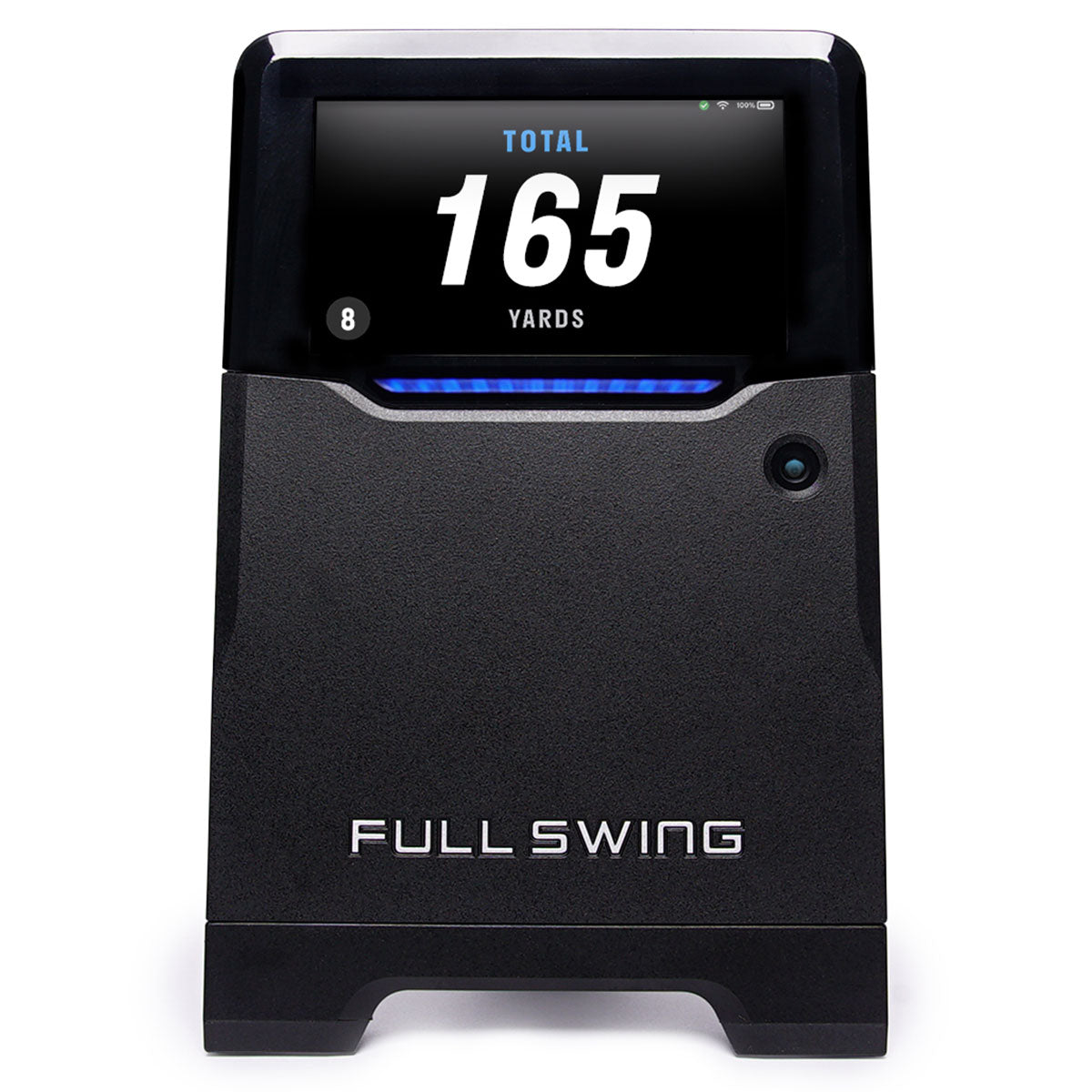
7.9/10Full Swing KIT review: the tape measure decides this, not Tiger
Tour pedigree, TGL on ESPN, and radar good enough to be checked against a Trackman outdoors. It also wants eighteen to twenty feet of room, which rules out most of the garages people buy it for.
Versus
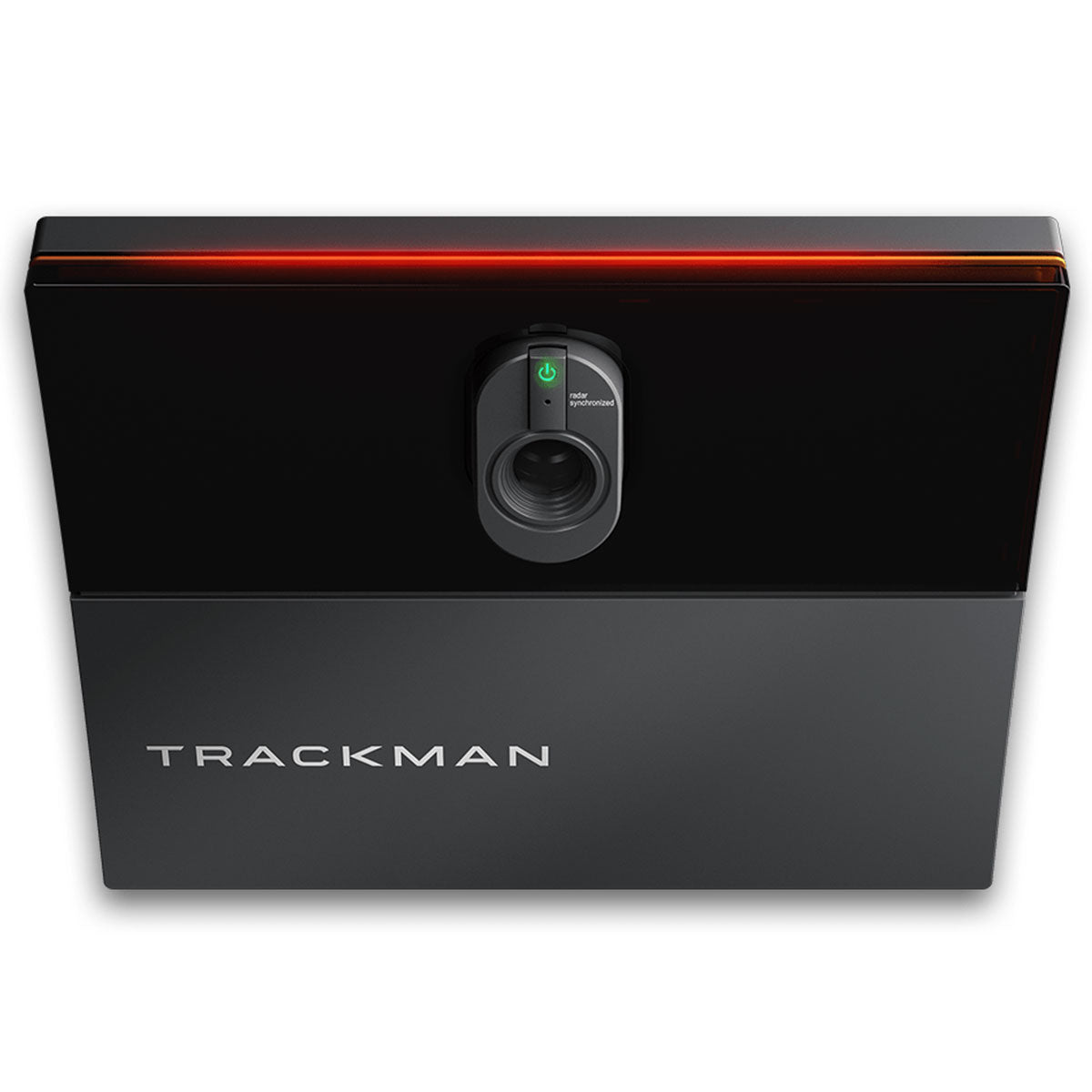
Trackman iO vs Uneekor EYE XO2: the year-one trap
Both mount overhead, both want ten feet of ceiling, and about $3,000 separates them on the shelf. Then Trackman's included first year runs out, and the gap starts growing by $1,100 a year.

Versus
Uneekor EYE XO2 vs Foresight GC3: ceiling or floor?
About $4,000 separates them, but they're not really rivals — one lives in your ceiling forever, the other sits on the floor and travels. The cheaper one is also the one with no subscription.