
Your waterproof jacket gets the credit, but the midlayer under it decides whether you're warm
A shell has exactly 2 jobs, and neither of them is warmth. Spend the money the other way round and you'll be more comfortable in October than the bloke in the premium jacket and a cotton hoodie.
By Dan Mercer · Editor
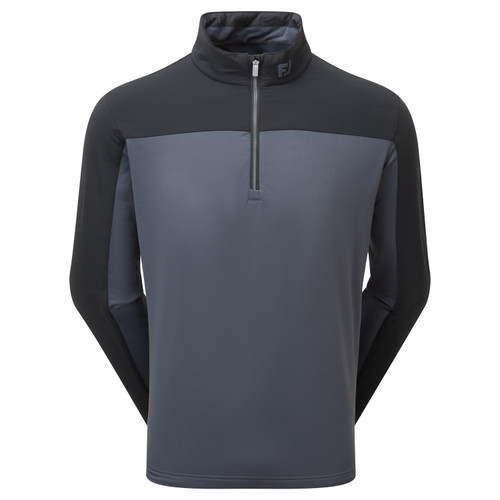
FootJoy
FootJoy ThermoSeries Half-Zip Mid-Layer
Stand in any pro shop in autumn and listen to the questions. They are all about the jacket. What's the rating, is it Gore-Tex, is it worth the extra over that one. Almost nobody asks about the thing they'll be wearing underneath it for the entire round, which is odd, because that's the garment that decides whether the next four hours are comfortable or quietly miserable.
Here's the position, and it's the opposite of how most golfers spend: the shell is the easy part of the problem and the layer under it is the hard part. Get the midlayer right and a mid-priced jacket is plenty. Get it wrong and the best waterproof made cannot save you.
A shell has two jobs, and warmth isn't one of them
This is the bit that gets lost. A waterproof jacket keeps water from getting in, and lets your sweat vapour get out. That's the whole brief. It has no meaningful insulation of its own — a Paclite-style shell is a thin membrane and some face fabric, and if you put it on over a short-sleeved polo in a cold wind you will be cold, however much it cost.
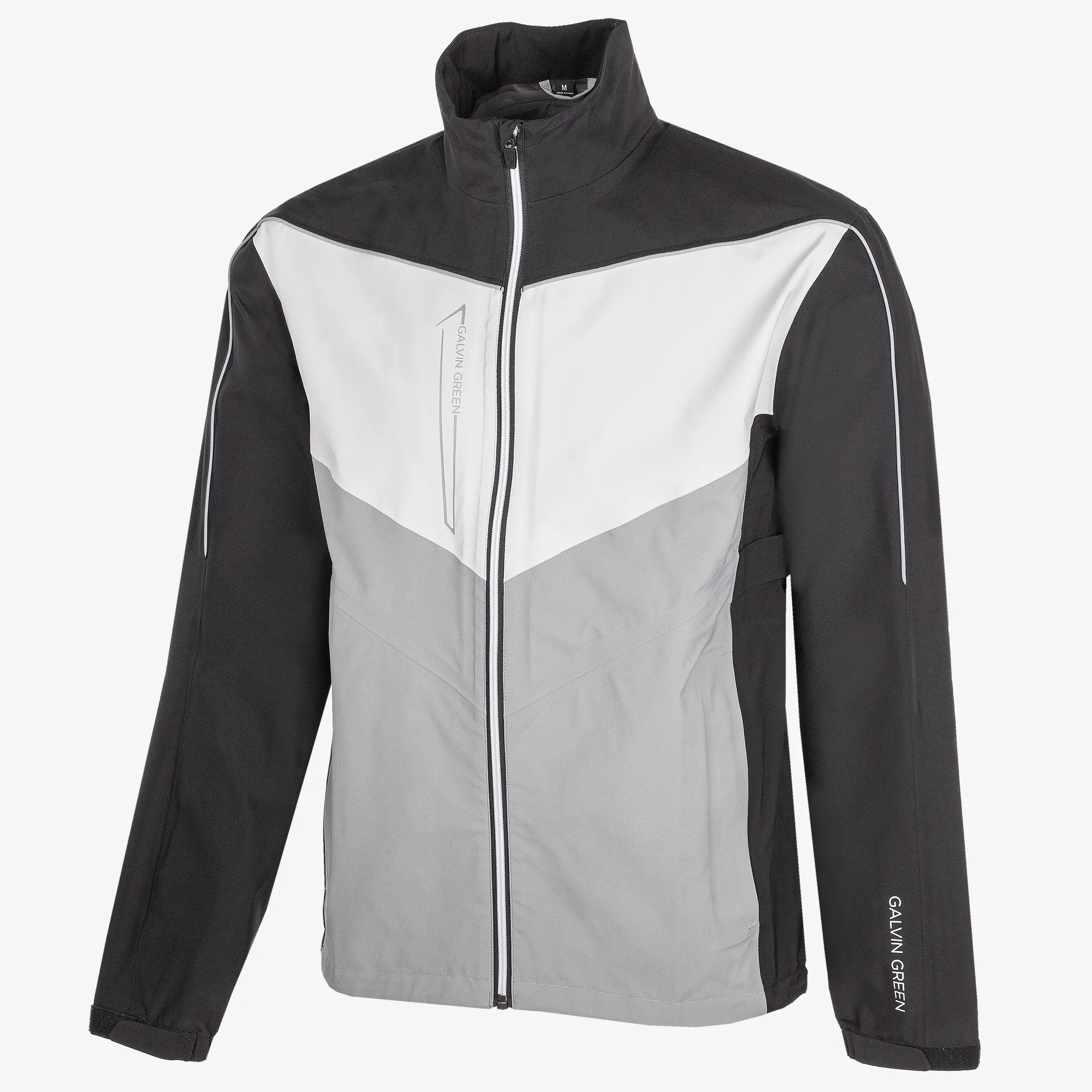
The Galvin Green Armstrong GORE-TEX Paclite Stretch is a fair example precisely because it's at the top end. It stays dry through a genuine four-hour downpour and it packs down to almost nothing, which is exactly what a premium shell should do. It is also, by design, barely there. That packability is the same property as having no insulation. The jacket is not failing you; it's doing its job and leaving the other job to something else.
What a shell does contribute is wind. Stopping moving air across you removes the biggest single cause of feeling cold on a golf course, and that's real. But wind-stopping only works if there's warmth underneath to keep in. A shell traps nothing on its own. It's a lid, not a duvet.
The constraint nobody checks in the shop: your turn
Try this before you buy anything. Put the midlayer on, put the jacket on over it, and make a slow full backswing with your hands above your shoulder. If anything binds across the upper back or drags at the trail elbow, put it back.
This is where bulk actually costs you, and it's a bigger deal than warmth. A thick, non-stretch midlayer under a well-cut jacket does two things at once: it eats the articulation you paid the jacket for, and it adds its own restriction on top. You end up with a shell that was cut to allow a full turn and a layer underneath that won't let you make one. Most golfers discover this in October, on the first tee of a comp, wearing a combination they've never swung in — and then spend the round making a three-quarter backswing and wondering why they're hitting it thirty yards short.
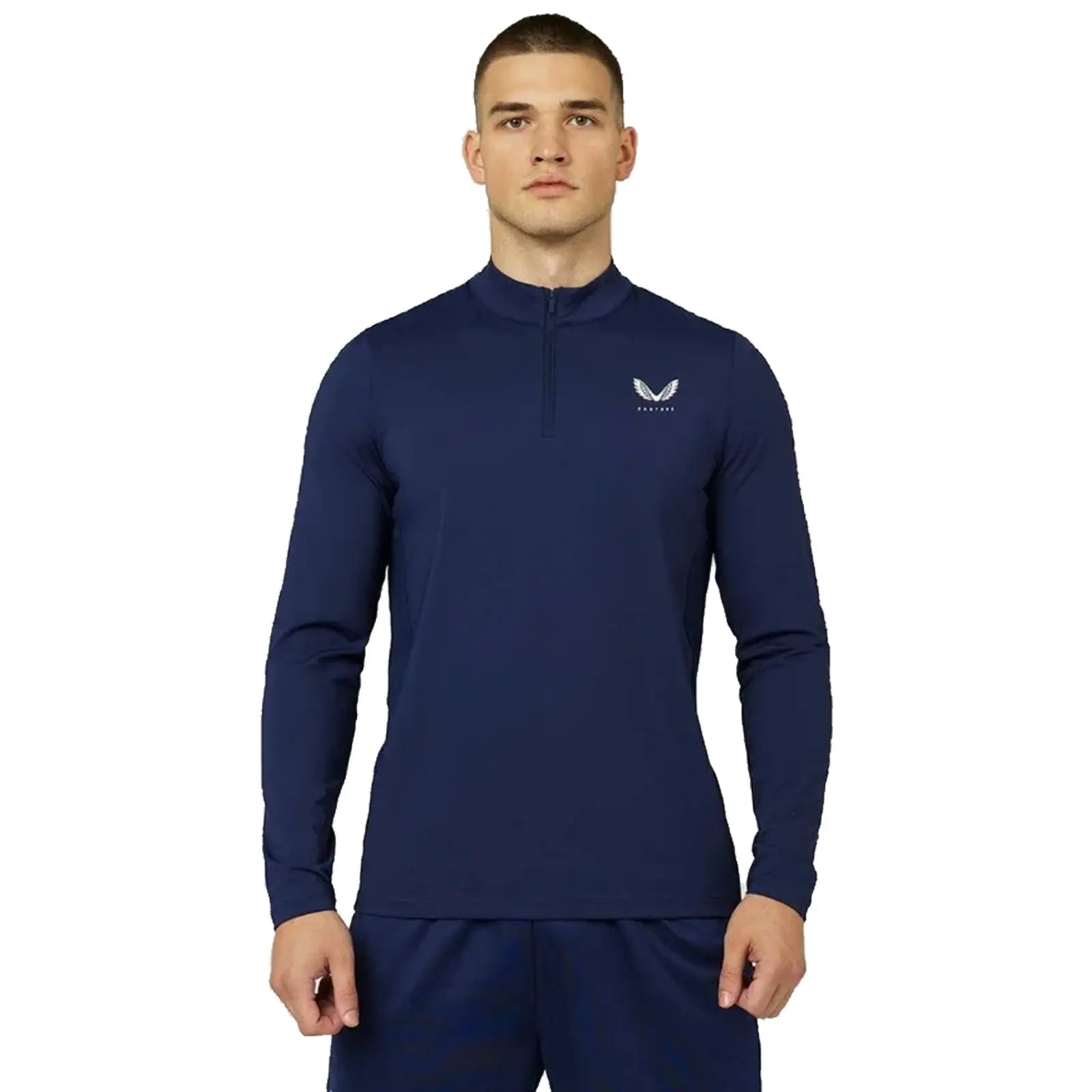
Which is why stretch matters more than loft in a golf midlayer. The Castore Active Performance half-zip is built around exactly that: stretchy and breathable enough to keep on for a whole round rather than tying round your waist at the 4th. That last point is not a small one. A layer you take off after five holes provided no warmth for thirteen of them.
The FootJoy ThermoSeries half-zip makes the same case from a slightly different direction. It's honestly a garment people buy for the clean athletic look, and it's fair to say it's prized more for the cut and the stretch than for stopping a genuinely cold wind. But that cut is the point: it sits close without gripping, so it goes under a shell without bunching at the shoulder. For the chilly-but-not-brutal rounds that make up most of a British autumn, that's the useful spec.
Breathability is a system, not a jacket spec
This is the most useful thing in this piece and almost nobody says it out loud. Breathability is a property of everything you're wearing, not of the outermost garment. The number on the jacket's swing tag describes what that fabric can pass through it. It says nothing about whether the moisture ever reaches the fabric.
Put a cotton hoodie under a premium shell and here's what happens. Cotton absorbs sweat and holds it against your skin instead of moving it outward. The vapour never arrives at the membrane as vapour — it's sitting in a wet layer next to you. The jacket dutifully breathes nothing, because there's nothing being handed to it. You get clammy, then cold, and you blame the jacket.
A premium shell over a cotton layer breathes like a bin bag. A mid-priced shell over a proper technical midlayer breathes properly. That single sentence is worth more than any hydrostatic head figure you'll read this season, and it's the reason the spending advice below runs the way it does. If you want the shell-side technical detail on its own terms, we've covered what 'waterproof' actually means separately.
Where the money should actually go
Take a position: buy the mid-priced shell and two good midlayers rather than the premium shell and whatever's in the drawer. Two, not one, and here's why. One midlayer gets worn every cold round, absorbs sweat every cold round, and doesn't get a proper day to dry between Saturday and Sunday. Two lets you rotate, and more importantly lets you match the layer to the day rather than wearing your one warm thing in October and boiling in it.
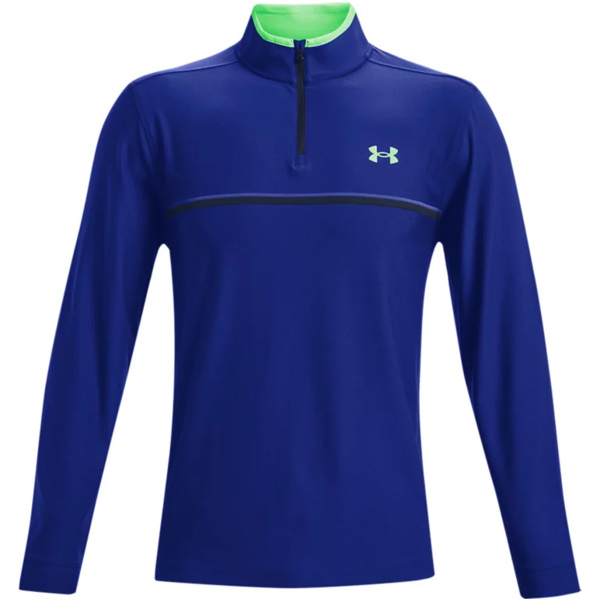
The ladder itself is short and the rungs are real. At the light end, the Under Armour Playoff quarter-zip is a lightweight stretch layer for cool-not-cold mornings — the one that earns its spot by never cooking you on the back nine, which is a genuine failure mode and not a joke. Wearing too much is as common a mistake as wearing too little, and it's worse, because you sweat into everything early and then chill.
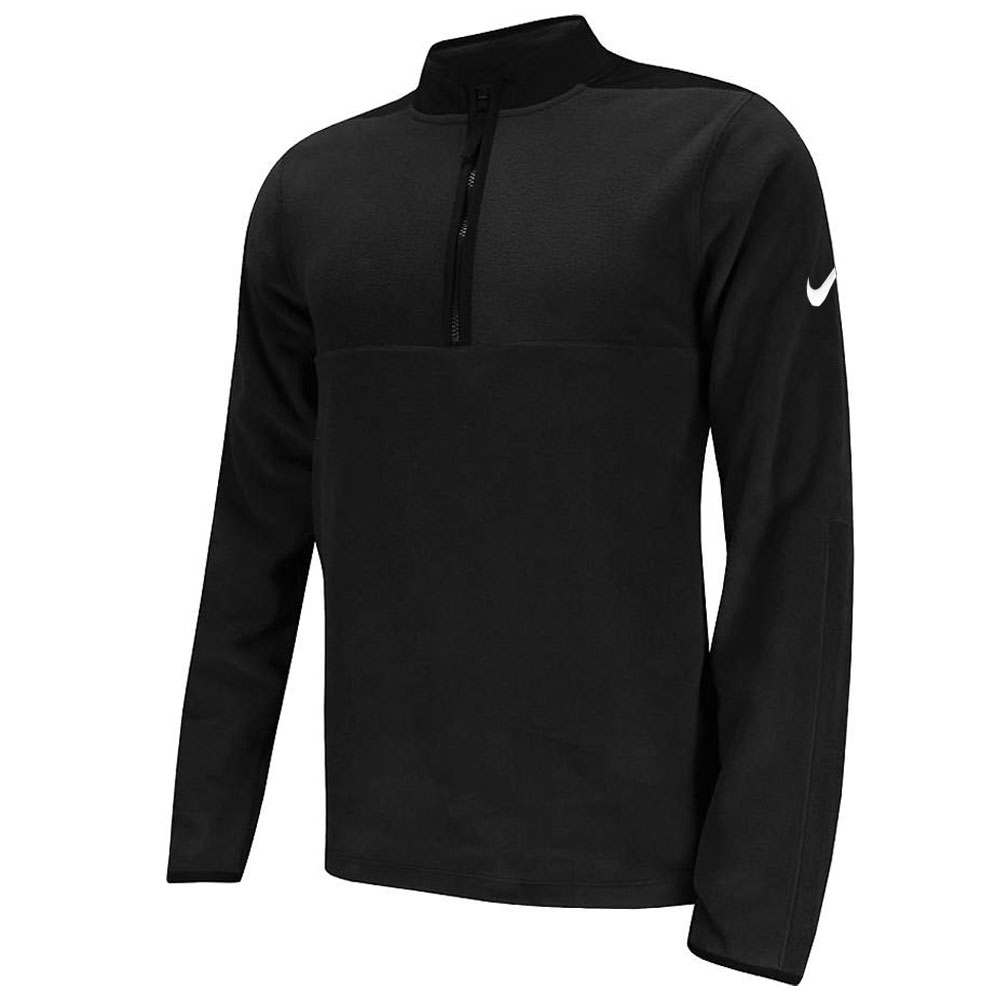
In the middle, brushed fleece is the value sweet spot. The Nike Therma-FIT Victory half-zip is warm and stretchy without the bulk, which is the specific combination that lets you keep swinging freely on a cold morning. For most golfers in most British and Irish autumn conditions, this rung is where the sensible answer lives and the money above it is optional.
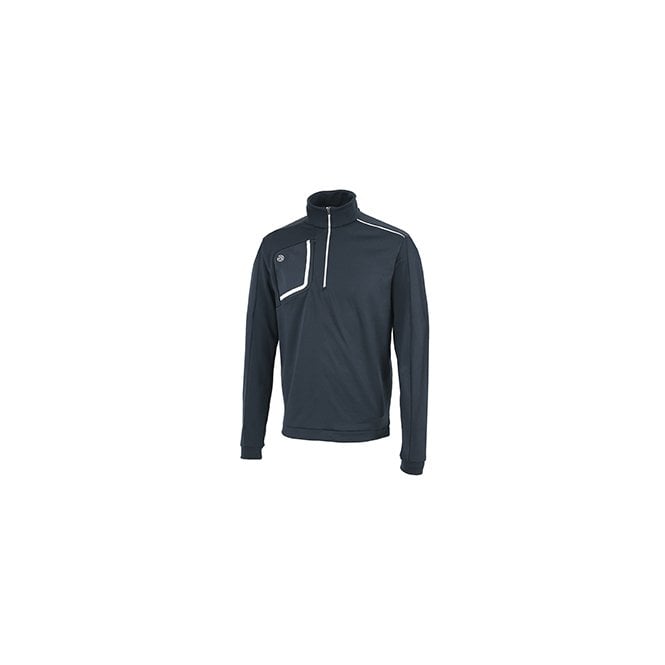
At the top, what you're buying is warmth per millimetre, not warmth. The Galvin Green Dwight INSULA is the clearest illustration in the catalogue: air-chamber insulation that earns its keep on cold mornings without turning you into the Michelin Man. Note what that promise actually is. It isn't warmer than a thick fleece. It's as warm in less thickness — which loops straight back to the swing constraint, because thickness is the thing that costs you turn. That's a coherent reason to spend up, and it's a completely different reason from the one people usually give.
The full range is in our mid-layers guide, and the whole-system version — base layer, midlayer, shell, extremities — is in how to dress for winter golf.
Who should ignore this
Two groups, and I mean it about both.
If your problem is persistent rain rather than cold — if you play somewhere the weather is wet and mild for months rather than cold and showery — then invert my advice and put the money in the shell. In sustained rain the shell is under continuous load for four hours, the difference between a good membrane and a cheap one shows up brutally, and mild conditions mean you barely need the insulation anyway. The waterproof jackets guide is the right starting point for you, not this article.
And if you're a fair-weather summer golfer who packs the clubs away in October, you need neither. Don't buy a midlayer, don't buy a shell, put a wind-resistant layer in the bag for the odd breezy evening and spend the money on golf balls. There is no shame in this and the golf industry would very much like you to feel some.
For everyone else — the majority who play through autumn and into winter and want to still be swinging properly in February — the ranking is straightforward. Midlayer first, because it decides warmth and it decides your turn. Shell second, and mid-priced is genuinely fine. Then check the two together with a full backswing before the weather makes the decision for you. The rest of the system is in our clothing coverage.
Products mentioned in this article
FootJoy
FootJoy ThermoSeries Half-Zip Mid-Layer
Athletic cut and real stretch — bought for the looks, kept for the fact it doesn't fight your turn.
Castore
Castore Active Performance Half Zip Midlayer
The one you leave on all round rather than tying round your waist by the 4th.
Nike
Nike Therma-FIT Victory Half-Zip
Brushed fleece warmth without the bulk that eats your shoulder turn — the sensible middle of the ladder.
Galvin Green
Galvin Green Dwight INSULA Pullover
Air-chamber insulation: the clearest example of paying for warmth-per-millimetre rather than warmth.
Under Armour
Under Armour Playoff Quarter-Zip
The lightweight one for cool-not-cold rounds, and the layer least likely to cook you on the back nine.
Galvin Green
Galvin Green Armstrong GORE-TEX Paclite Stretch Jacket
Referenced here as the shell, not the recommendation: it manages water and vapour, and it cannot make you warm.
ifrothgolf earns a commission on purchases made through these links, at no extra cost to you. It never changes what I recommend. Full disclosure.
Frequently asked
- Does a waterproof golf jacket keep you warm?
- Not on its own. A shell keeps water out and lets sweat vapour escape, and a packable one has almost no insulation by design. What it does contribute is wind protection, which removes a major cause of feeling cold — but only if there is warmth underneath for it to hold in. Warmth is the midlayer's job.
- What should you wear under a golf waterproof jacket?
- A technical midlayer such as a stretch or brushed-fleece half-zip, ideally over a thin base layer. Avoid cotton. Cotton absorbs sweat and holds it against the skin, so the moisture never reaches the jacket's membrane as vapour and the breathability you paid for does nothing.
- Is an expensive golf midlayer worth it?
- It buys warmth per millimetre rather than more warmth. Premium insulation is as warm as a thick fleece in less thickness, and thickness is what restricts your shoulder turn under a jacket. If you play regularly in genuine cold, that is a real benefit. For typical autumn conditions a mid-priced brushed-fleece half-zip is enough.
- How do I know if my layers are too bulky to swing in?
- Put the midlayer and jacket on together and make a slow full backswing with your hands above your shoulder. If anything binds across the upper back or drags at the trail elbow, the combination is too restrictive. Check this before the season starts rather than discovering it on the first tee of a cold-weather comp.
Read next
Review
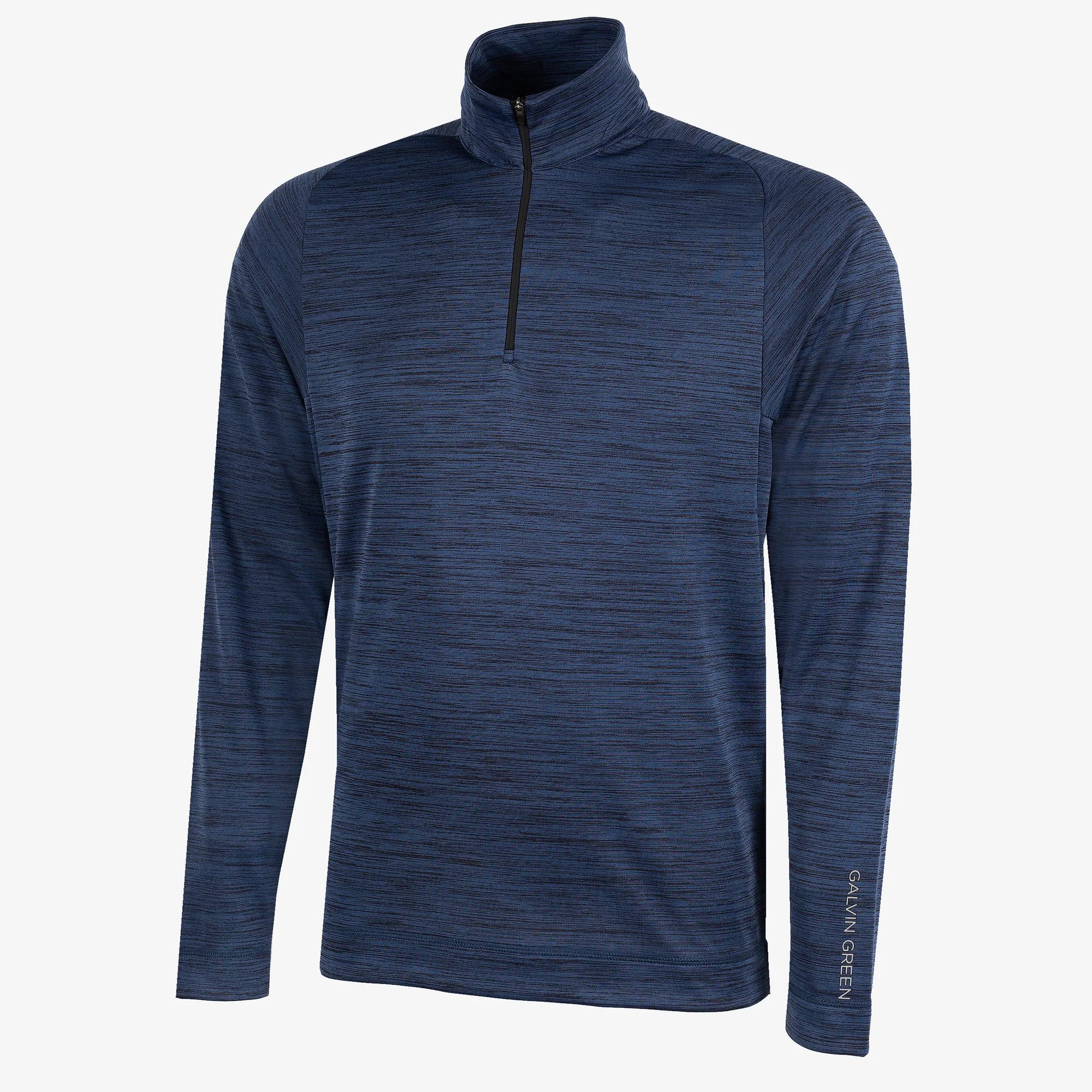
8.5/10Galvin Green Dixon INSULA review: the half-zip you'll wear nine months a year
Thin but deceptively warm, and stretchy enough to swing in — the mid-layer that earns its place from October to April.
Explained
Warmth tier, 10,000mm, four-way stretch: the one number golf layers never print is the one about wind
On a dry, raw autumn round you are not cold because of the temperature. You are cold because air is moving through your clothes, and the spec that would tell you whether a garment stops it is the one thing no golf brand puts on a swing tag.
Review
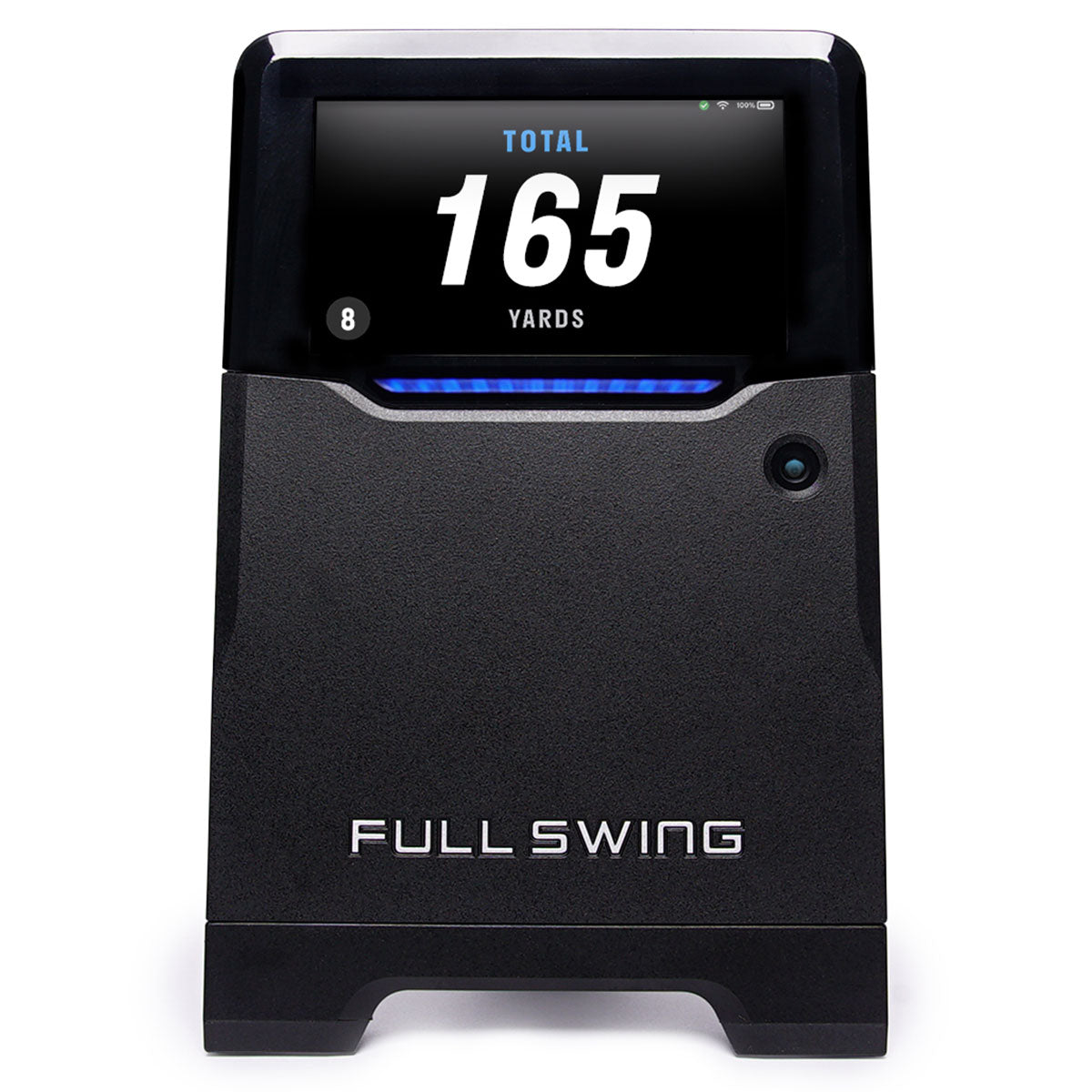
7.9/10Full Swing KIT review: the tape measure decides this, not Tiger
Tour pedigree, TGL on ESPN, and radar good enough to be checked against a Trackman outdoors. It also wants eighteen to twenty feet of room, which rules out most of the garages people buy it for.