
Ben Sayers Lithium vs Motocaddy QB2: is the cheapest electric trolley a false economy?
Every electric trolley conversation on this site has been held at the expensive end. Here is the one most club golfers are actually having, between a budget lithium trolley and the best compact push cart in the shop.
By Tom Whitaker · Staff Writer
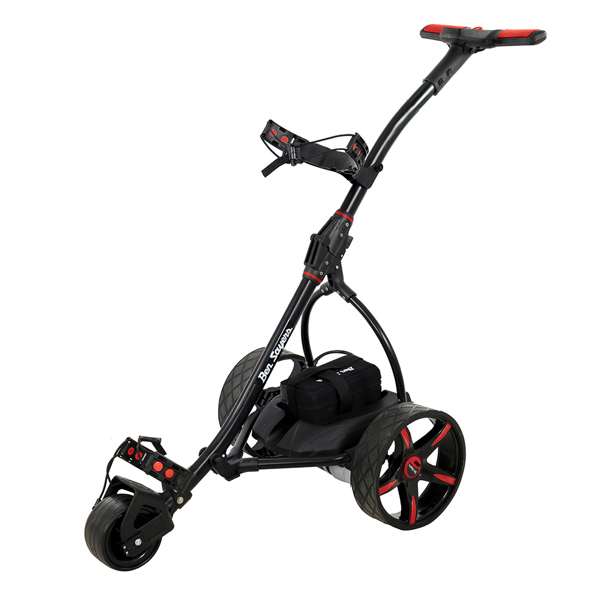
Ben Sayers
Ben Sayers Lithium Electric Trolley Package
Buy if hills are the reason you stopped walking, and you want every accessory in the box
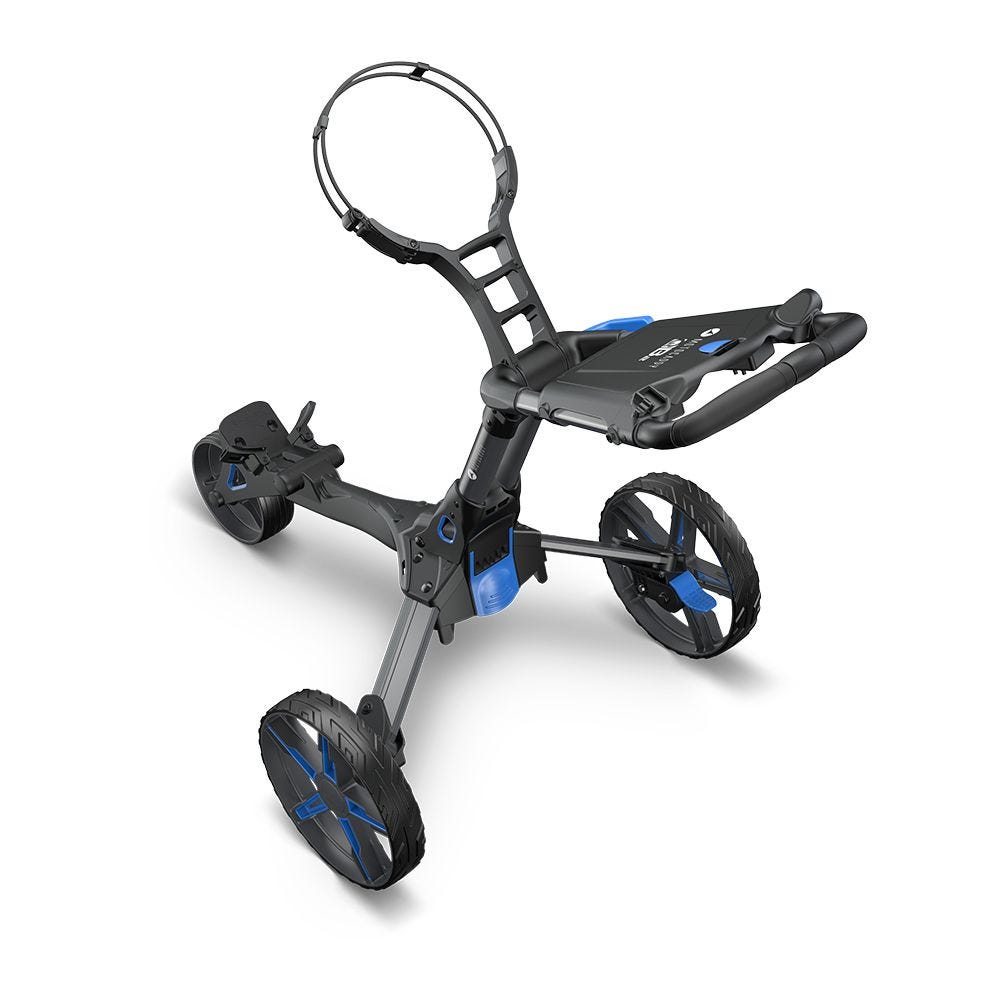
Motocaddy
Motocaddy QB2 Push Trolley
Buy if boot space is your real constraint and your course is walkable without help
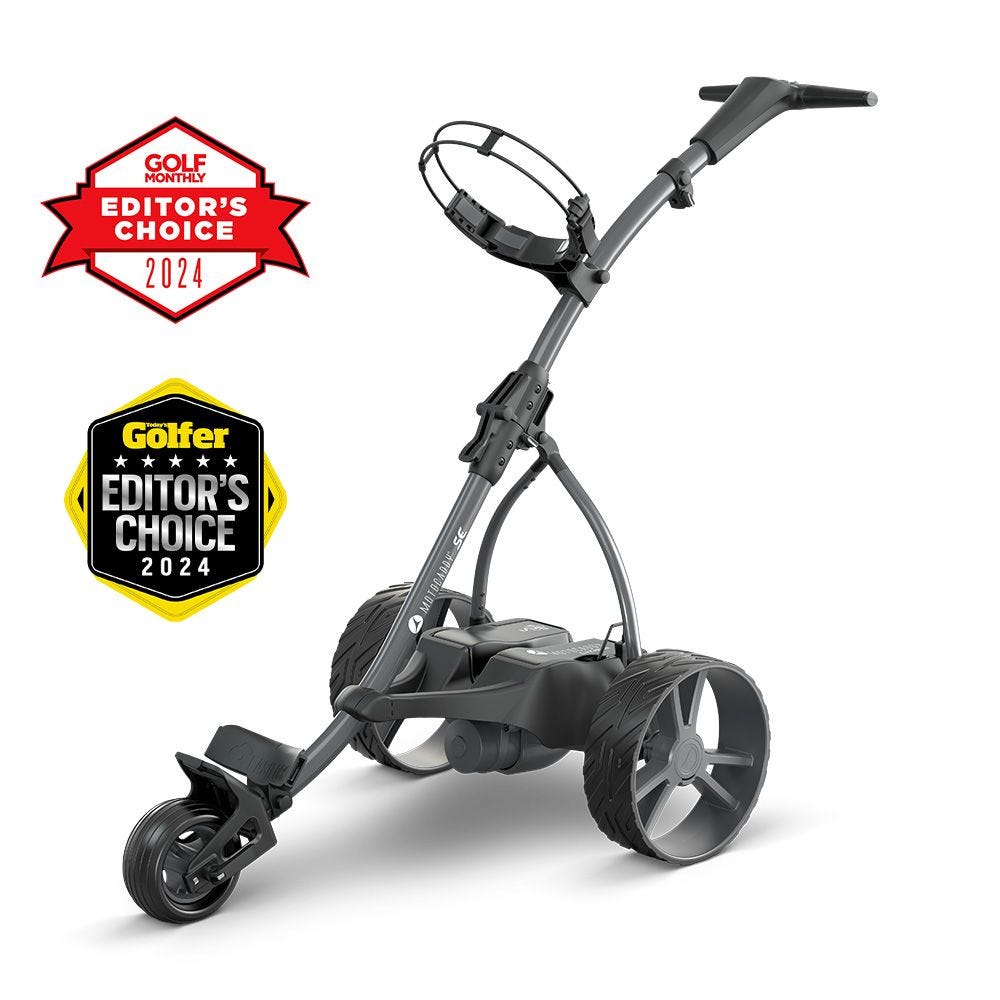
Motocaddy
Motocaddy SE Electric Trolley
Buy if you want electric and intend to still own it in five years
ifrothgolf earns a commission on purchases made through these links, at no extra cost to you. It never changes what I recommend. Full disclosure.
Part of our guide toBest Electric Trolleys 2026Look in a club car park on a Saturday morning and you will see the top of the electric-trolley market and the bottom of it, with very little in between. Someone is unloading a remote-control machine that cost more than their first car. Someone else is wrestling a push cart out of a hatchback. The gear press writes almost exclusively about the first golfer.
This piece is for the second one. The question is not whether a remote-control trolley at four times the money is impressive. It is whether the cheapest real electric trolley in the shop beats the best compact push cart, and the answer is less obvious than either camp will tell you.
The price gap is smaller than the labels say
The Ben Sayers Lithium Electric Trolley Package is around $450. The Motocaddy QB2 is around $250. On the shelf that is a difference of about $190, and that number is what stops most people at the counter.
It is also not the real number. The QB2 comes with a scorecard holder, an under-handle net and an accessory compartment. The umbrella holder and the drinks holder are sold separately, and once you have ticked the boxes most golfers end up ticking, the true cost of a QB2 heads towards $375.
The Ben Sayers arrives with a station, umbrella holder, scorecard holder, drinks holder, GPS cradle, rain cover and a carry bag in the box. Nothing to add. So the real comparison is closer to $375 against $450, and at roughly $60 of separation the argument stops being about money and starts being about what you actually want the trolley to do.
The number a value-hunter should be looking at
Warranties. The Motocaddy QB2 carries 24 months. The Ben Sayers carries 12.
That is the wrong way round if you believe warranty length tracks risk, because one of these products is an aluminium frame with wheels and a foot brake, and the other adds a 200W motor, a lithium battery, a charger and a digital control board. The item with more to go wrong is covered for half as long.
I am not calling that a scandal, and it is broadly what the budget end of the category looks like. But it is the single most useful number in this comparison, and it is the one nobody puts on the product page in bold. Budget electric trolleys are a bet on the electronics lasting, and the manufacturer is telling you how confident it is.
The battery is a related point. Lithium is a real upgrade here, and Ben Sayers offers 18 and 36-hole options with a stated lifespan up to five times that of lead-acid, plus an auto cut-off charger so you cannot cook it overnight. That is the correct specification at this price. It is still a consumable, and a replacement battery in three or four years is a cost the push trolley simply does not have.
Boot space is the cost nobody prices in
This is where the QB2 wins and it is not close. It folds in two steps with an auto-folding front wheel to 560 x 360 x 440mm, about 20% smaller than the Motocaddy Cube it replaced, at 9.5kg.
The Ben Sayers folds to roughly 35 x 55 x 80cm. Do the multiplication and the electric trolley occupies about three-quarters again as much space in your boot as the push cart. On a golf trip with three mates and four bags, that is the difference between everything fitting and someone's clubs on a back seat.
Add the battery, which travels with you and wants charging between rounds, and the electric option asks more of your week than the price tag suggests. National Club Golfer's verdict on the QB2 was that the upgrades over the Cube were real quality-of-life gains rather than marketing, and quality of life is exactly what this section is about.
What the motor actually buys
Hills. That is the honest short answer, and it is worth a lot to the right person.
A 200W motor with a nine-speed dial and a speed memory means the walk up the long par four stops being the reason your back is finished by the fourteenth. If the reason you stopped walking your course is gradient rather than distance, an electric trolley is not a luxury purchase, it is the thing that gets you back out. That case is made properly in an electric trolley is the best money I've spent on golf and I do not disagree with a word of it.
The digital screen showing speed and remaining charge is worth having; knowing you have enough battery for the last four holes is worth more than it sounds. The pre-set distance function that sends the trolley 10, 20 or 30 metres ahead while you walk to the next tee is not. You will use it twice, show a playing partner, and then stop, because a trolley trundling unattended towards a bunker is a two-minute problem you did not need. Do not let it be a reason to buy.
One caution the spec sheet will not give you: budget electrics tend to be less composed going downhill than up it, because the feature that manages descent is the one that gets cut first at this price. On a steep course that is worth knowing before you commit. Our soft-ground piece makes the related point that a heavier driven trolley is also harder on wet turf than a light push cart.
Who should just buy the push trolley
If your course is flat or gently rolling, buy the QB2. If your boot is small, buy the QB2. If you play fewer than twenty rounds a year, buy the QB2, because the electric will spend most of its life discharging in a garage and batteries do not enjoy that. If your back is fine and you like walking, buy the QB2 and spend the difference on literally anything else.
The push trolley is the default answer and it takes a specific reason to overrule it. Hills are that reason. Convenience alone is not.
Who should skip both
If you know you want electric and you intend to own it for five years or more, do not buy at the bottom of the market. The Motocaddy SE at around $650 is the cheapest trolley I would call a long-term purchase, and the argument for stepping into the middle of a range rather than the floor of it is set out in the Motocaddy I would actually buy. The gap from $450 to $650 buys you a dealer network, a brand that will still be servicing the model in four years and a warranty that reflects it.
The verdict
The Ben Sayers is a better buy than its badge suggests, and the reason is the accessory pack. Priced against a QB2 carrying the extras most people add, it is about $60 dearer and it does the walking for you. As a way of finding out whether you actually want an electric trolley, without committing $650 to the question, it is a sound piece of reasoning.
The QB2 is the better product. Twice the warranty, a fraction of the boot space, nothing to charge, nothing to fail, and a fold that has clearly been designed by people who have loaded a car in the rain. For the majority of club golfers on a walkable course it remains the right answer, and calling the entry-level electric a false economy is only fair if you have not priced the push trolley properly first.
Buy on gradient, not on gadgetry. That is the whole decision.
Frequently asked
- Is a budget electric golf trolley worth it, or a false economy?
- It depends almost entirely on gradient. On a hilly course a 200W lithium trolley like the Ben Sayers at around $450 is the thing that keeps you walking, and its included accessory pack narrows the real price gap to a good push trolley to roughly $60. On a flat course it is a false economy, because you are paying for a motor, a battery and a charging routine you do not need.
- What warranty do budget electric trolleys come with?
- Less than you might assume. The Ben Sayers Lithium package carries a 12-month warranty, while the Motocaddy QB2 push trolley carries 24 months despite having no electronics at all. Warranty length is the clearest signal of expected risk at the budget end of the electric market, and it is worth checking before the spec sheet.
- How much boot space does an electric trolley take compared with a push trolley?
- Considerably more. The Motocaddy QB2 folds to 560 x 360 x 440mm, roughly 20% smaller than the Cube it replaced, at 9.5kg. The Ben Sayers folds to about 35 x 55 x 80cm, which works out at around three-quarters again as much volume. Add the battery and charger and the difference matters on a golf trip.
- Do I need the pre-set distance function on an electric trolley?
- No. It sends the trolley 10, 20 or 30 metres ahead while you walk to the next tee, and most owners use it a handful of times before deciding an unattended trolley heading towards a bunker is not worth the novelty. Buy for the motor, the battery and the build, not for that feature.
Read next
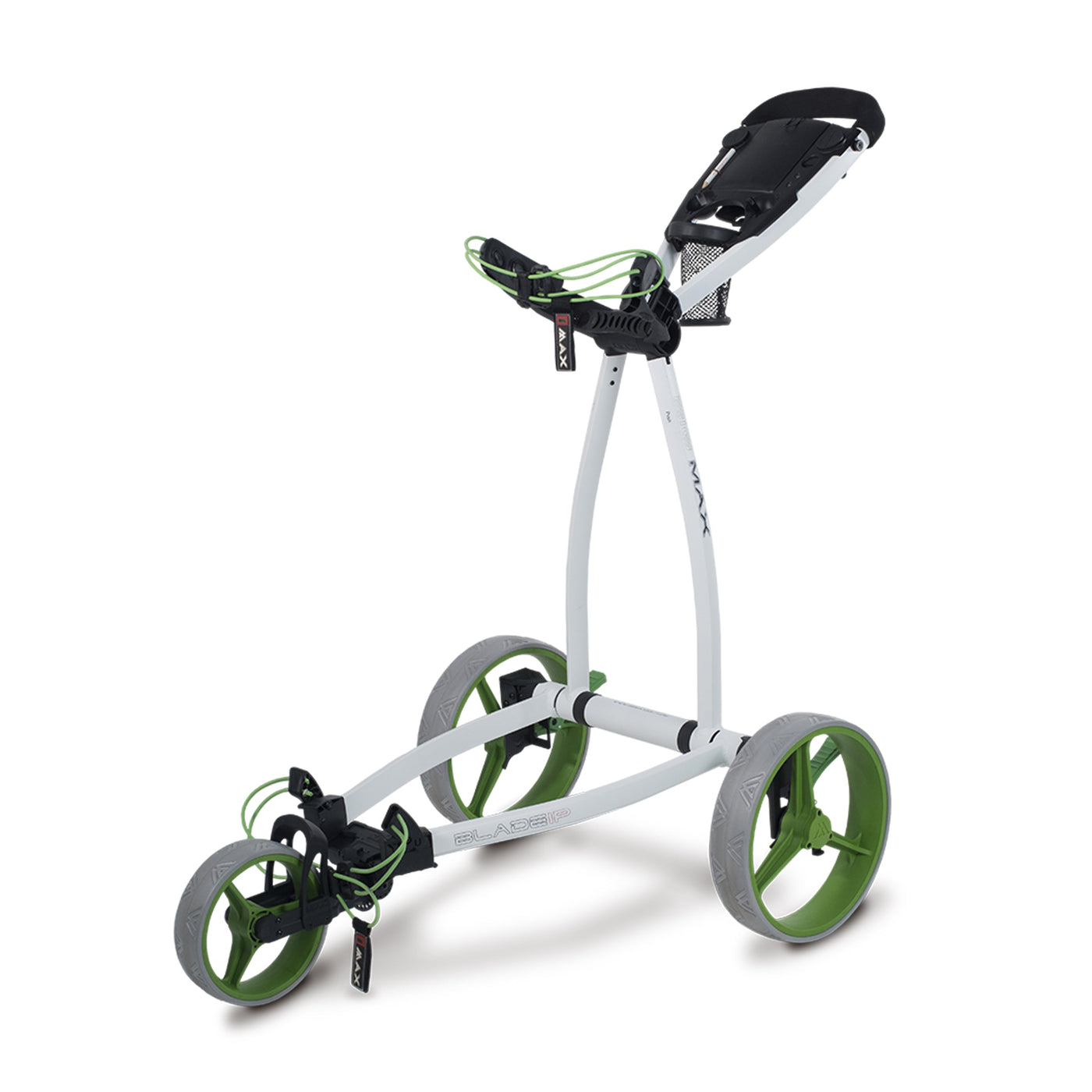
Versus
Push vs electric trolley: which is actually worth it?
One saves your back for not much money; the other saves your legs for rather more. How to spend wisely on carrying nothing.
Opinion
An electric trolley is the best money I've spent on golf
Not the clubs, not the gadgets. The thing that made me enjoy walking 18 again was the least glamorous purchase in the bag.
Review
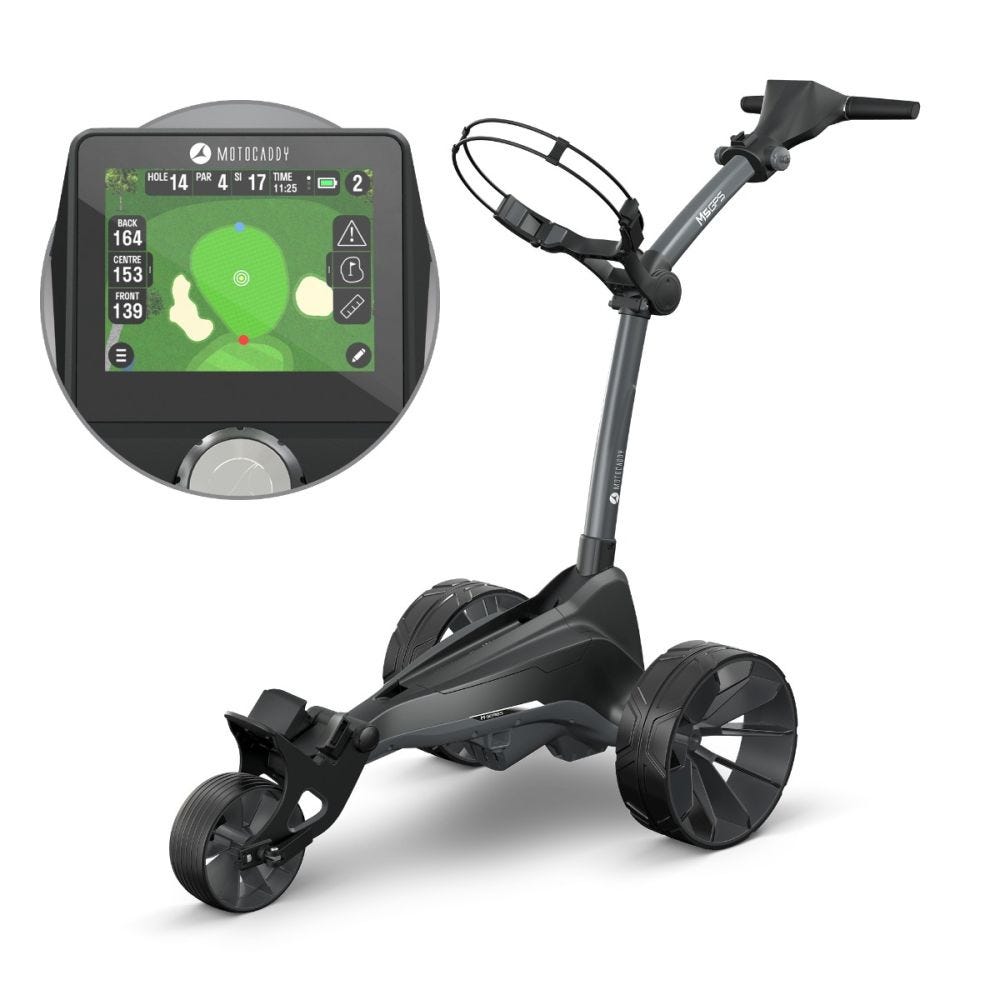
8.8/10Motocaddy M5 GPS review: the electric trolley that does the thinking
GPS course maps, downhill control and a battery that shrugs off 36 holes — the do-it-all electric trolley most walkers should buy first.