
Full Swing KIT vs Garmin Approach R50: the same price, but the KIT wants up to 20 feet of depth and the R50 about 10
Now that the R50's September price cut has ended, the two sell for the same money in late October 2026. One is a radar that sits behind you and needs room to watch the ball fly. The other sits beside the ball and brings its own screen. Price isn't the decider here; the tape measure is.
By Marcus Bell · Simulator & Indoor Golf Writer
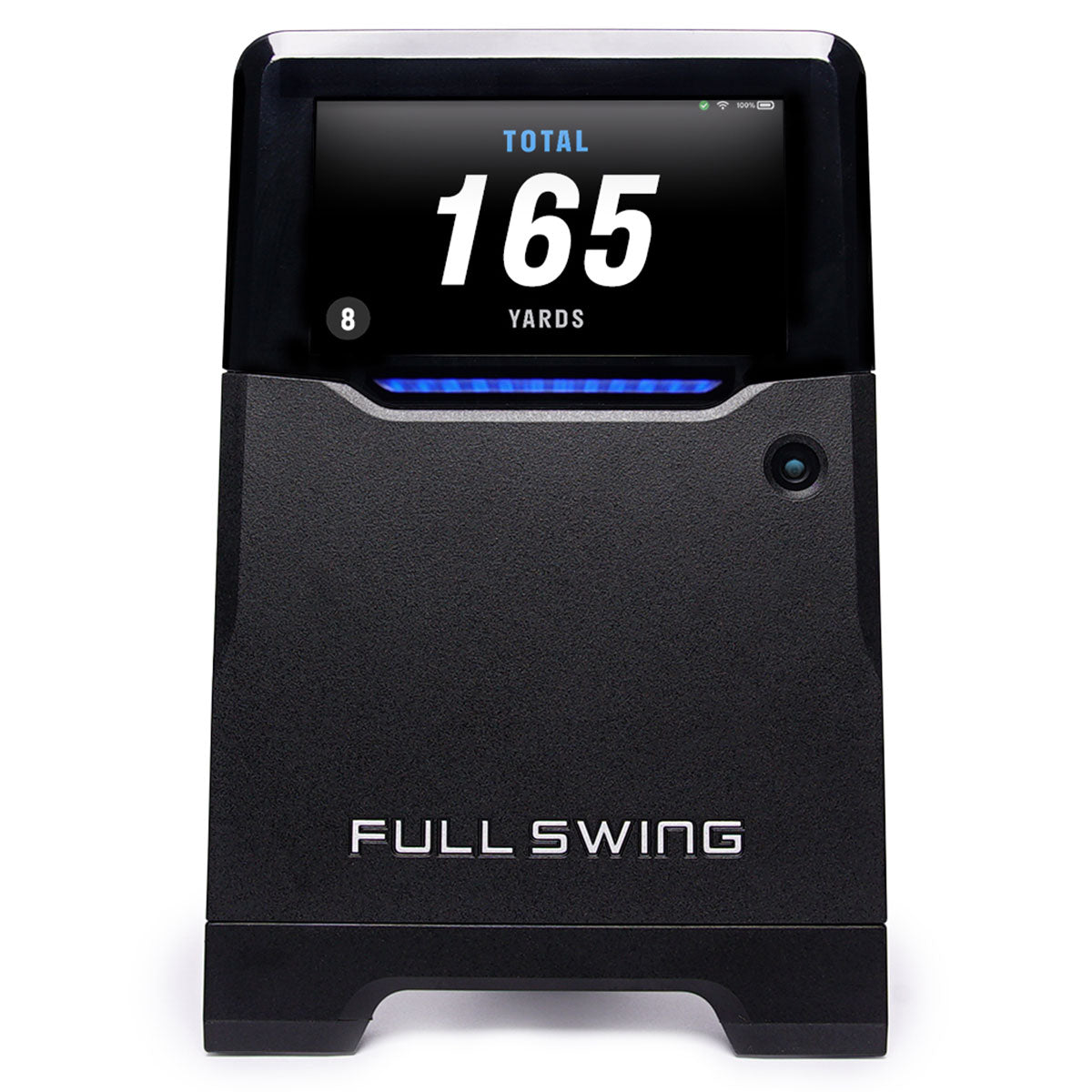
Full Swing
Full Swing KIT
Pick if you have 16 to 20 feet of depth or hit outdoors, practise more than you play, or share the bay with a left-hander.
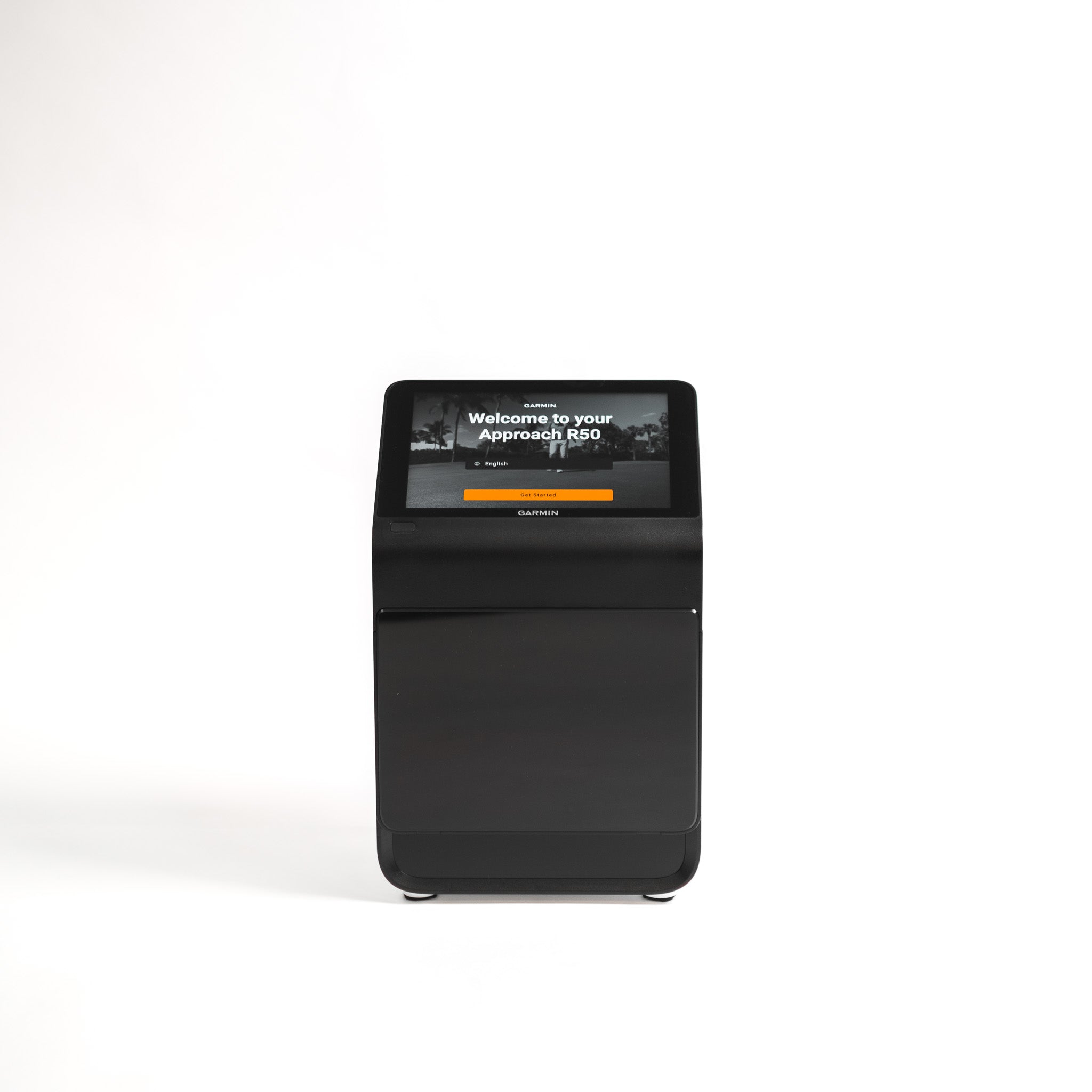
Garmin
Garmin Approach R50 Launch Monitor
Pick if the room is about 10 feet deep, there is no computer in it, and the point is playing courses rather than grinding numbers.
ifrothgolf earns a commission on purchases made through these links, at no extra cost to you. It never changes what I recommend. Full disclosure.
Side by side
| Specification | Full SwingFull Swing KIT | GarminGarmin Approach R50 Launch Monitor |
|---|---|---|
| Device type | launch monitor | launch monitor + simulator (all-in-one) |
| Sensor type | radar + high-resolution camera in one unit | photometric — three high-speed cameras for ball and club tracking |
| Metrics measured | 16 data points with synchronised swing video | over 15 ball and club metrics including spin rate and spin axis |
| Indoor outdoor | indoor and outdoor use | indoor and outdoor use |
Specs as published by each manufacturer. Rows in grey are where the two match.
Our price log caught the Garmin Approach R50 at a reduced price on PlayBetter on 20 September. On 24 October it was back to full list, which puts it within a cent of the Full Swing KIT. Two premium launch monitors, one price, around $5,000, and a choice that has nothing to do with money.
It has to do with the room. The KIT is a radar that sits behind you and watches the ball fly, and Full Swing asks for up to 20 feet of indoor depth to let it. The R50 is a three-camera unit that sits about 18 inches beside the ball and carries its own 10-inch screen. Before features, before software, before Tiger Woods, that is the decision. We have covered the KIT's room problem in our KIT review and the R50's portability against a ceiling unit in R50 vs APOGEE. This piece is about what happens when the two land on the same shortlist at the same price.
The depth each one needs
Full Swing's own FAQ is specific. Indoors, the KIT wants 8 to 10 feet of ball flight to the screen or net and another 8 to 10 feet behind the ball for the unit. That is 16 feet at the absolute minimum and 20 to do it properly, before you allow anything behind the screen. Outdoors, Full Swing puts it 10 feet behind the ball.
Garmin's manual asks for something entirely different. Place the R50 about 1.5 feet to the side of the tee, facing it, at roughly the same height. It does not even need to be level, because it compensates for uneven ground. Garmin publishes no room size, but PlayBetter, which sells both units, recommends around 10 feet wide, 10 feet deep and 9 feet tall for comfortable indoor use, and says that saving comes precisely from not needing to sit behind the ball.
So the gap is roughly 6 to 10 feet of depth. In a spare room or a single garage that is not a preference. It is a ruling. If you cannot find 16 feet between a back wall and a screen with a golfer standing in the middle of it, the KIT is off the list, however much you like it.
What the same price does not include
Both prices leave something out, and they leave out different things.
The R50 is complete out of the box for practice and data. Home Tee Hero runs on its own touchscreen, and Garmin's manual puts the 43,000-plus virtual courses and the weekly tournament behind a Garmin Golf membership. No PC, no tablet, no phone. Garmin's launch release also lists GSPro and Awesome Golf among the third-party options for players who want to plug in a bigger screen. The catch is the club: Garmin includes tracking stickers, and they are required for per-club stats.
The KIT gives you more of the data and less of the golf. Full Swing lists 16 club and ball numbers with no unlock needed, including face angle, club path, face to path and attack angle, and a free app that stores your data alongside the video from its built-in camera. Courses are separate. Full Swing lists GSPro for PC and E6 CONNECT for iPhone and iPad as compatible, with packages sold separately, and its own course software comes with its KIT Studio packages on a subscription. Out of the box it is a practice instrument that becomes a simulator once you bring a device and pay someone for the golf.
The video is different too, and worth being precise about. The KIT's camera sits behind you and records the swing. The R50's cameras record a high-speed close-up of impact. One shows you what your body did, the other what the club did to the ball. A coach will want the first. A golfer chasing a strike problem may prefer the second.
Three rooms where the answer changes
The room under 16 feet deep. R50, and it is not close. Most spare bedrooms, most basements with a beam in the wrong place, and a lot of single garages once the mat and screen are in. The KIT cannot work properly here, and the R50 was built for it.
The bay shared by a left-hander. This one surprises people. PlayBetter's own guide to the R50 notes that when right- and left-handed golfers share a session, the unit has to be moved from one side of the ball to the other, which means pausing every time the hitter changes. The KIT sits behind the ball looking down the target line, so there is no side for it to be on. In a household or a group where a left-hander plays regularly, that is a real daily friction the KIT removes.
The range, or a deep outbuilding. KIT. Radar does its best work when it can watch the whole flight, and outdoors there is no back wall to fight. The R50 goes outside too, with a battery rated at up to four hours and a carry case in the box, but the KIT is the one built around that job, and swing video on the range is the sort of thing you use rather than admire.
Who should buy which
Buy the R50 if your room is around 10 feet deep, if there is no computer in it and you do not want one, and if the point of the sim is playing courses with friends on a wet Sunday. It is the unit that gets used, because it asks for nothing but a power socket. Budget for the Garmin Golf membership and accept the stickers.
Buy the KIT if you have 16 feet of depth at the very least and preferably 20, if a real share of your hitting happens outdoors, if you practise more than you play, or if a left-hander shares the bay. Budget for a device and a course licence from the start, because a KIT without one is a superb practice tool rather than a simulator.
Skip both if the whole budget is roughly one of these units. The screen, enclosure, mat and projector still have to come from somewhere, and Full Swing's own KIT Studio packages start at more than twice the price of the unit alone. The Sim Room Architect will price a full room around either, and the case for measuring before you shop is set out in space, not cost.
The one I'd pick
For most people building a sim at home, the R50. Not because it is the better launch monitor, but because most home rooms are about 10 feet deep and most home sims get used to play golf, and the R50 is designed around exactly that. If I had a double garage, a barn or a range membership I used every week, I would take the KIT, and I would not think about it for long. Measure from the back wall to where the screen will hang first. That one number makes the decision for you.
Frequently asked
- How much room do the Full Swing KIT and Garmin Approach R50 need?
- Full Swing asks for 8 to 10 feet behind the ball and 8 to 10 feet of ball flight to the screen indoors, so 16 to 20 feet of depth. Garmin places the R50 about 1.5 feet to the side of the tee rather than behind it, and PlayBetter recommends a room around 10 feet wide, 10 feet deep and 9 feet tall for it.
- Which is better for left-handed golfers, the Full Swing KIT or the Garmin R50?
- For a bay shared by left- and right-handers, the KIT. It sits behind the ball on the target line, so nothing moves when the hitter changes. The R50 sits beside the ball, and PlayBetter notes it has to be moved to the other side when a left-hander and a right-hander share a session.
- Do the Full Swing KIT and Garmin R50 need a computer or subscription?
- The R50 needs no computer: Home Tee Hero runs on its built-in 10-inch screen, and the 43,000-plus courses and weekly tournament come with a Garmin Golf membership. The KIT's 16 data points and app are free, but playing courses means GSPro on a PC or E6 CONNECT on an iPhone or iPad, sold separately, or Full Swing's own software on a subscription.
- Is the Garmin Approach R50 on sale?
- Not as of 24 October 2026. Our PlayBetter price log recorded the R50 at a reduced price on 20 September and back at its full list price on 24 October, the same as the Full Swing KIT to within a cent. Launch monitor prices do move, so check the current price before buying.
Read next
Review
7.9/10Full Swing KIT review: the tape measure decides this, not Tiger
Tour pedigree, TGL on ESPN, and radar good enough to be checked against a Trackman outdoors. It also wants eighteen to twenty feet of room, which rules out most of the garages people buy it for.
Versus
Trackman iO vs Uneekor EYE XO2: the year-one trap
Both mount overhead, both want ten feet of ceiling, and about $3,000 separates them on the shelf. Then Trackman's included first year runs out, and the gap starts growing by $1,100 a year.
Versus
Uneekor EYE XO2 vs Foresight GC3: ceiling or floor?
At least $4,000 separates them, but they're not really rivals — one lives in your ceiling forever, the other sits on the floor and travels. Both now charge a yearly fee for the software most home builders want.