
MGI Zip Navigator AT review: the remote trolley that finally stopped being a gimmick
At around $1,700 the Zip Navigator AT pairs full-directional remote control with all-terrain drive. On a hilly course that combination is the point. On a flat parkland course it is a very expensive way to walk.
By Tom Whitaker · Staff Writer
The verdict
Excellent
What's great
- Full-directional remote control that steers under power, not just a straight-line drive
- All-terrain drive built for the hilly, wet ground where a push trolley genuinely taxes you
- MGI's flagship remote platform, so the two headline features are designed to work together
Watch out
- Serious money in a category where a very good push trolley costs a fraction of it
- Heavy to lift in and out of a car boot twice a round, as all remote trolleys are
- No on-board GPS screen, which rivals at the same price include
Bottom line — The remote trolley that finally justifies the category, provided your course has gradient. On hills, slopes and soft ground it earns every penny; on flat parkland a push trolley or a cheaper electric does the job for far less.
MGI
MGI Zip Navigator AT
ifrothgolf earns a commission on purchases made through these links, at no extra cost to you. It never changes what I recommend. Full disclosure.
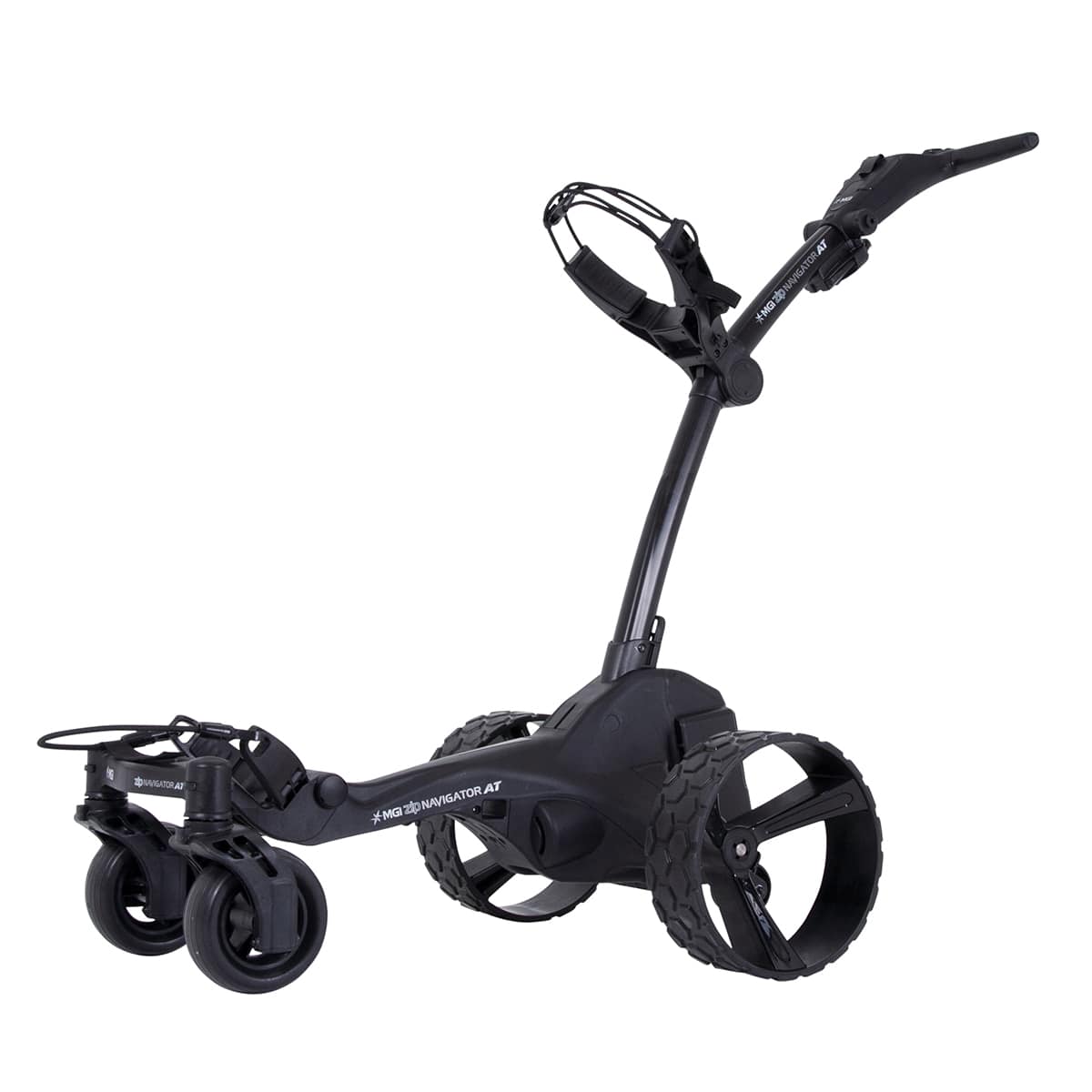
For about a decade, remote-control trolleys were the golf equivalent of a novelty gadget: a machine you steered into a bunker on the second hole, then pushed by hand for the rest of the round while your playing partners enjoyed themselves at your expense. The MGI Zip Navigator AT, at around $1,700, is where that reputation stops being fair. It is MGI's flagship remote platform, and the two things it does — full-directional remote control that genuinely steers rather than just sending the trolley forwards, and an all-terrain drive built for hilly ground — are precisely the two things the early remotes could not do. The honest verdict is that this is a very good trolley for a specific golfer, and an indulgence for everyone else. Which one you are comes down almost entirely to the shape of the land you play on.
All-terrain drive is the feature, not the remote
Start with the drive, because it is the bit that changes the argument. MGI's all-terrain setup is aimed squarely at courses with real gradient, and gradient is where a trolley either earns its keep or exposes itself. A push cart on a flat parkland layout costs you almost nothing in effort. A push cart on a course with a long climb to a raised green, wet turf and a couple of side-sloping fairways is a genuine tax on your legs by the fifteenth, and it is a tax you pay right before the holes where you most need to be steady. This is the golfer the Zip Navigator AT is built for. If your course drains poorly, sits on a hillside, or has that one hole everyone dreads walking, powered all-terrain drive is not a luxury — it is the difference between finishing the round fresh and finishing it hanging on.
Full-directional control is what killed the gimmick
The remote is the part that used to be worthless. Early remote trolleys effectively offered forward, stop and a prayer, so the moment the ground tilted, the trolley wandered and you spent the round chasing it. Full-directional control — steering left and right under power rather than nudging a straight-line machine — is the fix, and it is why the category has quietly matured. In practice it means you send the trolley up the fairway on the line you actually want, park it in the right place beside the green rather than wherever momentum dumped it, and walk to your ball without towing anything. That is the small pleasure people buy remote trolleys for, and it only works if the steering is genuinely reliable on a slope. Pair directional control with all-terrain drive and the two features cover each other's weaknesses, which is exactly why MGI sells them together at the top of its range.
What the same money buys elsewhere
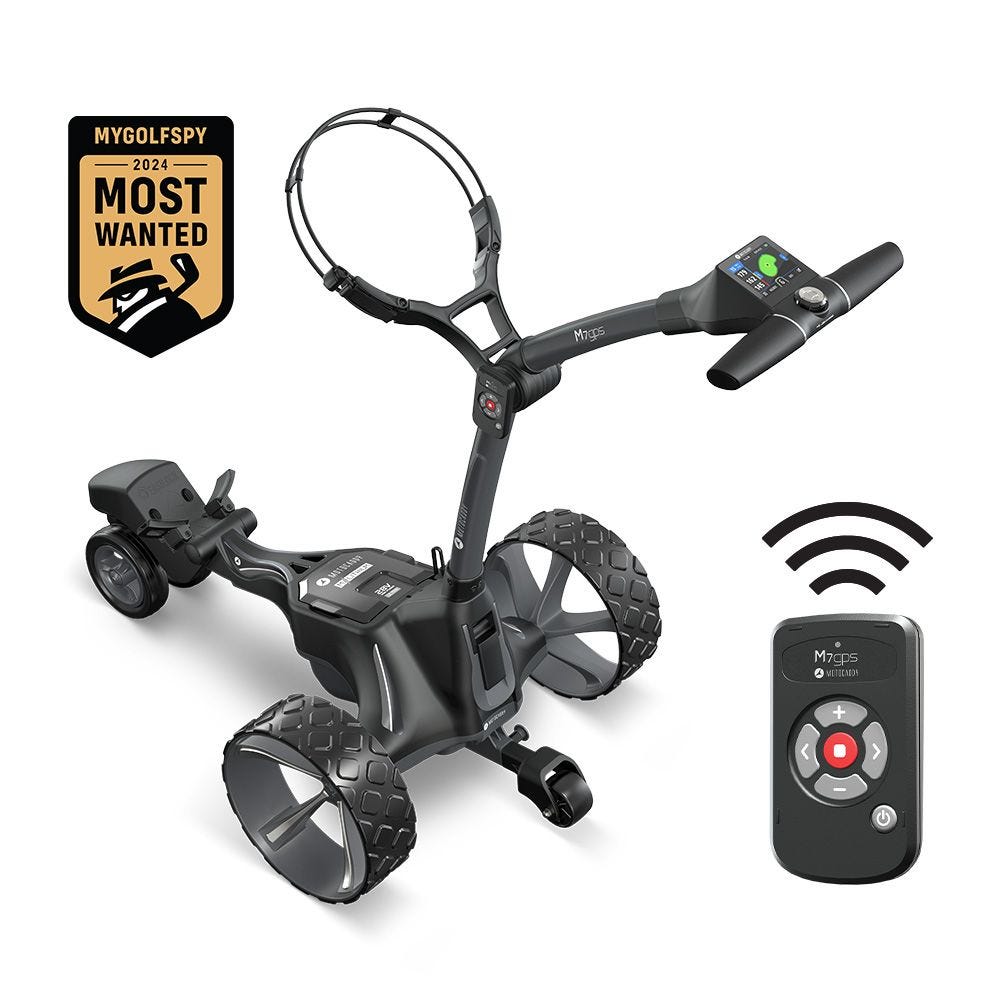
This is a crowded shelf at the top end, and the rivals are not selling the same thing. The Motocaddy M7 GPS at around $1,800 answers with gadgetry: a pocket remote with forward, reverse, left and right plus a manual dial on the handle, twin 230W DHC motors with automatic downhill control and an anti-tip stabiliser wheel, and — the headline — an integrated 3.5 inch touchscreen GPS with more than 40,000 pre-loaded courses, free lifetime mapping and full-hole flyovers. If you want the trolley to replace your GPS device as well, that is the one.
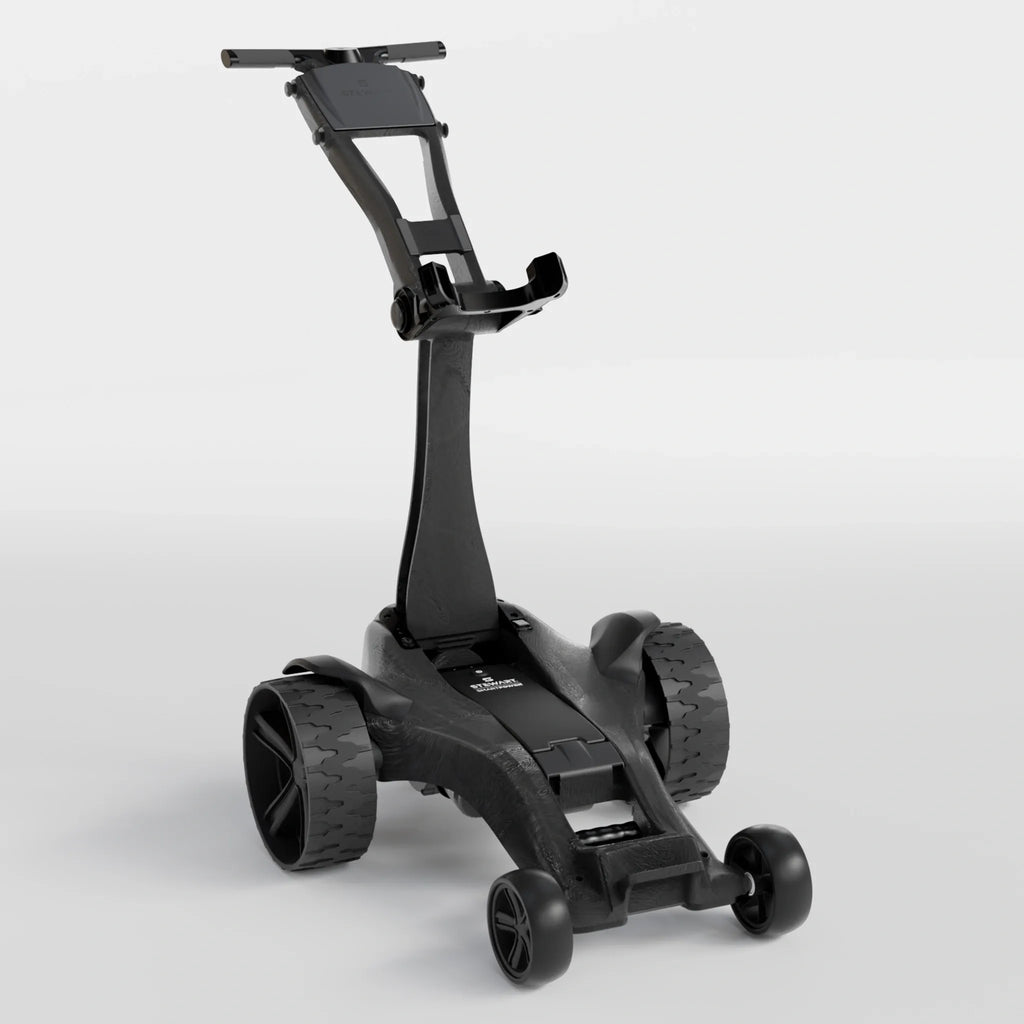
The Stewart Golf Vertx, also around $1,800, answers with engineering. It is hand-built in the UK, runs dual 190W EcoDrive motors with Active Terrain Control, and its CORTEX chip reads the ground a thousand times a second to hold a steady pace on slopes. It has 100m Bluetooth range with three cruise-control speeds, folds in about six seconds, and its SmartPower LiFePO4 battery is rated for more than 2,000 charge cycles. Stewart also publishes its weight honestly at 14.1kg plus a 2.5 to 3kg battery, which brings us neatly to the thing nobody in this category likes to dwell on.
The case against, stated plainly
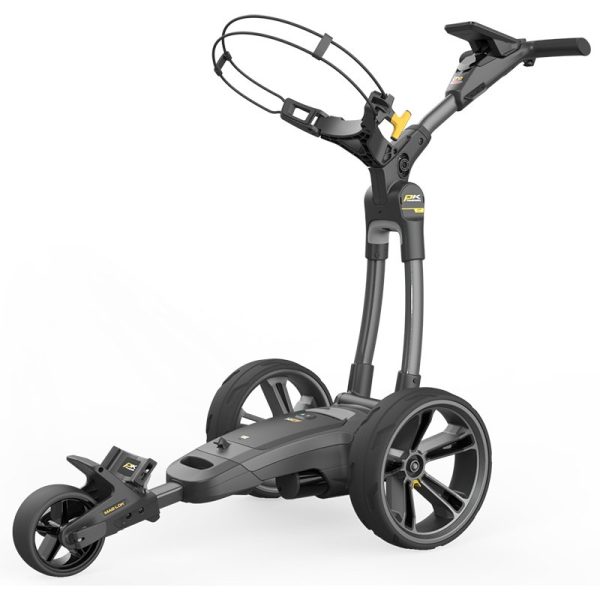
Remote trolleys are heavy. Motors, a gearbox and a lithium battery have to live somewhere, and that somewhere is a frame you lift into a car boot twice per round. If you have a bad back or a high boot lip, that is a real, repeated cost that no amount of clever electronics offsets. They are also expensive in a category with excellent cheaper answers: the PowaKaddy CT12 GPS at around $1,500 has no remote at all, and instead gives you a 5-inch HD portrait touchscreen with over 40,000 courses and no subscription, a 9.9kg frame without the battery, Simple-2-Fold folding, MAG-LOK bag attachment and a 30v lithium battery with a five-year warranty that comfortably does 36 holes. On a flat course, that trolley does the job that matters for $180 less and less weight to lift, and you will not miss the remote by the fourth round. And if you are still weighing whether a motor belongs in your golf at all, our push versus electric trolley piece is the argument in full.
Who should skip it
Skip the Zip Navigator AT if your home course is flat parkland — a good push trolley or a standard electric will serve you just as well for a fraction of the money, and you will lift less weight doing it. Skip it if you have a small boot or a dodgy back, because the lifting is the part of remote-trolley ownership people underestimate. Skip it if what you actually want is on-course information rather than propulsion, in which case the CT12's screen or the M7's GPS is the better buy. And skip it if you ride more often than you walk, because the maths never works on a trolley you use six times a year. Buy it if you walk regularly on undulating, hilly or wet ground, you have the boot space and the back for it, and you want a trolley that steers where you point it instead of where gravity fancies.
The bottom line
The Zip Navigator AT is the clearest evidence yet that remote trolleys grew up. Full-directional control plus all-terrain drive is not two marketing features stapled together — it is the combination that makes a powered caddie behave like one on real terrain rather than a putting-green demo. It is still a lot of money and still a lot of trolley to lift, and on flat ground it is comfortably beaten on value. On a hillside, it is the one you will be glad you bought. More options in our trolleys hub and the ranked field in best electric trolleys.
Products mentioned in this article
MGI
MGI Zip Navigator AT
Full-directional remote plus all-terrain drive — MGI's flagship, built for courses that actually have hills.
Motocaddy
Motocaddy M7 GPS Remote Electric Trolley
The gadget answer: remote control plus a 3.5 inch touchscreen GPS with 40,000-plus courses and lifetime mapping.
Stewart Golf
Stewart Golf Vertx Remote Trolley
The engineering answer: dual EcoDrive motors and a chip reading the ground 1,000 times a second to hold pace on slopes.
PowaKaddy
PowaKaddy CT12 GPS Electric Trolley
The sensible answer: no remote, but a 5-inch touchscreen, 9.9kg frame and no subscription, for less money.
ifrothgolf earns a commission on purchases made through these links, at no extra cost to you. It never changes what I recommend. Full disclosure.
Frequently asked
- What makes the MGI Zip Navigator AT different from a standard electric trolley?
- Two things. It is a remote trolley with full-directional control, so it steers left and right under power rather than only driving forwards, and it uses MGI's all-terrain drive aimed at hilly courses. A standard electric trolley follows you under power but you steer it by hand.
- Is a remote trolley worth it on a flat course?
- Usually not. On flat parkland the effort a push trolley costs you is small, so you are paying a large premium and lifting extra weight for convenience rather than relief. Remote and all-terrain drive make sense when the ground genuinely taxes you: hills, side slopes and soft, wet turf.
- How does the Zip Navigator AT compare with the Motocaddy M7 GPS and the Stewart Vertx?
- They solve different problems at similar money. The M7 adds a 3.5 inch touchscreen GPS with over 40,000 courses and lifetime mapping. The Vertx is hand-built in the UK with dual EcoDrive motors and a chip reading the ground 1,000 times a second to hold pace on slopes. The MGI focuses on directional remote control plus all-terrain drive.
- Who should not buy a remote trolley?
- Anyone with a small car boot or a bad back, since these machines are heavy to lift twice a round, and anyone who rides more often than they walk. If what you really want is course information rather than power, the PowaKaddy CT12 GPS gives you a 5-inch subscription-free touchscreen and a 9.9kg frame for less.
Read next
Versus
Push vs electric trolley: which is actually worth it?
One saves your back for not much money; the other saves your legs for rather more. How to spend wisely on carrying nothing.
Opinion
An electric trolley is the best money I've spent on golf
Not the clubs, not the gadgets. The thing that made me enjoy walking 18 again was the least glamorous purchase in the bag.
Review
8.8/10Motocaddy M5 GPS review: the electric trolley that does the thinking
GPS course maps, downhill control and a battery that shrugs off 36 holes — the do-it-all electric trolley most walkers should buy first.