
10 of the 15 Presidents Cup bags we track blend two or three iron models. Only five play a matching set
Medinah No. 3 is 7,564 yards and par 72, which asks a lot of the top of the bag. That is exactly where the sets of the players arriving to play it stop matching.
By Dan Mercer · Editor
Titleist
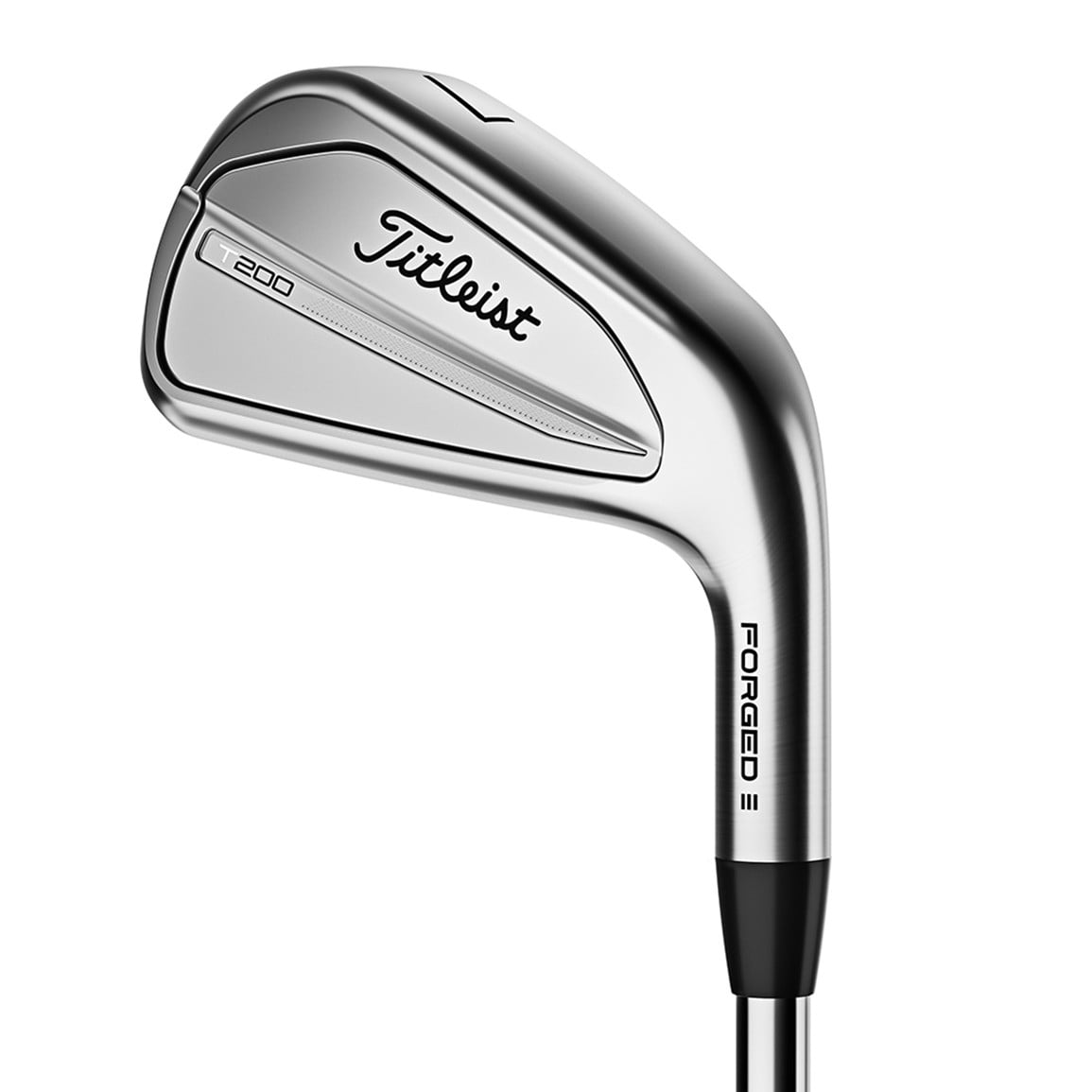
Titleist T200
The 16th Presidents Cup begins at Medinah Country Club in Illinois on Thursday 24 September, and the golf course is a good place to start because it changed. Course No. 3 was redesigned by OCM in 2024 — the practice whose O is Geoff Ogilvy, who will captain the International side against Brandt Snedeker's United States on it. The official numbers are 7,564 yards and par 72, with larger greens, bigger bunkers, wider fairways and long fescue where the trees used to be.
A course that long and that wide asks a specific question of a bag: what do you hit from 200 yards and up, and how confident are you with it? So we went and counted, because the answer is sitting in a file we already keep.
Fifteen of the twenty-four, and the rest of the edges
We maintain 53 tour and creator bags, re-verified against named sources, with the date of that check printed at the top of every page. Fifteen of the 24 players at Medinah are in it: nine of the twelve Americans — Scottie Scheffler, Cameron Young, Wyndham Clark, Sam Burns, Russell Henley, Collin Morikawa, Xander Schauffele, Justin Thomas and Patrick Cantlay — and six of the twelve Internationals: Hideki Matsuyama, Min Woo Lee, Tom Kim, Adam Scott, Corey Conners and Sungjae Im.
The nine we do not hold are Chris Gotterup, Jacob Bridgeman and Jackson Koivun for the United States, and Si Woo Kim, Ryan Fox, Nico Echavarría, Ryo Hisatsune, Nick Taylor and Christiaan Bezuidenhout for the International team. Fifteen bags out of twenty-four is not a census of this Presidents Cup and it is certainly not a census of professional golf. Most of these entries were last verified in July and early August, and a team week is precisely when a bag changes, so treat every specific below as a snapshot with a date on it rather than a guarantee about Thursday morning.
One more honest edge before the number. Justin Thomas's 4-iron is recorded in our file as a Titleist T200 or a T250, because the sources we trust do not agree on which. It is one club either way, so it does not move the count.
The count: ten blended sets, five matching ones
Here is what we did. For each of the fifteen bags we took the iron section only — everything from the longest iron or driving iron down to the pitching wedge — and counted the number of distinct models in it. Utility woods like the Callaway Apex UW are woods and were excluded. Wedges were excluded. We counted models per player with a set rather than counting rows, because a row is not a model: Cameron Young's irons occupy one line in our file and contain three different heads.
Ten of the fifteen bags carry more than one iron model. Only five play a single model from the top of the set to the bottom. Three of the ten go further and carry three. Two of the ten cross brands inside the iron section.
The split is almost identical on both sides, which kills the lazy version of this story before it starts. Six of the nine American bags are blends and three are not. Four of the six International bags are blends and two are not. Whatever this is, it is not a team habit.
Five of the fifteen play the same recipe
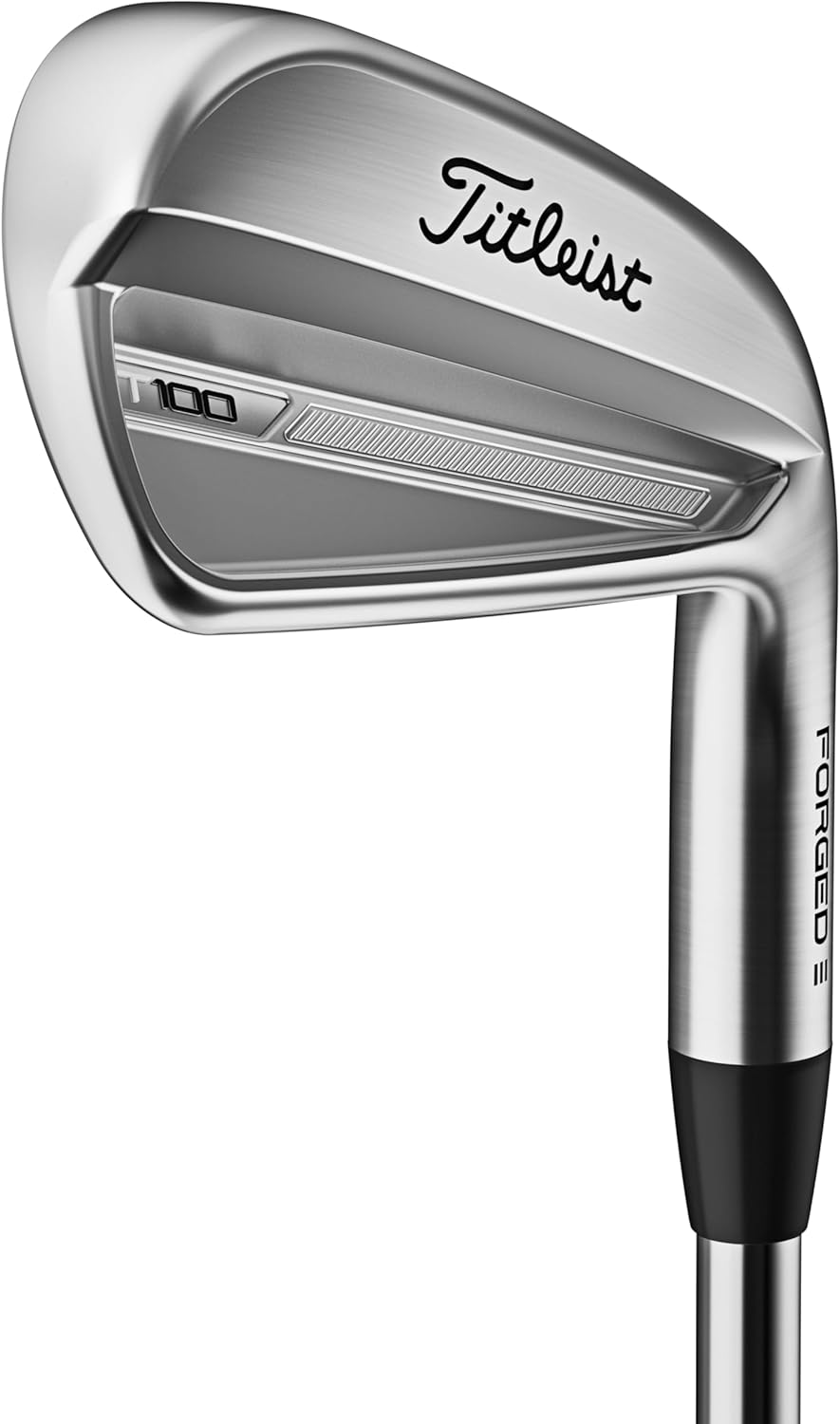
The most striking thing in the count is not the total, it is the repetition. Five of the fifteen bags run exactly the same idea: a Titleist T200 or T250 hollow-body at the top of the set, with T100 forged players' irons underneath it. Cameron Young, Wyndham Clark, Russell Henley and Justin Thomas all do it, and so does Tom Kim on the International side, whose T200 is a 2-iron rather than a 4.
That is a third of the field we can see arriving at a 7,564-yard course having independently reached the same conclusion: the long iron should be a different club from the scoring irons. Not a different shaft. A different head, with a hollow body and tungsten in it, built to launch.
Three models in one set is not exotic
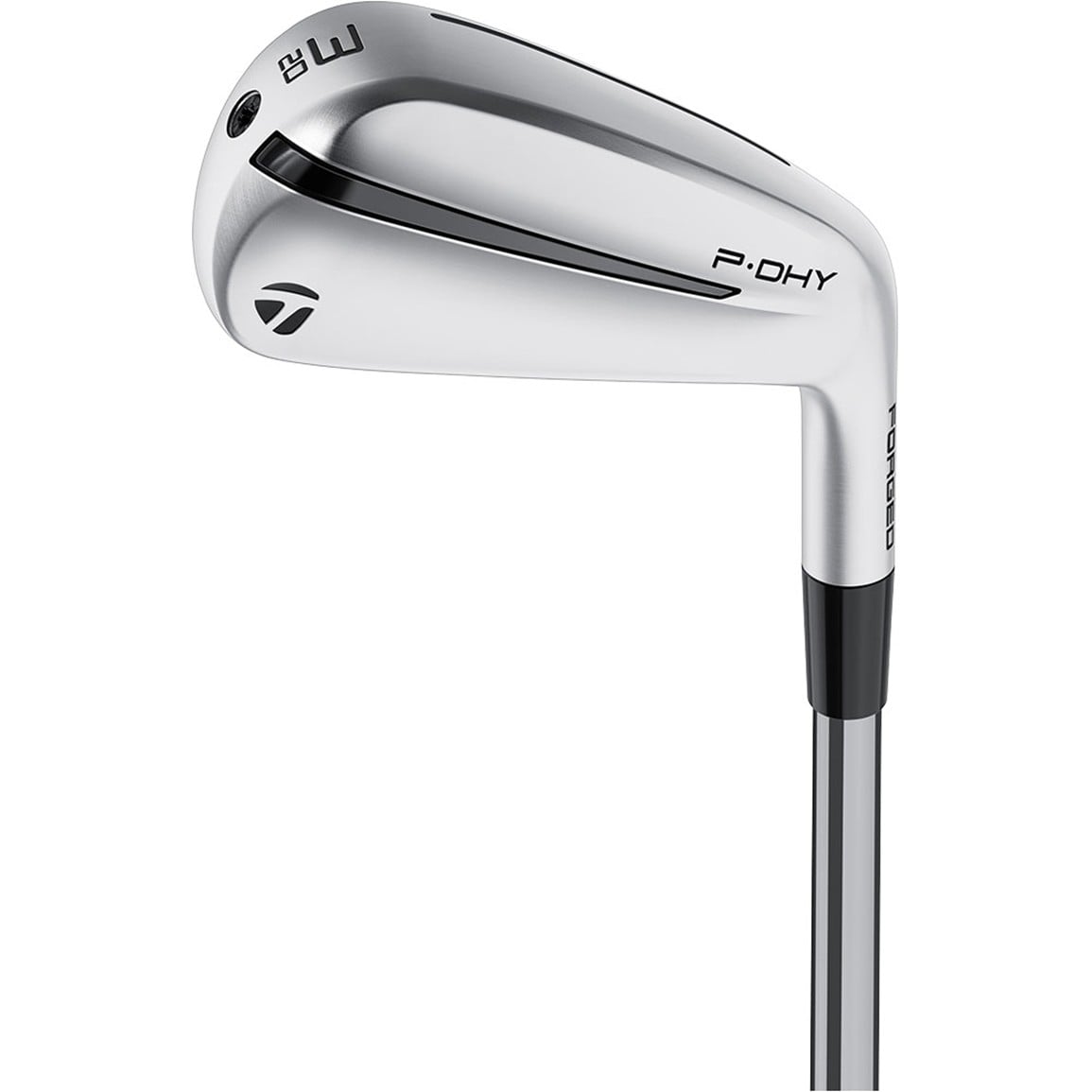
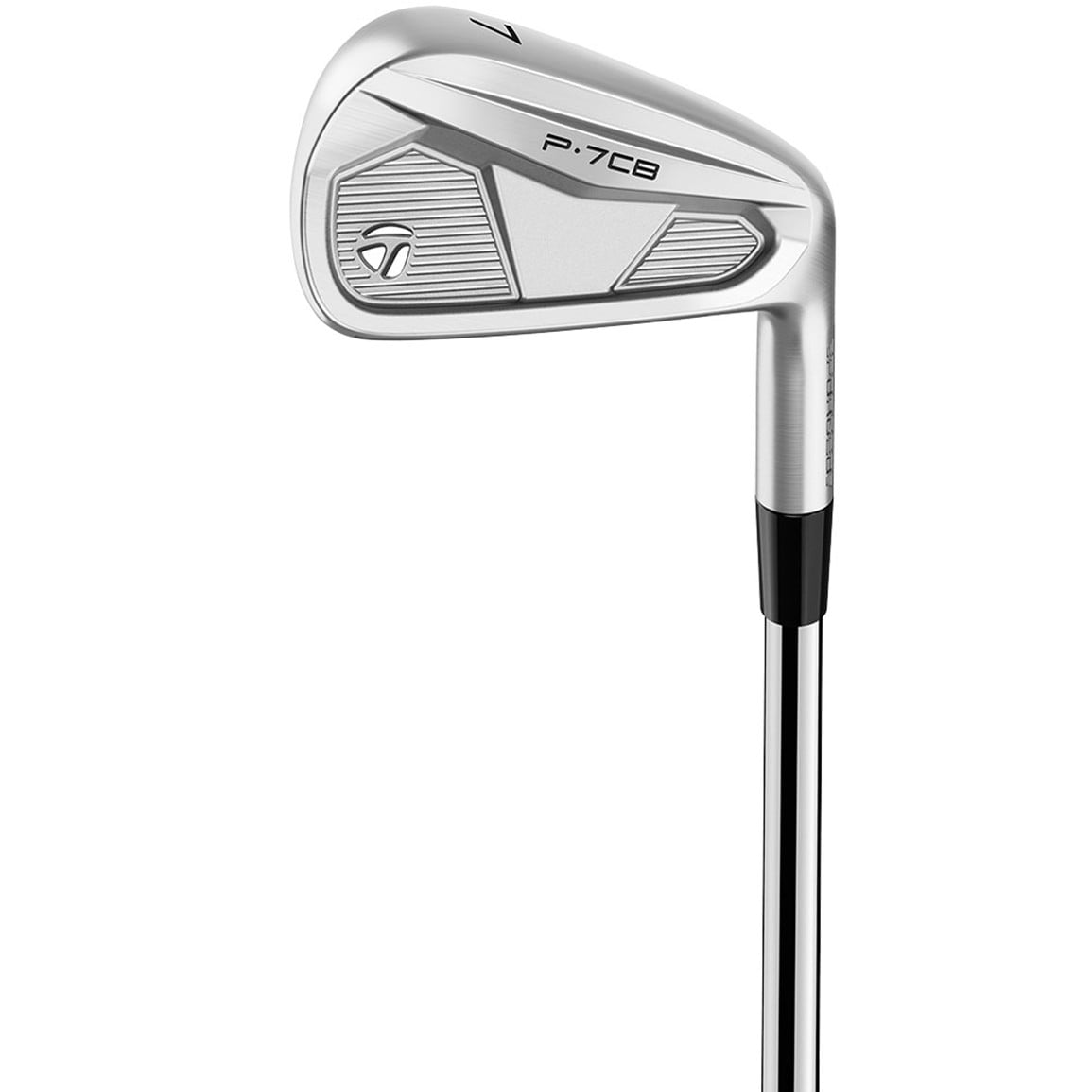
Young, Morikawa and Thomas all carry three. Morikawa's is the cleanest to read because every part of it is TaylorMade: a P-DHY driving iron in the 4, P7CB compact cavities in the 5 and 6, and P730s from the 7 down. Three constructions, three jobs, one continuous set of gaps.
Cameron Young's bag is the busiest of the fifteen and worth opening for its own sake: a T200 in the 4, a T100 in the 5, and a 631.CY muscleback prototype from the 6 down, all on the same shaft. Three heads, three purposes, one number progression.
Young's and Thomas's third model is a prototype nobody can buy — a 631.CY and a 621.JT respectively — which is a different subject we have already counted in the tour putters and prototypes you cannot buy. Strip the unbuyable club out and both bags are still blends.
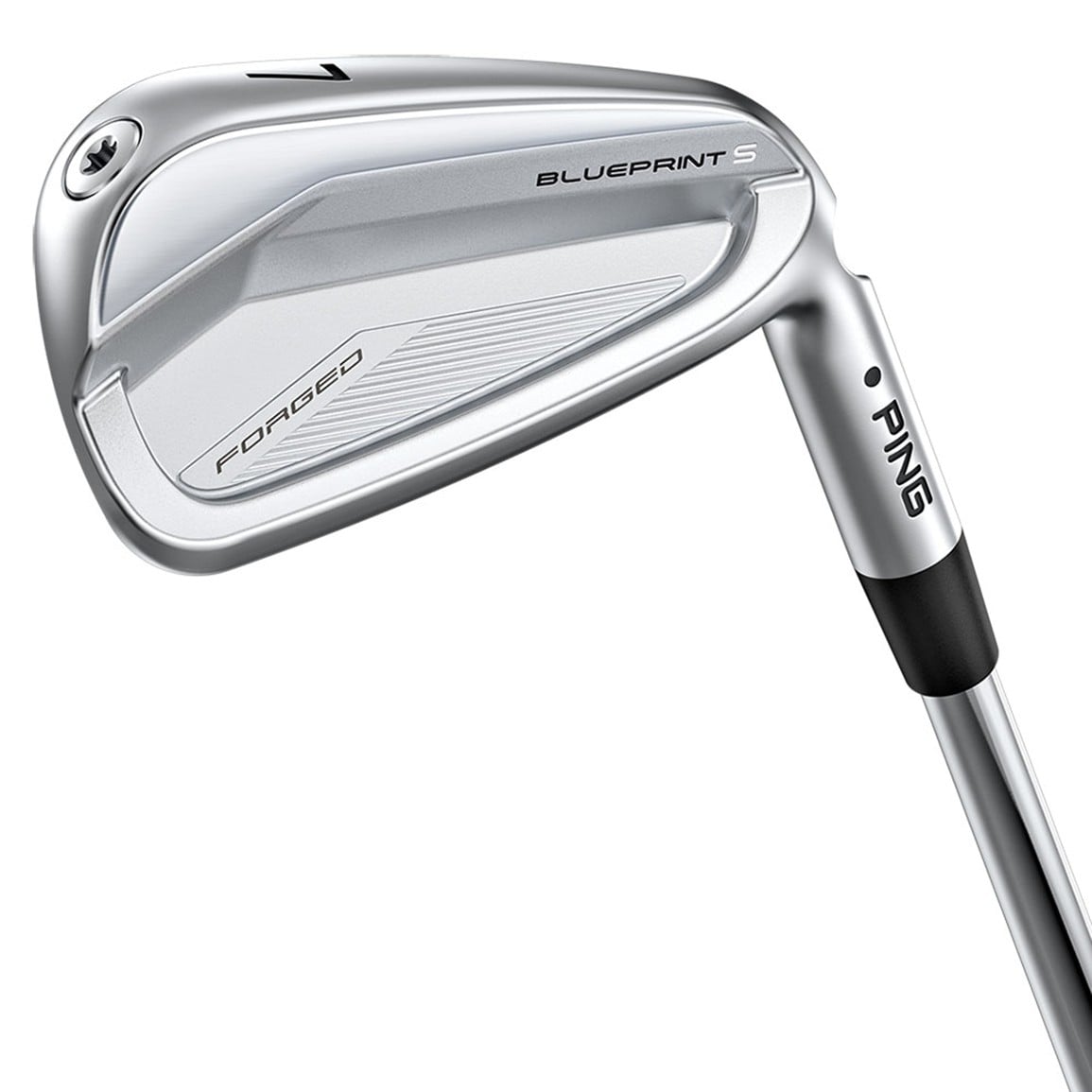
The tidiest blend at Medinah belongs to Corey Conners, and it is the one worth copying: Ping Blueprint S in the 4 and 5, Blueprint T from the 6 down. Two models, one family, one design brief, lofts and lengths built to the same plan from the start.
Two bags cross brands inside the iron section, and both are the top club only. Scheffler's 4-iron is a Srixon ZU85 above TaylorMade P7TWs. Adam Scott's 3-iron is a Titleist T250 above Callaway Apex MBs. That is the hardest version of this to get right, and it is being done by two players with a tour van and a fitter on call.
The five who did not blend
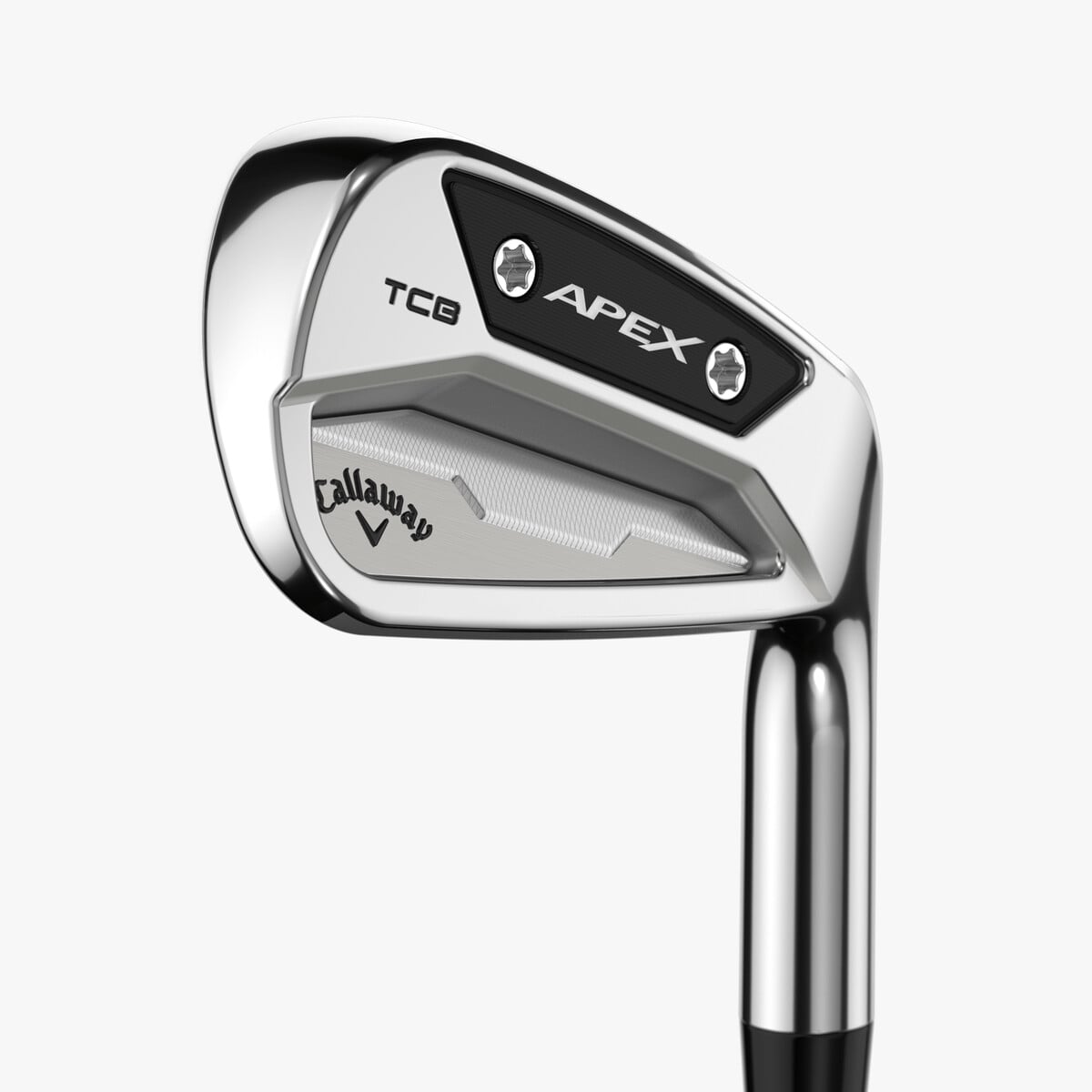
Sam Burns plays Callaway Apex MB from the 4-iron down. Schauffele plays Apex TCB from the 4-iron down. Cantlay is still in Titleist 718 AP2s, an iron from 2018. Matsuyama plays Srixon Z-Forged II. Four of those five are blades or near-blades in the hands of exceptional strikers, which is the honest reading: they do not blend because they do not need help getting a 4-iron airborne.
The fifth is the interesting one. Sungjae Im plays a Titleist T150 from the 3-iron to the 9 — a players' distance iron, one model, all the way through. He solved the same problem the blenders solved, by making the whole set a little easier instead of making the top of it different. That is a genuinely available option for a club golfer and almost nobody is offered it.
What this changes about buying irons
The set of seven irons in one box is a retail convention, not an engineering one. Two thirds of the bags we can see at Medinah do not obey it, and the reason is always the same: the club you hit from 210 yards off a bad lie and the club you hit from 140 to a flag are being asked to do unrelated things, and one head shape cannot be optimal for both.
So the question at a fitting is not which iron set. It is where your set should change. For most amateurs that join lands at the 5 or the 6, and everything above it wants a hollow body, a wider sole and more loft than a matching blade will give you.
The catch is the join itself, and it is a real one. Mixing a strong-lofted distance iron into a traditionally lofted set is how golfers end up with a forty-yard gap in one place and a five-yard gap in another, and a fitter has to bend the join clubs to close it. We went through that in detail in P770 against the PING i240, which is the same argument at the level of two specific models.
Who should not blend anything
If your strike pattern moves around, adding models adds variables you cannot yet feel, and you will spend a season blaming the wrong club. A single game-improvement set fitted properly will score better and cost less, and the money left over buys the lesson that changes the strike.
If you already hit a 4-iron well from a real lie, you are Sam Burns in this article and you should ignore all of it. And if you are tempted by the cross-brand version, note that only two of these fifteen bags do it and both of them belong to players with a manufacturer's van fifty yards away. Blend inside a family first.
Watch the long approaches at Medinah with this in your head. When one of those fifteen pulls a long iron, there is a two-in-three chance it did not come out of the same box as the club they will hit next.
Products mentioned in this article
Titleist
Titleist T200
The hollow-body long iron that sits on top of five of the fifteen Medinah bags we maintain.
Titleist
Titleist T100 Irons
The scoring half of that same recipe, and the iron model that appears in more of our bags than any other.
TaylorMade
TaylorMade P-DHY
Morikawa's 4-iron, and the club that explains why his set has three models in it.
Ping
Ping Blueprint S
One half of the tidiest blend at Medinah, because both halves come from the same family.
Callaway
Callaway Apex TCB
The counter-example. One model, 4-iron to pitching wedge, in Schauffele's bag.
ifrothgolf earns a commission on purchases made through these links, at no extra cost to you. It never changes what I recommend. Full disclosure.
Frequently asked
- Do tour players use matching iron sets?
- Mostly not. Of the fifteen 2026 Presidents Cup players whose bags we maintain, ten carry more than one iron model between their longest iron and their pitching wedge, and three of those carry three models. Only five play a single model throughout: Sam Burns, Xander Schauffele, Patrick Cantlay, Hideki Matsuyama and Sungjae Im.
- What is a blended iron set?
- A set built from more than one model, usually with a hollow-body or driving iron at the top for launch and a more compact forged head in the scoring clubs for control. The models are chosen so the lofts, lengths and lies still progress evenly, which is why it is a fitting purchase rather than something you assemble from a website.
- What is the most common iron blend on tour?
- A Titleist T200 or T250 hollow-body long iron sitting above Titleist T100 forged players' irons. Five of the fifteen Presidents Cup bags we track use that exact recipe, including Cameron Young, Wyndham Clark, Russell Henley, Justin Thomas and Tom Kim, whose version starts with a T200 2-iron.
- Should an amateur blend two iron models?
- Only through a fitting, and preferably inside one family. The benefit is real if your long irons will not get airborne, and the join is where it goes wrong: mixing a strong-lofted distance iron into a traditionally lofted set produces uneven gaps unless the join clubs are bent to close them. If your strike location still moves around a lot, a single fitted game-improvement set is the better answer.
Read next
Review
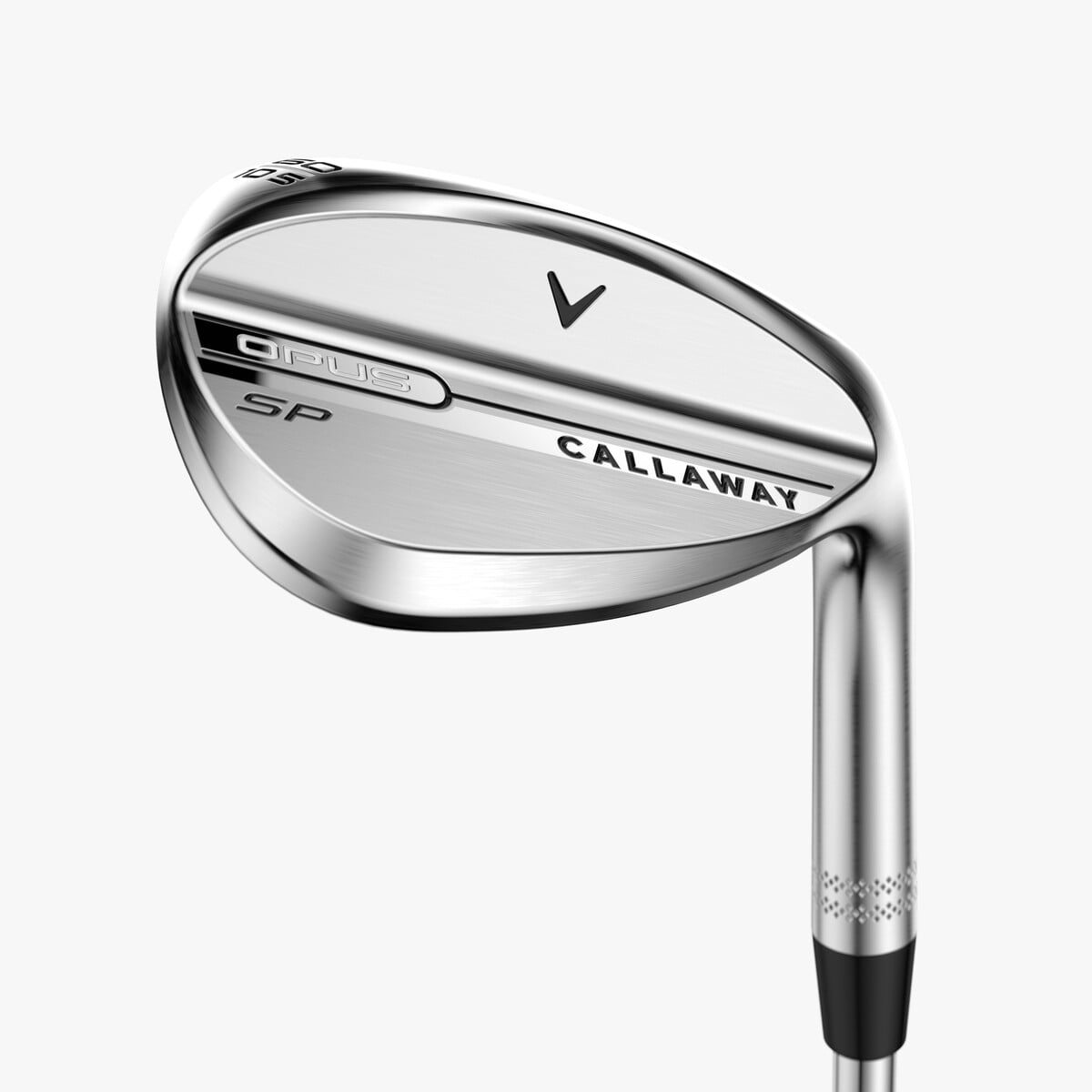
8.4/10Callaway Opus SP review: the wedge in four tour bags while everyone buys Vokey
Callaway's Spin Pocket wedge lands a lower, spinnier flight for about the same money as a Vokey. It is the one I would buy for firm turf and full shots, and the wrong call if your short game lives in soft sand.
Explained
Wedge bounce and grind, explained
The two numbers that decide whether your wedge digs, glides or skips — in plain English, with how to pick yours.
Review
8.8/10Takomo 101 MKII review: the irons quietly embarrassing the big brands
Half the price of a name-brand set, and good enough that you'll feel a bit silly for not trying them sooner. The direct-to-consumer irons reviewed.