
TaylorMade Qi4D vs Callaway Quantum Triple Diamond Max: only one is built to be bought off the rack
Both landed in January, both are nine months into a twelve-month cycle, and both start getting marked down about now. The thing that decides it in September is what happens to each head when there is no fitting bay attached to the purchase.
By Jordan Hale · Equipment Writer
ifrothgolf earns a commission on purchases made through these links, at no extra cost to you. It never changes what I recommend. Full disclosure.
Side by side
| Specification | TaylorMadeTaylorMade Qi4D Driver | CallawayCallaway Quantum Triple Diamond Max Driver |
|---|---|---|
| Club type | driver | driver |
| Face material | fourth-generation carbon Twist Face | Tri-Force Face: thin titanium + poly-mesh + carbon |
| Target player | upgrading a driver three or more seasons old | fast swingers chasing low-spin distance (rewards 95mph-plus swings) |
Specs as published by each manufacturer. Rows in grey are where the two match.
The short answer: buy the TaylorMade Qi4D if you are going to buy a driver the way most people actually buy one — online, in a stock configuration, off a discount, with no launch monitor in the room. Buy the Callaway Quantum Triple Diamond Max if you are booking a proper fitting and you already know that spin, rather than carry, is what is costing you tee shots. Both are 2026 flagships and both are very good golf clubs. Only one of them is designed to survive being bought blind.
September is when driver buying gets sloppy
Both heads launched in January. Callaway's Quantum family arrived in-line — five heads, of which the Triple Diamond Max is the 460cc low-spin one — and TaylorMade's Qi4D metalwoods landed in the same window. That puts both about nine months into a cycle that ends when the 2027 heads appear next January, which is exactly why the discounts start showing up now, and why autumn is when a lot of golfers finally commit to a driver they have been circling since spring.
It is also when the fitting quietly drops out of the process. A January buyer books a bay because the club is new, full price and a bit of an occasion. A September buyer sees a number they like next to a stock configuration and clicks. That is not a character flaw, it is just what a markdown does to behaviour. And it happens to be the single variable these two drivers handle most differently.
The Qi4D's shaft system is a fitting you can partly do yourself
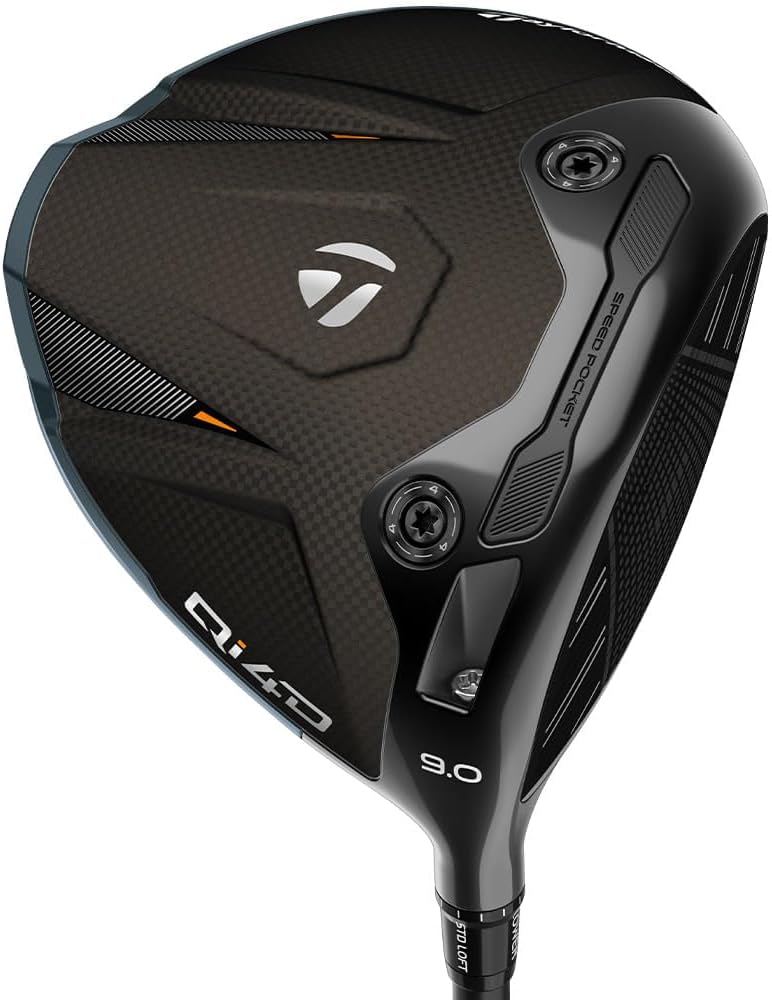
The Qi4D's headline in the gear press was the robot data — top-tier distance, accuracy and forgiveness in one head, which is the combination every brand promises and very few deliver, and the reason it won 2026's biggest test outright. Our Qi4D review covers that side of it.
The more interesting piece of engineering for an autumn buyer is REAX, the stock shaft programme TaylorMade built alongside the head. Their pitch is that two decades of fitting data covering more than eleven million driver shots showed golfers sorting into three broad rates of clubface rotation through impact — the profiles are named Hold, Balanced and Active — so the line ships three stock shafts built against them, in a spread of flexes and weights. A fitter can put you in the right one. So, roughly, can a face-on video of your own swing.
Be clear about what that is and is not. It is not a substitute for a fitting: it sorts you into one of three buckets, and a fitting sorts you into one of hundreds. There are Qi4D owners who were better off pulling the stock shaft straight back out. What REAX changes is the shape of the mistake available to you off the rack. Instead of one stock shaft built for an imaginary average golfer, there are three, and the odds of the one in the box being in the right postcode go up a lot. On a club bought online at a discount, that is worth more than another mile an hour of ball speed. At around $700 it is also, in September, no longer the expensive one.
The Quantum Triple Diamond Max is a fitted club sold in a box
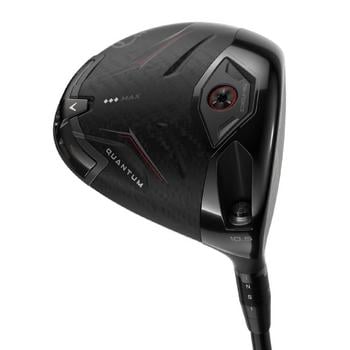
Callaway went the other way and did it well. The Triple Diamond Max is the 460cc version of the tour head: a full-size, more forgiving body wrapped around the same low-spin brief and the same Tri-Force Face, which layers thin titanium, a poly-mesh and carbon into one AI-tuned face. Reviewers at Today's Golfer and National Club Golfer came away with the same read — tour-head ball speed with a meaningfully wider hot zone than the standard Triple Diamond. As a piece of design it is one of the more complete things Callaway has built.
It also has the narrower landing strip, and every part of that narrowness points at the shaft. A low-spin head is a fix for a flight that climbs, stalls and drops; hand it to someone whose drives already run short on carry and it makes the problem worse rather than better. The 10-gram weighting runs neutral to fade, which is a feature if your miss goes left and a nine-month argument if it goes right. And spin is the variable a shaft moves most, which means a low-spin head is the least forgiving place in the bag to guess at one. Callaway's own positioning is unambiguous: this is a 95mph-plus club. None of that is a mark against the driver. It is a description of how much has to be right before the box gets opened.
What the discount is actually paying for
The honest way to read an autumn driver price is as a transfer of risk. The retailer is clearing stock configurations and you are taking on the job of working out whether the configuration is the right one. On the Qi4D that job is about three questions long and TaylorMade has published the answers. On the Quantum Triple Diamond Max, at around $700, it is a real fitting or a coin toss, and the coin toss costs more than the saving did.
There is a second question sitting underneath both, which is whether a low-spin better-player head is the right category for you at all. We argued that one at length when we put the Quantum tour head against the Titleist GTS2 and there is no point rerunning it. The short version is that the population of golfers who genuinely need spin taken off is smaller than the population buying heads that do it.
Who should buy which
Buy the Qi4D if you are a mid-to-low handicapper or a reasonably consistent striker who wants one head with no obvious weakness, and especially if you are buying without a fitting — the three-profile shaft system is the reason it is the safer autumn purchase. Buy the Quantum Triple Diamond Max if you carry real clubhead speed, your current driver spins too much and climbs, your miss is a hook rather than a slice, and you are going to be fitted for it properly. Buy neither yet if you have never had your launch and spin measured: the head is the last variable worth guessing at and it is the first one everybody guesses at. The rest of the field sits in our best drivers guide, and everything else we have written on the category is in the drivers hub.
Frequently asked
- Is the TaylorMade Qi4D or the Callaway Quantum Triple Diamond Max more forgiving?
- The Qi4D. It won 2026's biggest robot test by finishing near the top in distance, accuracy and forgiveness at the same time, which is a profile with no obvious weakness. The Quantum Triple Diamond Max is a 460cc low-spin head — more forgiving than Callaway's standard Triple Diamond, but still built around taking spin off a fast player's ball flight rather than around maximum stability.
- What is the REAX shaft system on the Qi4D?
- It is TaylorMade's stock shaft programme for the Qi4D line. The company says it analysed more than eleven million driver shots gathered over about twenty years of fitting and found golfers group into three broad rates of clubface rotation through impact, labelled Hold, Balanced and Active. Three stock shafts are built against those profiles in a range of flexes and weights, and a fitter or a face-on video of your swing can point you at the right one.
- Is it worth buying a driver in September rather than January?
- Usually yes on price. Both of these launched in January and the next generation lands the following January, so autumn is when retailers start clearing stock configurations. The catch is that discounted stock is stock — you get the shafts and lofts the retailer has left, not the ones a fitting would have specified. That matters far more on a low-spin head than on an all-round one.
- Do I need a fitting for the Callaway Quantum Triple Diamond Max?
- Effectively, yes. It is a low-spin design with neutral-to-fade weighting aimed at swings around 95mph and above, and spin is the launch characteristic a shaft influences most. Put the wrong shaft in a low-spin head and you lose the benefit you paid for. If a fitting is not part of your plan, an all-round head is the safer purchase.
Read next
Versus
TaylorMade Qi4D vs PING G440 Max: the 2026 driver decision most golfers get backwards
Two of the year's biggest drivers, cross-shopped in every fitting bay — and most players walk in chasing the wrong thing. One wins the robot test outright; the other quietly saves more rounds. Here's which head actually belongs in your bag, and why the answer probably isn't the one you'd guess.
Opinion
What the 'longest driver of 2026' number won't tell you
Every year a chart crowns one driver the longest, and every year thousands of golfers buy the wrong club because of it.
Opinion
The most overrated gear in golf (and what to buy instead)
Golf is spectacularly good at selling you the wrong thing. Here's where the money quietly leaks out of your bag — and the unglamorous stuff that actually drops shots.