
TaylorMade SpeedSoft vs Callaway Supersoft: level off the driver, split by iron height and consistency
The two softest big-brand balls in the shop, a coin apart in price. Robot testing puts them within a fraction of a mile an hour off the driver, so the decision lives in the irons, around the green and inside the box.
By Ross Hamilton · Staff Writer
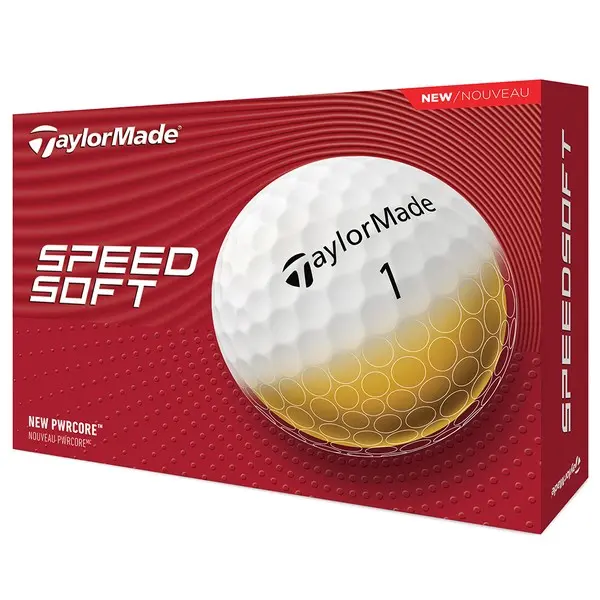
TaylorMade
TaylorMade SpeedSoft Golf Balls (Dozen)
Pick if you swing in the 90s, want a touch more response around the green and a dozen that behaves the same ball to ball.
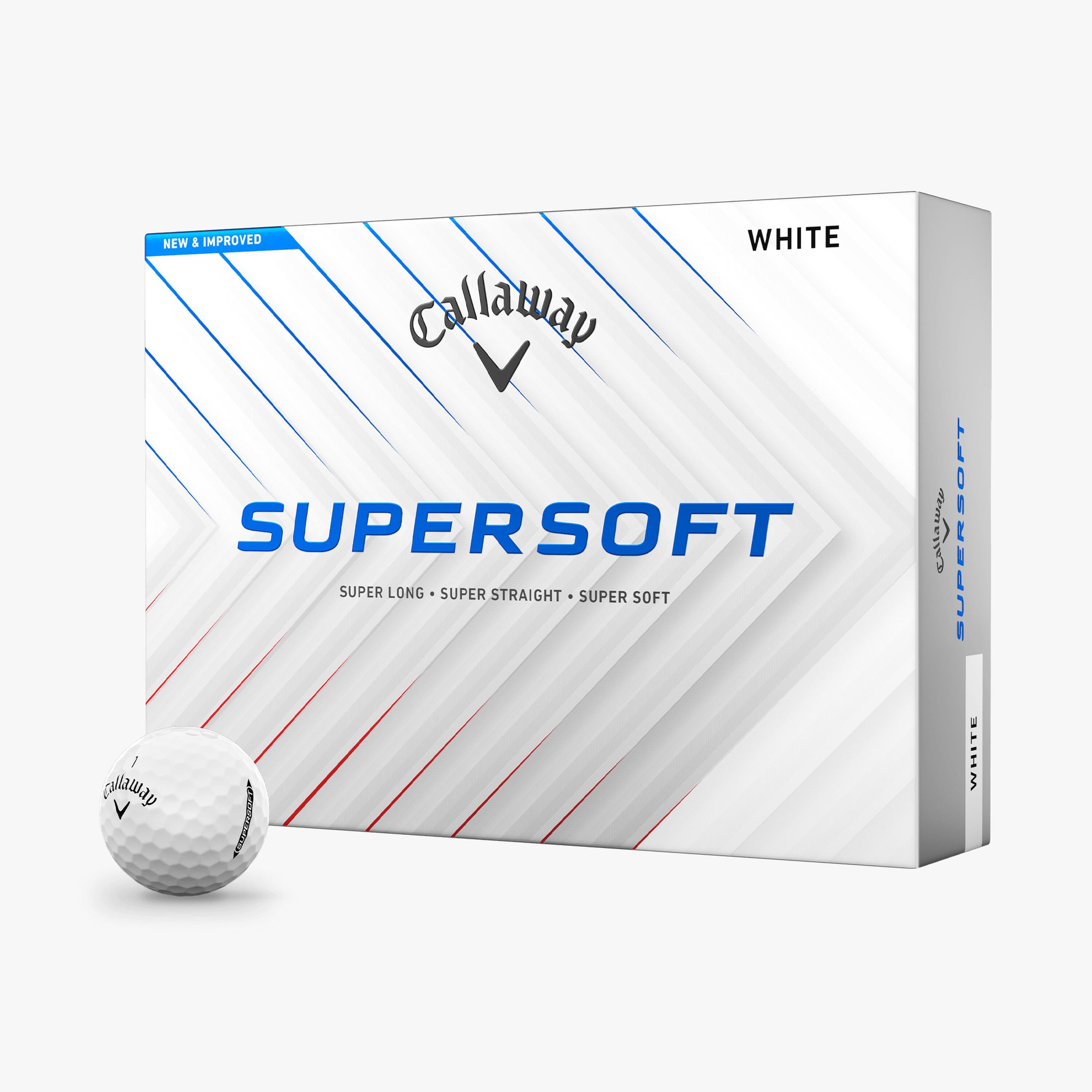
Callaway
Callaway Supersoft Golf Balls (Dozen)
Pick if your irons come out low and you need every bit of height and the least spin you can buy to keep a slice in play.
ifrothgolf earns a commission on purchases made through these links, at no extra cost to you. It never changes what I recommend. Full disclosure.
Side by side
| Specification | TaylorMadeTaylorMade SpeedSoft Golf Balls (Dozen) | CallawayCallaway Supersoft Golf Balls (Dozen) |
|---|---|---|
| Construction | 2-piece | two-piece |
| Compression | sub-50, TaylorMade's softest ball | ultra-low, around 38 |
| Feel | like a marshmallow off the putter | very soft |
| Spin profile | no tour-level greenside spin or check; a touch spinny in the wind for faster swingers | low spin for straighter flight |
| Swing speed fit | slower-swinging golfers | slow and moderate swing speeds |
| Colours | white, yellow and Ink splatter colours (blue, red, green and pink) | white and bright matte colours |
| Quantity | dozen | dozen |
Specs as published by each manufacturer. Rows in grey are where the two match.
Off a slow driver swing, MyGolfSpy's robot clocked the Callaway Supersoft at 122.81mph of ball speed and the TaylorMade SpeedSoft at 122.76. That is five hundredths of a mile an hour, which is nothing, and it is why every argument about these two that starts on the tee goes nowhere. The TaylorMade SpeedSoft at around $30 a dozen and the Callaway Supersoft at around $30 are the two softest balls the big brands make, they are built the same way, and off the driver they are the same ball. Where they differ is further down the bag, and inside the box.
One housekeeping note first. TaylorMade's older value soft ball, the Soft Response, has been replaced by the SpeedSoft, so if that is the name you remember, this is its successor.
Same recipe, two cooks
Both are two-piece balls: a large, very low-compression core under an ionomer cover. TaylorMade builds the SpeedSoft around what it calls PWRCORE and puts its compression under 50, roughly a quarter below its TP5 tour ball. MyGolfSpy's Ball Lab lists the 2026 Supersoft at 44 compression. Neither has a urethane cover, which is the material that grips wedge grooves and stops a ball on a firm green, and neither pretends otherwise.
That construction is a deliberate trade. A soft core lets a slower swing compress the ball properly, and the ionomer cover keeps spin low, which straightens the curve on a slice and adds roll. The cost is speed at the top end and stopping power around the green. MyGolfSpy's line on this is blunt: soft is slow. In its 2026 test the softest ball of all, the Supersoft, was the slowest off the driver at high speed, and at its 86mph driver condition the Supersoft and SpeedSoft were both among the four slowest balls tested. The same write-up adds that less than two miles an hour covered the whole field at that speed, so slow here means slightly, not badly.
The irons are where these two earn their place
This is the result that should interest anyone over sixty, anyone who swings in the 70s or 80s, and anyone playing a heavy winter course. Off a slow 7-iron swing, MyGolfSpy's three fastest balls were the Callaway Supersoft, the TaylorMade SpeedSoft and Amazon Basics. The testers' own reaction was that it was not a typo. The softest balls in the test, the slowest off the driver, were the quickest off the iron. At mid speed the Supersoft tied for fastest off the 7-iron with TaylorMade's Tour Response, and the SpeedSoft was just behind.
So for a slower golfer the case for either ball is not driver distance, which both give away by a fraction. It is iron distance, which both hand back.
Here is the first real split. The Supersoft flies higher. At the slow 7-iron speed it was among the highest-flying balls in the 2026 test, and at mid speed MyGolfSpy picked it as one of the best balls for pairing distance with height, with the caution that it flies high but spins very little, so stopping power is still a question. If your irons come out low and run off the back of the green, that height is a real asset. If you already hit it high enough, it is not worth paying for in spin.
Around the green: neither, but one less so
On MyGolfSpy's 35-yard wedge test the bottom of the spin chart was all ionomer. Of the 48 balls, the Supersoft spun second-least, behind only the Titleist Velocity. The SpeedSoft was fifth from bottom. That is not a big gap, and both are a long way short of any urethane ball, but the direction is consistent with what other testers have found: the SpeedSoft gives you slightly more to work with on a chip. We made that case at length in our SpeedSoft review, including why autumn is when a low-spin ball costs you least, so I will not run it again here.
Inside the box
The second split is the one that does not show up in a launch-monitor average. MyGolfSpy's Ball Lab cut open and measured 36 Supersofts from three boxes this summer. It gave the 2026 ball a quality score of 74, a C grade and a Not Recommended verdict. The driver was compression consistency: individual balls ran from about 40 to about 54, a spread Ball Lab put in the bottom quartile of its database. Three of the 36 were flagged as bad, two for compression and one for uneven layer thickness.
It is worth keeping that in proportion. A 14-point compression spread in a 44-compression ball is not going to wreck a round for someone who loses three balls a side, and plenty of Supersoft loyalists say the ball goes further for them than anything else they have tried. But consistency is the main thing you are buying when you commit to one model, and on the evidence available it is the Supersoft's weak spot. I have not seen an equivalent Ball Lab report on the SpeedSoft, so this is a mark against one ball rather than a pass for the other.
One more data point leans the same way. In its 2026 picks for mid swing speeds, MyGolfSpy named the SpeedSoft as its ionomer choice.
Who should buy which
Buy the SpeedSoft if your driver speed sits somewhere in the 90s, your irons already get airborne, and you would like a chip to do something rather than nothing. It is the more rounded of the two, and the one I would buy for a golfer moving down from a firmer two-piece. It is also the safer default if you are unsure.
Buy the Supersoft if you are at the slow end, your irons come out low, and a slice is the miss that costs you most. Its extra height off the irons and the lowest spin of the pair are aimed squarely at you, and the colour range is wider than anything else at the price. Accept that one dozen may vary more than it should.
Skip both if you swing the driver much over 100mph, because MyGolfSpy's data says a firmer ball will be faster off the tee, or if your short game can use urethane spin. The Golf Ball Finder will steer you in three questions, our TruFeel vs Supersoft comparison covers the slightly firmer Titleist alternative, and the rest of the field sits in the soft feel balls guide. Whichever you pick, buy it by the dozen and keep playing it. Changing balls every month costs more than the gap between these two ever will.
Frequently asked
- Is the TaylorMade SpeedSoft or Callaway Supersoft longer?
- Off the driver they are effectively identical: in MyGolfSpy's 2025 robot test at a slow swing speed the Supersoft produced 122.81mph of ball speed and the SpeedSoft 122.76mph. Off a slow 7-iron in the 2026 test they were two of the three fastest balls of the 48 tested. Distance should not decide between them.
- Which is better for seniors and slow swing speeds?
- Both suit slower swings. The Supersoft flies higher off the irons and spins less, which helps golfers who struggle to get the ball airborne or who slice. The SpeedSoft spins slightly more around the green and is the better all-rounder for swings in the 90s. MyGolfSpy named the SpeedSoft its ionomer pick for mid swing speeds.
- What compression are the SpeedSoft and Supersoft?
- TaylorMade puts the SpeedSoft under 50 compression, about a quarter below its TP5. MyGolfSpy's Ball Lab lists the 2026 Callaway Supersoft at 44, although its measurements of 36 balls ranged from about 40 to 54, a spread it graded C-minus for consistency.
- What replaced the TaylorMade Soft Response?
- The TaylorMade SpeedSoft, which arrived in 2024 as TaylorMade's softest ball. It is a two-piece ball with a low-compression PWRCORE and an ionomer cover, aimed at swing speeds below about 95mph.
Read next
Opinion
August turf quietly changed your golf ball's job, and almost nobody adjusts
Firm summer fairways hand you roll you never had to buy, and firm greens refuse to hold. The 38-compression ball you sensibly chose in April is now optimised for the half of the shot the ground is already doing for you.
Versus
Bridgestone Tour B RX vs Callaway Chrome Soft: one is fitted to your swing speed, the other to your taste
Two premium urethane balls sold on softness, from two brands that decide what soft means in completely different ways. One asks how fast you swing. The other asks what you like.
Review
7.9/10TaylorMade SpeedSoft review: the two-piece ball that still spins a wedge
Sub-50 compression and an ionomer cover, which is supposed to mean nothing happens around the green. Independent launch-monitor testing keeps putting it near 6,000 rpm off a wedge. Here is the golfer that actually helps.