
Bridgestone Tour B RX vs Callaway Chrome Soft: one is fitted to your swing speed, the other to your taste
Two premium urethane balls sold on softness, from two brands that decide what soft means in completely different ways. One asks how fast you swing. The other asks what you like.
By Ross Hamilton · Staff Writer
ifrothgolf earns a commission on purchases made through these links, at no extra cost to you. It never changes what I recommend. Full disclosure.
Part of our guide toBest Soft Feel Golf Balls 2026Put these two boxes side by side and they look like the same purchase. Both are three-piece urethane balls from major manufacturers, both sit a rung below their brand's firmest tour offering, and both are sold on the word soft. The difference is not really in the ball. It is in the question each brand asked before it built one.
Bridgestone asked how fast you swing. Callaway asked what you want the ball to feel like. That is the whole comparison, and it decides which of these two is a fitting answer for you and which is a preference.
Bridgestone splits the range by speed, Callaway splits it by feel
Bridgestone's Tour B family is arranged along a swing-speed line before anything else. The X and XS are built for golfers north of 105mph. The Bridgestone Tour B RX at around $50 is the same three-piece urethane construction tuned for swings under 105mph, which covers the overwhelming majority of people reading this. Bridgestone's own fitting logic points a sub-105 golfer at the RX rather than upselling them to the firmer X, and that is a genuinely unusual thing for a manufacturer to do with its most profitable product.
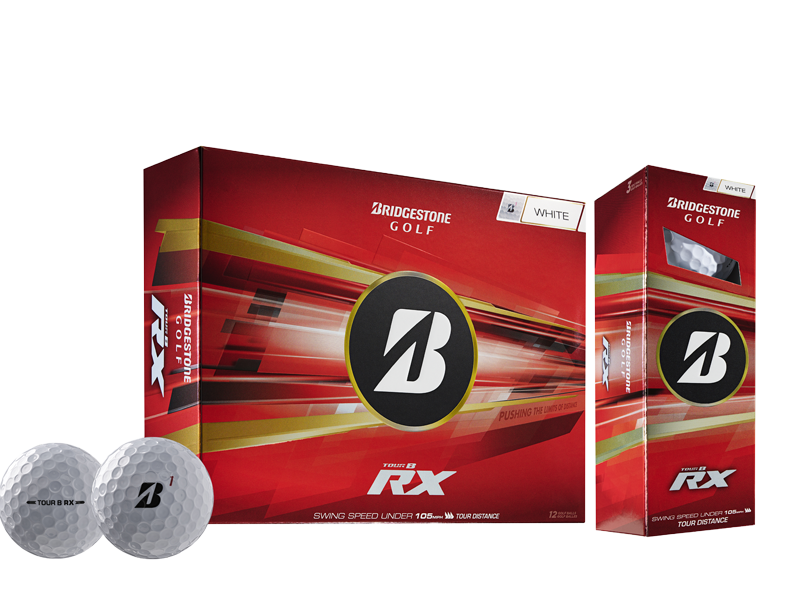
The 2026 version adds VeloSurge and a denser mantle aimed at ball speed, and keeps the REACTIV iQ cover, which is Bridgestone's argument that a cover can behave firm against a driver and soft against a wedge. Treat the cover story as a design intent rather than a promise you will perceive. The speed tuning is the part that changes what happens to your ball.
The Callaway Chrome Soft at around $60 is arranged on a different axis entirely. Callaway's premium range splits by feel and spin: the Chrome Tour is the firmer, faster, spinnier one, and the Chrome Soft is the softer, straighter one. There is no speed gate anywhere in that positioning. It is a cast urethane cover over a low core, around 75 compression, and it is one of the softest balls anyone sells with a genuine tour cover on it. High flight, lower long-game spin, and a muted, quiet strike.
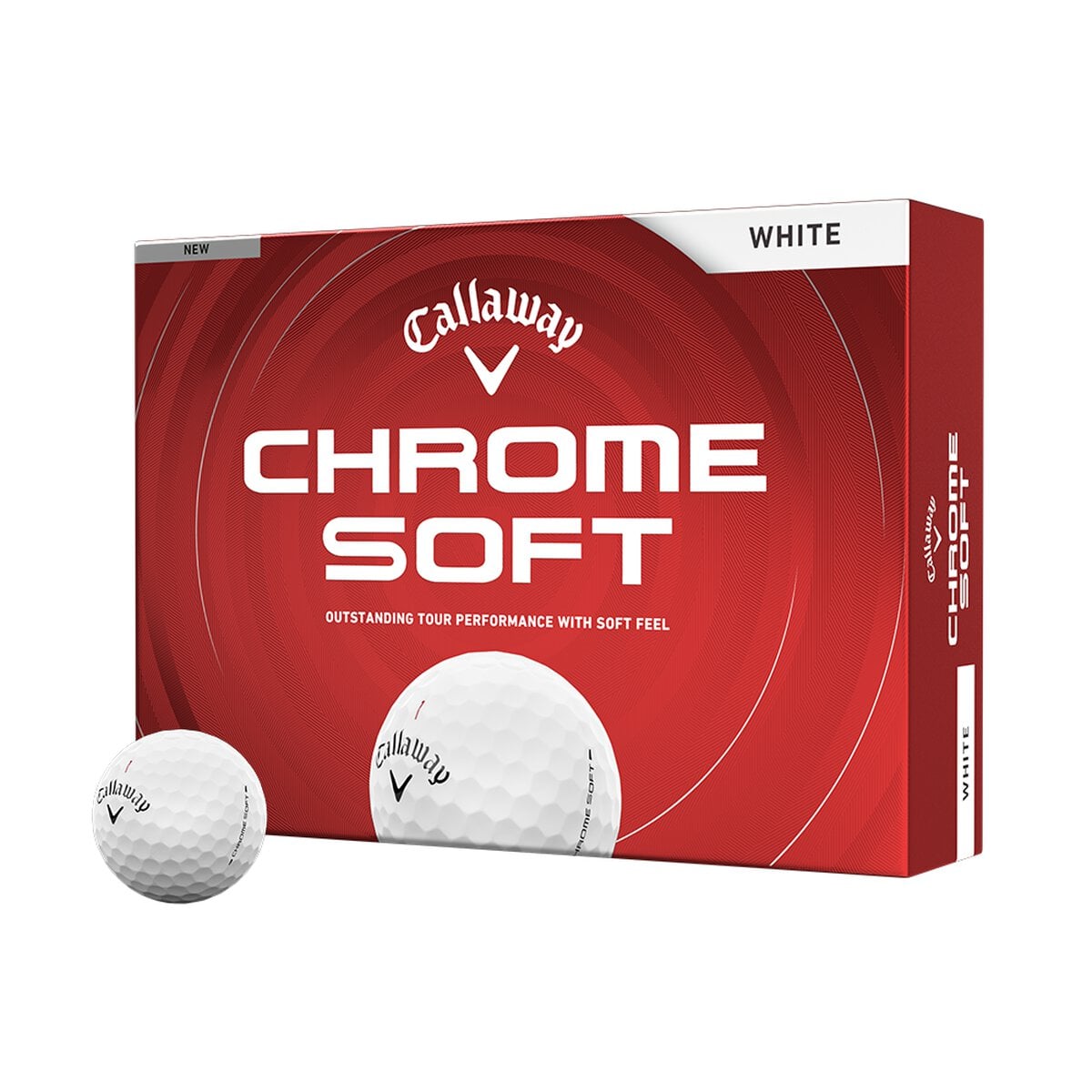
So the Chrome Soft is not the Bridgestone's equivalent. It is the answer to a different question. If Bridgestone had built a ball for the same brief, it would be the RXS rather than the RX.
The tour count is not your answer, and it is the clearest case of that on the shelf
We counted this a fortnight ago: 37 of the 51 tour bags we track play the firmer ball in their family, close to three to one, with Scheffler and McIlroy among the exceptions on the soft side. Go and read the working there rather than taking it from me.
What matters here is the reason behind that lean, because it is the single strongest argument for the ball on the left of this page. Tour players skew firm because they swing between roughly 115 and 125mph and can compress a firm ball fully. That is a fact about their clubhead speed, not a fact about which ball is better made. Read the count as a shopping instruction at 90mph and you have inverted it: you would be buying the ball built for the swing you do not have, on the evidence of players who bought the ball built for the swing they do.
Bridgestone is the only major that has put that logic on the box. Whether the RX is the right ball for you is still a fitting question, but it is at least the right question.
Where you will notice the difference
Two places, and neither of them is the one people talk about.
Long-club flight. This is where a speed-tuned ball earns its keep. If you are under 105mph and playing a firm tour ball, the usual symptom is a flat, dead flight off the driver and long irons, because you are not compressing enough of the ball to get it working. The RX is built to stop that happening. The Chrome Soft attacks the same problem from a different direction, with a high, lower-spinning flight that gets airborne easily. Both will help. They are not doing the same thing.
Feel around the green and on the putter. This is where the Chrome Soft is unmistakable. Around 75 compression against a proper tour ball is not a subtle gap, and it is the reason people who play a Chrome Soft tend to be evangelical about it. Soft is a real preference, it is not a lesser one, and anybody who tells you it is a beginner's choice has not putted with one.
The thing you will not notice is distance off the tee. The gaps between good urethane balls disappear inside your own strike variance, and if a comparison leads with a yardage claim, it is selling you something. We went through why compression explains less than people assume in golf ball compression explained.
Greenside is closer than the price gap suggests
Both have real urethane covers, which is the feature that separates this tier from everything below it and the only one that reliably shows up in your scoring. On a flighted wedge from 60 to 100 yards, both check. The RX's cover is the more aggressive of the two in intent; the Chrome Soft is deliberately the more forgiving, straighter ball, and it gives up a little grab to get there.
That trade is the honest summary of the pair. The Chrome Soft is easier to hit straight and softer to feel. The RX is more precisely aimed at a swing speed and slightly more interested in spin. Neither of those is a flaw.
Who should buy which
Buy the Tour B RX if you swing under 105mph and have never played a ball that admits it. That is most club golfers, and it is the closest thing to a free fitting on the ball wall. It is also the pick if you flight your long clubs too low and suspect the tour ball you have been loyal to is part of the reason.
Buy the Chrome Soft if soft feel is the thing you want most from a golf ball. If you have tried a firm premium ball and found it clicky off the putter, this is the fix, and it is a proper tour-construction ball rather than a compromise. It is also the better answer if your miss is a slice and you want the straightest premium flight you can buy — the Chrome Soft is built to flatten out the sides.
Buy the Chrome Tour instead if you swing hard and picked the Soft by accident. Plenty of golfers reach for the plain name because it looks like the default. If you are over 105mph and score with your wedges, you want the firmer sibling, and we put it against the field in the Chrome Tour review.
Who should skip both
If you lose more than two balls a round, neither of these is a sensible purchase and no amount of cover technology changes that. You would be putting premium urethane into hedges at a rate that dwarfs any performance difference between the two. Play something you can afford to lose and read stop buying premium golf balls, or look at the genuinely good cheap urethane covered in the case against tour-ball pricing.
The second group is smaller but real: if your approach shots run out regardless of what you are playing, you are buying greenside spin that the shot never asks for. Urethane only pays when a wedge is landing on a green with a chance of stopping.
The verdict
I would buy the RX, and the reason is not that it is the better golf ball. It is that it is the only one of the two that made a decision on my behalf using a number I can actually measure about myself. Callaway's ball is excellent and its positioning asks me to know what I like; Bridgestone's asks me how fast I swing, which is a question with an answer.
If you already know you like soft and you are not chasing the last unit of spin, the Chrome Soft is the more enjoyable ball to play and there is nothing clever to say against it. If you do not know, get your driver speed measured — most clubs will do it in five minutes — and let the number pick. That is a better use of an afternoon than another dozen of the ball you have always bought.
Frequently asked
- Is the Bridgestone Tour B RX a tour ball or a slower-swing ball?
- Both. It uses the same three-piece urethane construction as the Tour B X and XS at the top of Bridgestone's range, but the core and cover are tuned for swing speeds under 105mph rather than above it. It is a genuine premium ball aimed at the speed most club golfers have.
- Is the Callaway Chrome Soft a beginner ball?
- No. It has a cast urethane cover, which is the feature that separates premium balls from everything below them, and it delivers real greenside spin. It is soft by design rather than cheap by construction. The firmer, spinnier Chrome Tour sits above it for faster swingers, but the Chrome Soft is a full-price tour-construction ball.
- Should I play a firmer ball because most tour players do?
- Not on that evidence alone. Tour players swing roughly 115 to 125mph and can fully compress a firm ball, which is why they gravitate to the firmer half of each family. At 90mph the same ball often flies flatter and shorter for you. Get your driver speed measured and choose from that instead.
- How different will the two feel on the putter?
- Noticeably. The Chrome Soft is one of the softest premium balls sold, at around 75 compression, and the Tour B RX is firmer at impact. Feel off the putter is the difference you will register on the first green, and it is also the one you adapt to within a few holes, so do not let it decide the purchase on its own.
Read next
Opinion
August turf quietly changed your golf ball's job, and almost nobody adjusts
Firm summer fairways hand you roll you never had to buy, and firm greens refuse to hold. The 38-compression ball you sensibly chose in April is now optimised for the half of the shot the ground is already doing for you.
Review
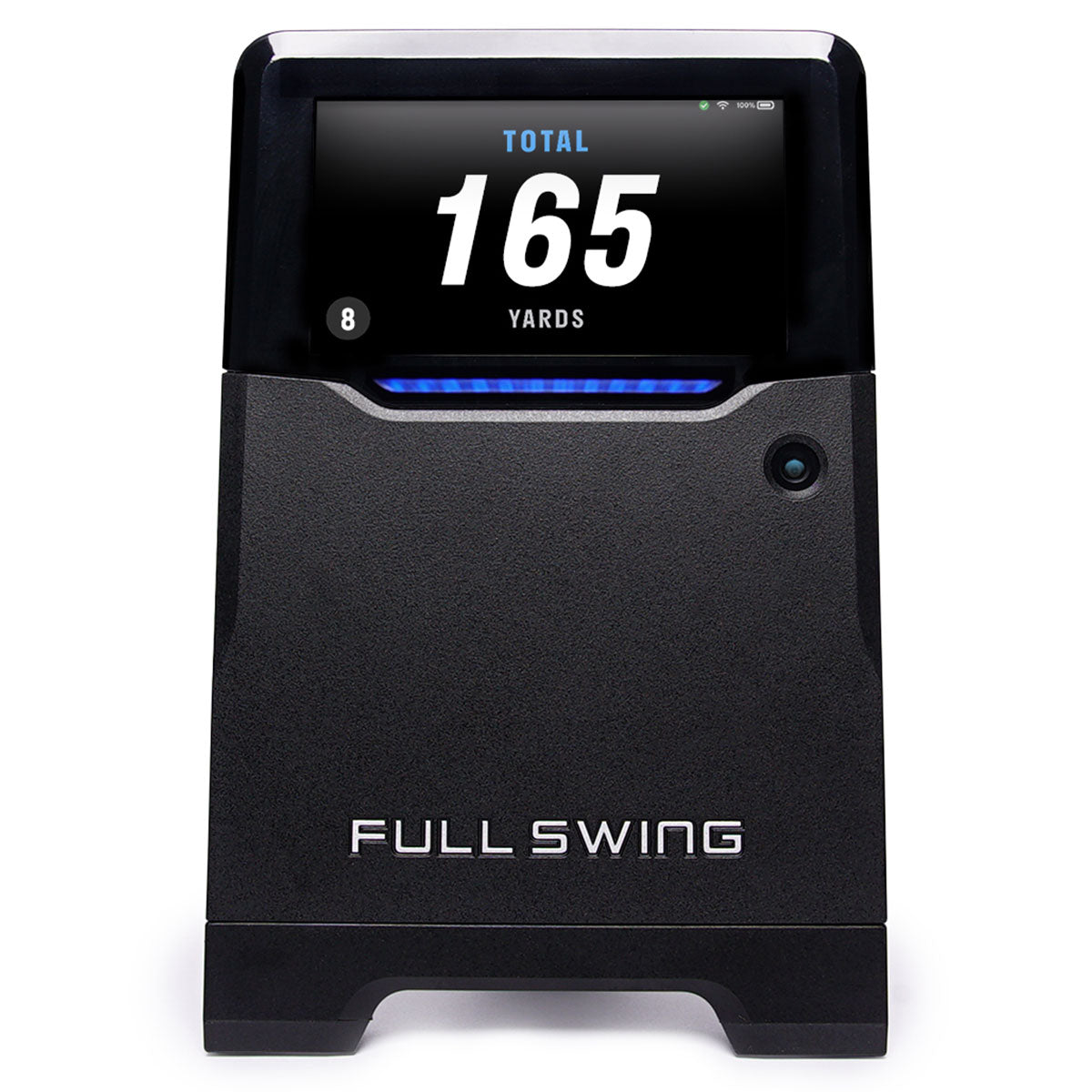
7.9/10Full Swing KIT review: the tape measure decides this, not Tiger
Tour pedigree, TGL on ESPN, and radar good enough to be checked against a Trackman outdoors. It also wants eighteen to twenty feet of room, which rules out most of the garages people buy it for.
Versus
Trackman iO vs Uneekor EYE XO2: the year-one trap
Both mount overhead, both want ten feet of ceiling, and about $3,000 separates them on the shelf. Then Trackman's included first year runs out, and the gap starts growing by $1,100 a year.