
Evnroll EZPZ vs L.A.B. DF3: delete the torque, or control it?
Two putters, two opposite answers to the same problem. The DF3 removes face rotation entirely; the EZPZ slows it down and keeps a normal putter's look. Your stroke decides which is right.
By Ross Hamilton · Staff Writer
ifrothgolf earns a commission on purchases made through these links, at no extra cost to you. It never changes what I recommend. Full disclosure.
If you have a genuine straight-back-straight-through stroke, or you have spent years fighting a face that opens and shuts on its own, the L.A.B. Golf DF3 is the stronger buy. If you putt with a slight arc — which is most golfers — and you want a putter that looks normal behind the ball, the Evnroll EZPZ is the one. That is the whole comparison in two sentences, and everything below is why.
These two are the cleanest philosophical head-to-head in putting right now. Both start from the same observation: the face rotating open and closed through the stroke is where most missed short putts come from. They then take opposite sides. One engineers the rotation out of existence. The other leaves it in and slows it down.
The DF3: take the torque away entirely
L.A.B. stands for Lie Angle Balance, and the L.A.B. Golf DF3 is the club that took the idea from cult curiosity to the third-biggest putter brand in golf. The head is engineered so the face does not want to twist during the stroke at all — where a conventional putter opens and closes and relies on your hands to square it up in time, the DF3 simply stays square. Off-centre strokes hold their line noticeably better. Golfers who have fought a wristy, handsy action for years tend to describe it as putting with the steering wheel finally straight.
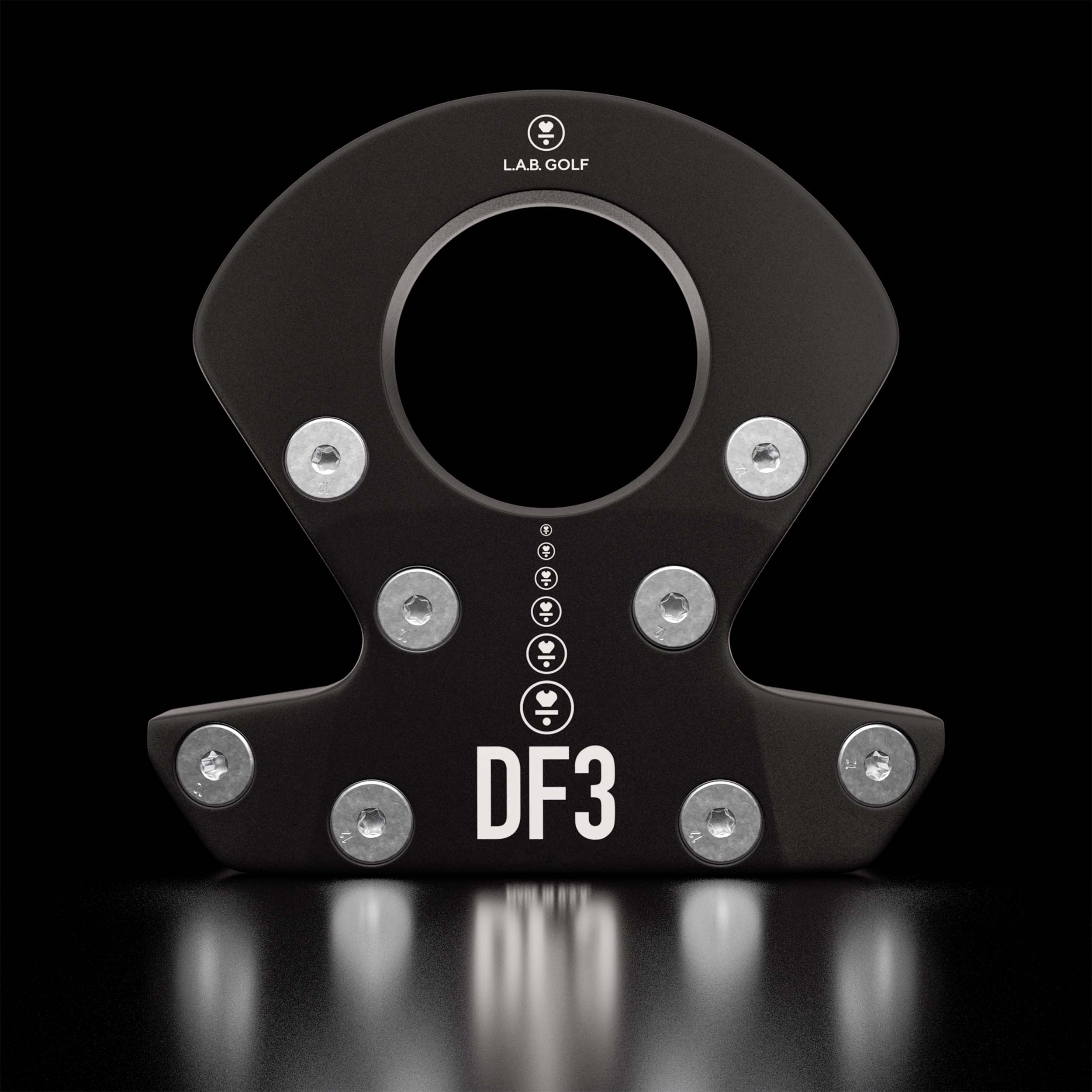
The costs are equally real. It is a wide-bodied, striking-looking head that a lot of golfers never warm to behind the ball, and the shaft arrangement that makes the physics work also makes the setup feel unfamiliar for the first few hundred putts. It has to be built to your length and lie — more so than a normal putter, because the balance is only correct at the spec it was built for — so it is a fitted purchase, not a rack purchase. It is sold direct, and popular finishes go out of stock. And at $550 it is priced like a premium blade. There is more detail in our full DF3 review if it is the one you are leaning towards.
The EZPZ: keep the torque, just slow it down
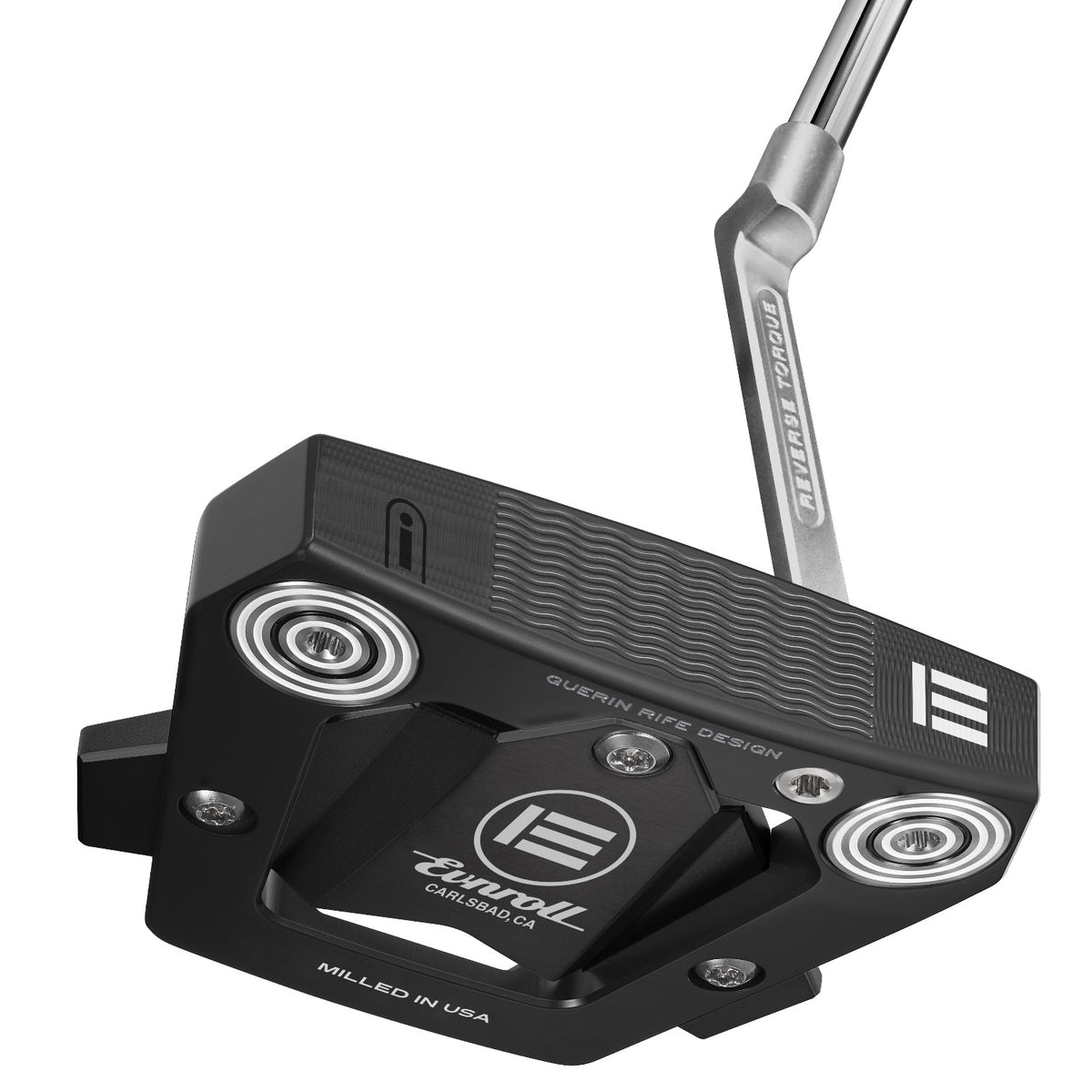
Guerin Rife spent a decade building Evnroll on face milling, and the Evnroll EZPZ is him arguing the other side of the biggest debate in putting. The shaft stays where a normal putter has it, so you get traditional offset and a familiar picture at address. The work is done by a forward-leaning hosel that points slightly toe-ward of the head's centre of gravity, which drops roughly 60 per cent of the head's mass below the shaft axis.
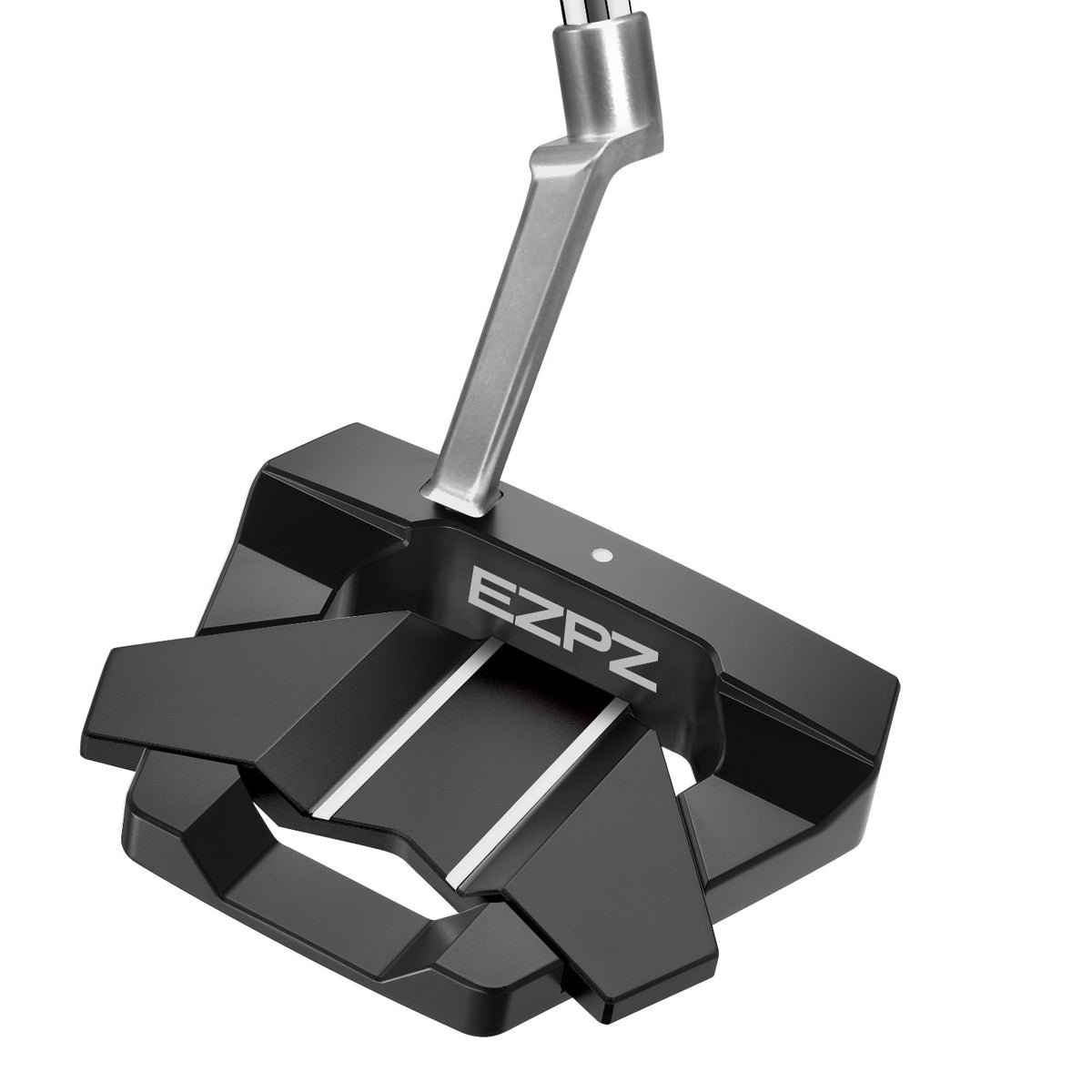
That heel-down balance gives the heel more momentum through the stroke, which slows face rotation rather than freezing it. Evnroll's claim is a square zone twice the size of a conventional putter's. The head is a fully milled high-MOI mallet — a light 6061 aluminium chassis with a heavy 303 stainless weight wing at the back — with SweetFace 2.0 milling and the UST Mamiya ALL-IN shaft as standard. At $450 it undercuts the DF3, though not by enough to make price the deciding factor.
Why the address look is the actual decision
It is tempting to treat this as a physics argument and pick whichever number is bigger. In practice the deciding variable is whether you can stand over the thing. Zero-torque putters ask you to accept a setup that looks and sits unlike any putter you have used, and a meaningful share of golfers who try one bounce off it in the shop for exactly that reason — not because it did not work, but because it looked wrong. If you want the mechanics of that argument rather than the marketing version, we broke down what zero torque actually does separately.
The EZPZ is explicitly aimed at those golfers. It is the same problem approached from the side of the player's existing stroke instead of against it. That is a design compromise, and it should be read as one: you get less rotation resistance than a true zero-torque head, in exchange for a putter you will actually pull out of the bag.
Match it to your stroke, not to the technology
A genuine straight-back-straight-through stroke is the DF3's home ground. So is a stroke that is chronically inconsistent in face angle at impact — if your start line varies wildly on five-footers, taking the rotation out of the system is a hardware fix for a hands problem, and the DF3 is the most complete version of that fix on sale.
A slight-arc stroke is the EZPZ's. Arc putters are working with rotation, not against it, and a head that refuses to rotate can feel like it is fighting the shoulders. Slowing the rotation gives you a bigger margin without asking you to relearn the motion. If your putting is already good and your misses are speed rather than line, neither putter is your problem and you should spend the money on a lesson.
Availability, and the honest caveat on the EZPZ
The DF3 is an established club with a track record: it is the putter J.J. Spaun holed from 64 feet with to win the 2025 US Open, and the tour and creator switches have not stopped since. You know what you are getting, and if it is out of stock it is because demand outran supply again, not because it is unproven.
The EZPZ is new. It went on sale in mid-August 2026 and it is right-hand only at launch, in 33, 34 and 35 inch plus a 38-inch Tour Spec, with a left-handed version slated for winter. Evnroll's own store is currently taking pre-orders with shipping quoted at two to three weeks, so if you want a putter in your hands this month, factor that in. It also has no tour record yet, because there has not been time for one.
The winner, by player type
Buy the DF3 if you putt straight back and straight through, if face control is measurably your weakness, or if you have already tried a zero-torque putter and liked what it did. Buy the EZPZ if you putt with a slight arc, if you have picked up a zero-torque putter and immediately disliked how it sat, or if a conventional address picture is non-negotiable for you. Buy neither if your putter already suits you and your misses are pace — this is the most fitting-dependent category in golf, and the technology only pays out when it matches the stroke you already own.
Frequently asked
- Is the Evnroll EZPZ a zero-torque putter?
- No, and that is deliberate. Zero-torque designs run the shaft axis through or near the head's centre of gravity so the face barely rotates at all. The EZPZ keeps a conventional offset hosel and instead redistributes mass so that around 60 per cent of the head sits below the shaft axis, which slows face rotation rather than eliminating it. It is designed for golfers who want the benefit without the unusual setup.
- Which is better for an arc putting stroke?
- The EZPZ. An arcing stroke works with a degree of face rotation, so a head engineered to resist rotation entirely can feel like it is fighting the motion. Slowing rotation widens the margin for error while leaving the stroke you already own intact. A true straight-back-straight-through stroke is where the DF3's approach makes the most sense.
- Can I buy the Evnroll EZPZ left-handed?
- Not at launch. The EZPZ went on sale in mid-August 2026 in right hand only, in 33, 34 and 35 inch lengths plus a 38-inch Tour Spec model. A left-handed version has been slated for winter 2026. Evnroll's own store has been quoting roughly two to three weeks for shipping on pre-orders.
- Does the L.A.B. DF3 need a custom fitting?
- Effectively yes. Lie angle balance is only correct at the length and lie the putter was built to, so buying one off a rack undermines the mechanism that makes it work. L.A.B. builds to order and sells direct, which is why lead times stretch when a colourway goes viral.
Read next
Review
7.9/10Full Swing KIT review: the tape measure decides this, not Tiger
Tour pedigree, TGL on ESPN, and radar good enough to be checked against a Trackman outdoors. It also wants eighteen to twenty feet of room, which rules out most of the garages people buy it for.
Versus
Trackman iO vs Uneekor EYE XO2: the year-one trap
Both mount overhead, both want ten feet of ceiling, and about $3,000 separates them on the shelf. Then Trackman's included first year runs out, and the gap starts growing by $1,100 a year.
Versus
Uneekor EYE XO2 vs Foresight GC3: ceiling or floor?
About $4,000 separates them, but they're not really rivals — one lives in your ceiling forever, the other sits on the floor and travels. The cheaper one is also the one with no subscription.