
Foresight QuadMAX review: a coach's instrument for the range as much as the bay, and a GC3 covers the home sim
Four cameras, 18 parameters, a touchscreen and a battery that outlasts a range day. The QuadMAX is the machine fitting bays are built around, and the people who should own one are the people who use its data for a living.
By Ben Marsden · Reviews Editor
The verdict
Excellent
What's great
- Reads the club-delivery numbers a fitter or coach acts on: path, face angle, impact location and closure rate
- Touchscreen, internal storage and a 7 to 9 hour swappable battery mean a full range day with no laptop and no socket
- At 2.86kg in its own carry bag it is as portable as the radar unit it gets compared with
Watch out
- Club data depends on Foresight's dot markers on the clubface, and a gaming PC is still needed to run it as a simulator
- A floor unit with a handedness, priced for professionals: a home room built for playing courses will never read most of what it measures
Bottom line — The best camera-based instrument Foresight makes and the right purchase for fitters, coaches and the rare owner who acts on club data indoors and out; anyone buying a home simulator should spend about a third of the money on a GC3.
Foresight Sports
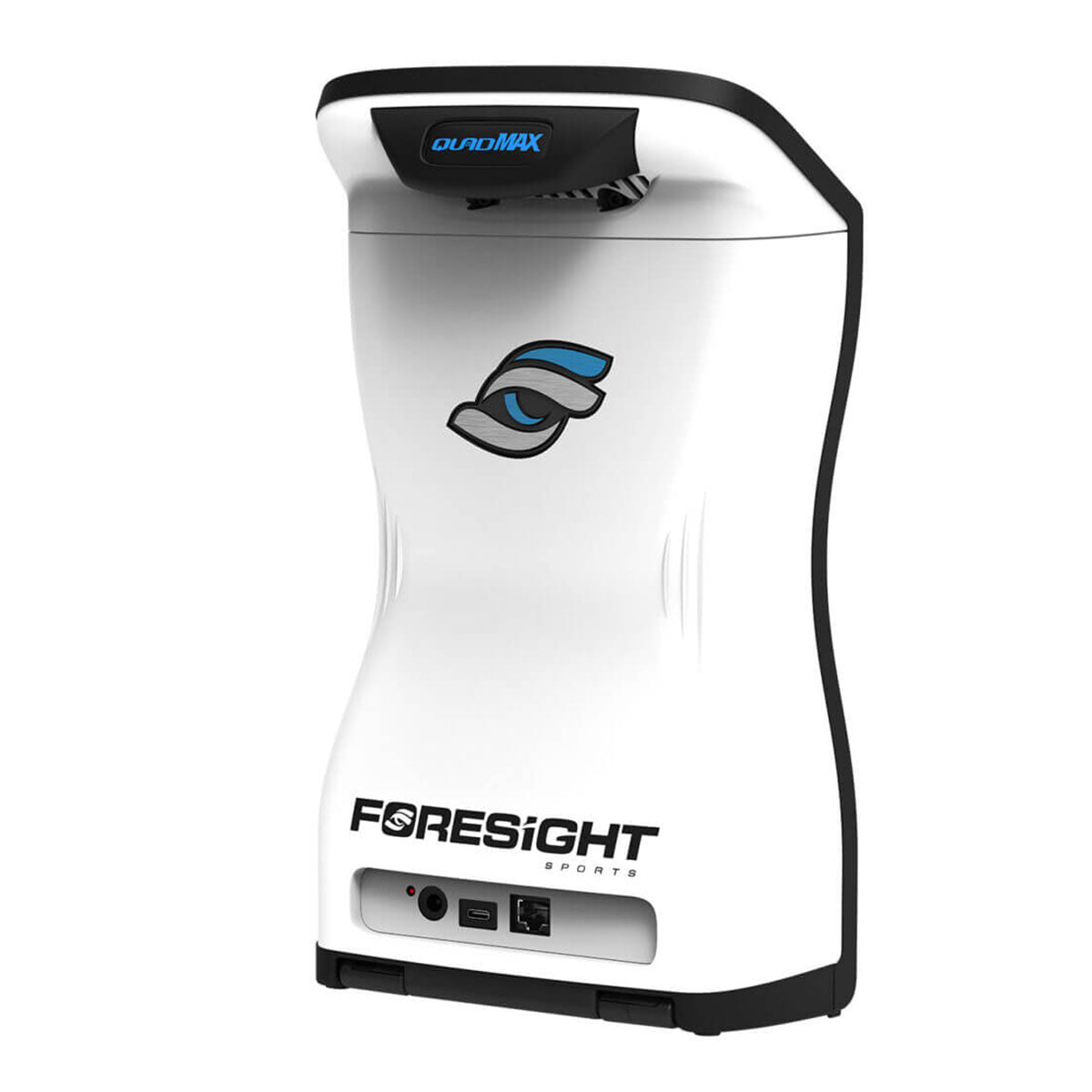
Foresight QuadMAX Launch Monitor
ifrothgolf earns a commission on purchases made through these links, at no extra cost to you. It never changes what I recommend. Full disclosure.
Walk into a club-fitting bay and the thing on the floor beside the ball is, more often than not, Foresight. A small grey box angled at the tee, a fitter watching a screen, and a conversation about face angle that ends with a different head on the shaft. The Foresight QuadMAX is the current version of that box, and the question this review has to answer is narrower than whether it is any good. It is whether you are the person it was built for.
It costs $20,000. Foresight unveiled it at the PGA Show in January 2024 as the successor to the GCQuad, and it remains the top of the company's floor-standing line. We have already put it against the Trackman 4 on the question of how much room each one needs, in QuadMAX vs Trackman 4, so I am not going to rerun that argument. This is the QuadMAX on its own terms: who gets their money back from it, and who should spend a third of it on something else.
What four cameras actually read
Four high-speed cameras sit beside the ball and photograph club and ball through impact. From those frames the unit reports 18 measured parameters. On the ball side that is ball speed, launch angle, side angle, total spin, spin axis, carry, apex, descent angle and how far offline the shot finished. On the club side it is head speed, smash factor, club path, angle of attack, loft and lie at impact, face angle, impact location and closure rate.
The second list is the reason the machine exists. Path, face, strike location and closure rate are the numbers a fitter uses to change a head or a shaft and a coach uses to change a swing. Ball data on its own tells you what happened. Club data tells you why, and the why is what somebody is being paid to fix.
One condition attached to that, and it is not on the box art. Club data is enabled by Foresight's four-dot club markers, small stickers that go on the clubface and ship with the unit. The balls need nothing. So a coach hands a pupil a marked club, and a fitter keeps marked heads on the cart. For a private owner it means the full data set arrives only on clubs you have prepared.
What changed from the GCQuad is the working day
Foresight did not reinvent the measurement. The QuadMAX runs on the same four-camera platform as the GCQuad, and that continuity is part of the sale: a fitter replacing an old unit is not starting again with numbers that disagree with last year's. What changed is everything around the cameras.
There is a touchscreen on the unit with a customisable tile layout Foresight calls MyTiles, so you choose which numbers sit in front of you without a laptop in the bay. There is internal memory Foresight rates at up to two billion shots, which is a number designed to end a conversation rather than inform one, but the practical point stands: sessions live on the device. Apex, descent angle and offline are reported on the unit itself, three ball measurements the GCQuad did not give you. There is a speed-training mode and phone pairing by NFC or QR code.
And the physical package got easier to carry. Foresight lists it at 2.86kg and 12.5 by 7 by 4 inches, says it is 15 per cent lighter than the GCQuad thanks to magnesium internals, and it runs on a 12,000mAh lithium-ion battery rated at seven to nine hours that can be swapped in the field when a lesson day runs long.
It is not a bay-only machine
This is the part worth correcting, because our own head-to-head leaned on the Trackman 4 as the box that does both worlds. For full radar flight on a range, it still is. But the QuadMAX is not stuck indoors. Foresight sells it explicitly from the range to the course to the studio, it weighs about 140 grams lighter than the Trackman's 3.0kg, and its rated battery life is roughly double the Trackman's four hours-plus.
So if outdoor use is the only thing pulling you towards radar, take it off the list: both go outside. What separates them out there is how they measure. Radar watches the whole flight. Cameras photograph the launch and the strike in detail, then calculate the rest. If the question you care about is what the club did, the QuadMAX answers it with more precision for less money. If the question is what the ball did over two hundred yards of real air, radar is the purer read.
Who gets their money back
Three people, and I would be surprised if you are a fourth.
The fitter. This is the instrument the job is built around, and the price is an operating cost recovered across hundreds of fittings. Club delivery data is the product a fitting bay sells. There is not much to deliberate here.
The coach. The changes from the GCQuad read like a list written by coaches: numbers on the device, sessions stored on the device, a battery that covers a full teaching day, a carry bag, nothing to plug in on a range. A coach who teaches outdoors in summer and in a studio in winter gets one instrument and one set of numbers for both.
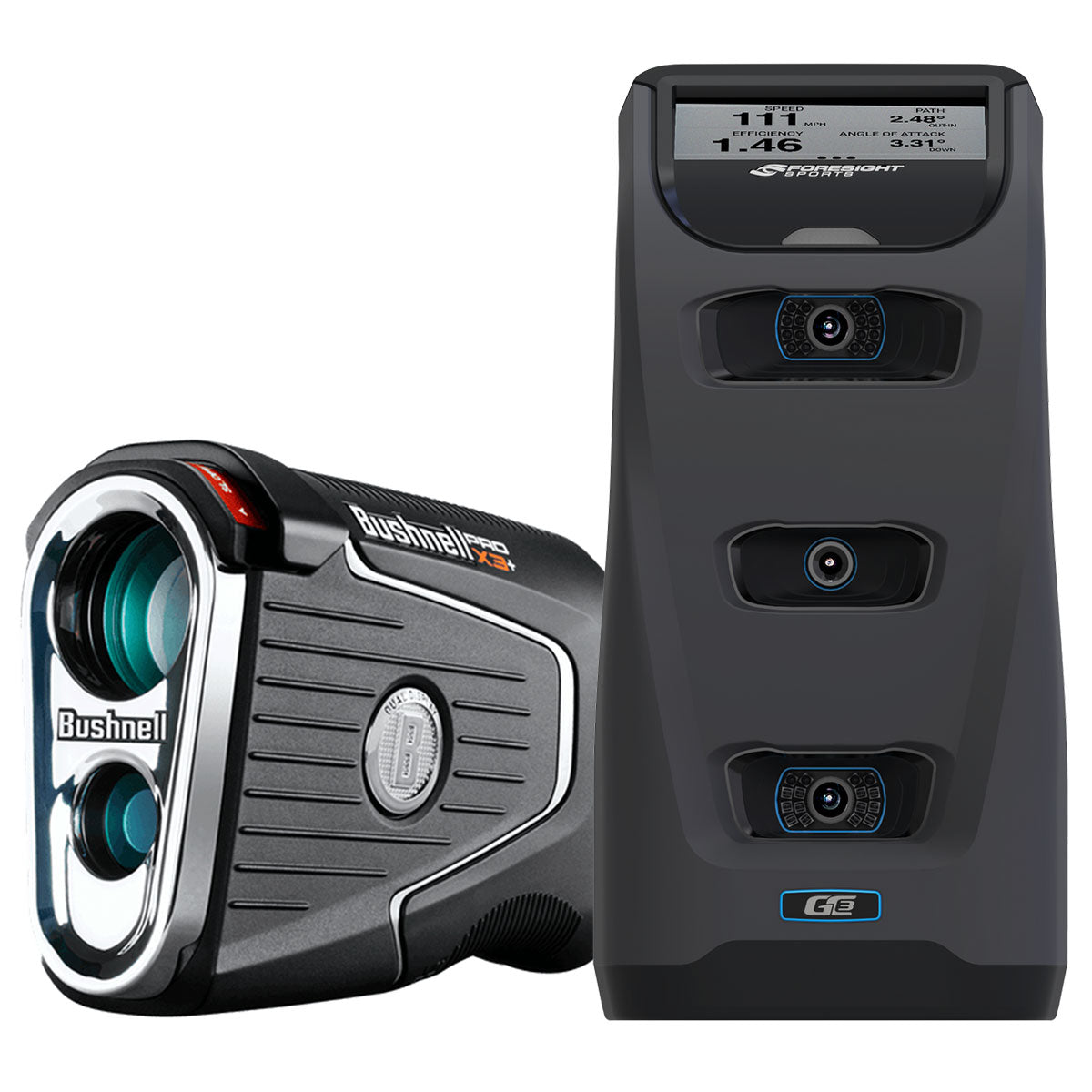
The serious owner who also practises outside. The one private buyer it makes sense for is the player who would rather have the same numbers on the range in July as in the garage in January, and who will act on face angle and strike location rather than glance at carry. PlayBetter's listing currently ships it with a Bushnell Pro X3+ LINK rangefinder, which says plenty about who it is aimed at: somebody whose practice data is meant to follow them onto the course. If that is you, the money is defensible. If you are telling yourself it might be you, it isn't.
Who should buy a GC3 or a Falcon instead
If the room is mainly for playing courses, the Foresight GC3 with LINK is the Foresight I would buy. Three cameras rather than four, ball data that holds up in a shallow garage, indoor and outdoor use, every feature included with no subscription, and the same LINK hook-up to a Bushnell rangefinder. It costs $7,000, about a third of the QuadMAX. What you give up is the depth of club data, which is exactly the part a Saturday-night round never reads. We went through its one software asterisk in the GC3 with LINK review.
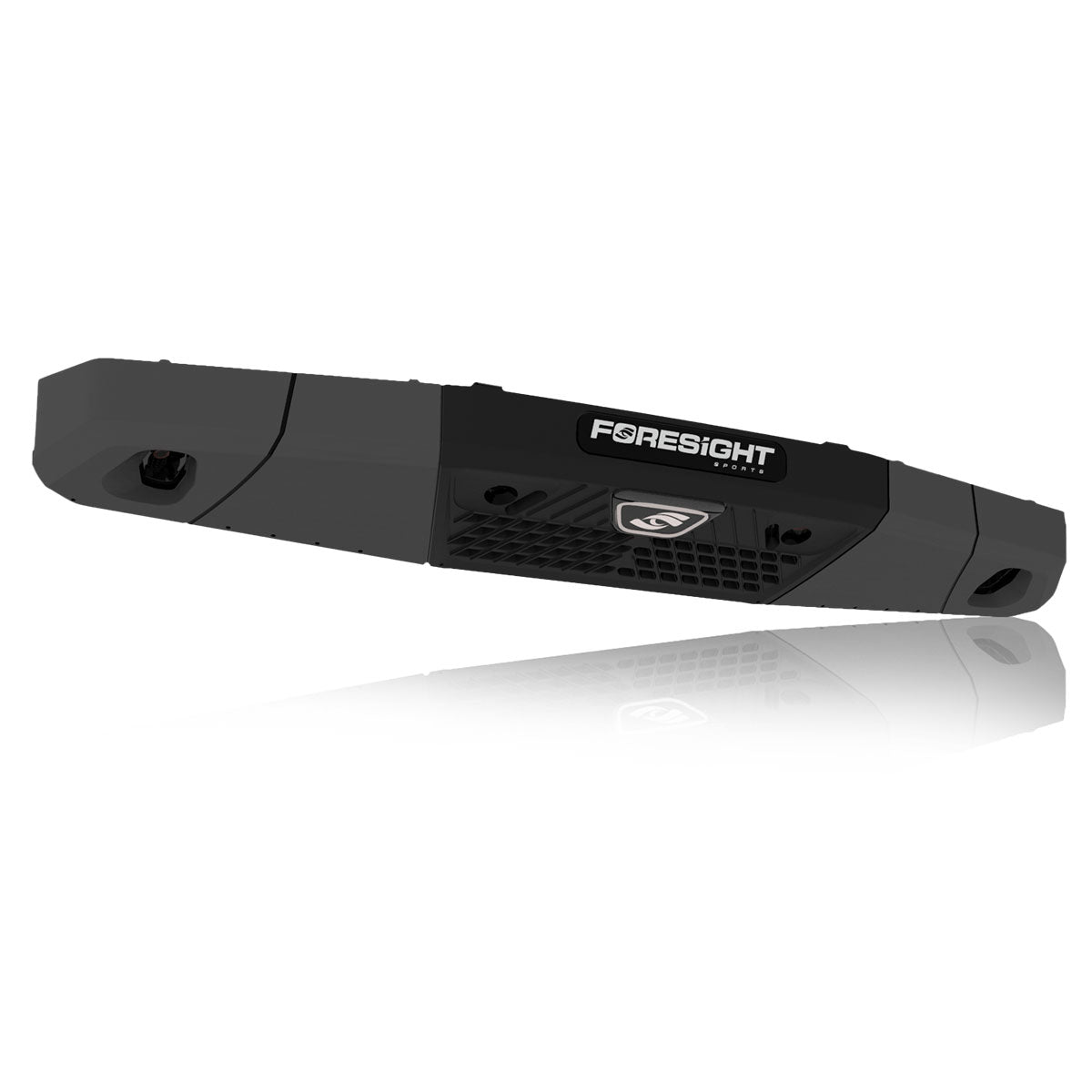
If what you want is a permanent bay where nobody walks around a box on the floor and a left-hander and a right-hander can share without moving anything, the Foresight Falcon is the better architecture at $17,000. It mounts overhead, reads ball and club, and asks for a ceiling you are allowed to drill and enough height above the hitting zone to fit it. That is a room decision more than a data decision, and it is covered in full in the Falcon review.
Two practical notes on the QuadMAX that apply whichever way you lean. It is a floor unit with a side, so a household with both handednesses will be moving it. And to run it as a simulator you still need a gaming PC, which PlayBetter lists as sold separately. Software bundles vary by retailer, so check what the box you are buying includes. If you are planning a room around any of these, run the numbers through the Sim Room Architect before the shortlist, not after.
The verdict
The QuadMAX is the most complete camera-based launch monitor Foresight makes, and the improvements over the GCQuad are the right ones: they make a professional instrument easier to work with rather than claiming to measure something new. The surprise is how portable it is. It is a range tool as much as a bay tool, and that widens the case for coaches in particular.
It is still a professional's machine at a professional's price. Buy it if club delivery data is how you earn a living, or how you have decided to improve, and you will use it both indoors and out. Buy a GC3 if you want Foresight's cameras in a home room for playing golf. The full field sits in our premium launch monitors guide, and I would rather point you down it than up it.
Where to buy
8.4/10Foresight Sports
Foresight QuadMAX Launch Monitor
The four-camera unit the fitting bays actually use, with the screen and the storage on board.
ifrothgolf earns a commission on purchases made through these links, at no extra cost to you. It never changes what I recommend. Full disclosure.
Frequently asked
- What is the difference between the Foresight QuadMAX and the GCQuad?
- Both use the same four-camera photometric platform, so the core measurement is shared. The QuadMAX adds an onboard touchscreen with a customisable display, internal storage rated to around two billion shots, apex, descent angle and offline reported on the device, a speed-training mode and NFC or QR pairing. It is also lighter, at 2.86kg, with a 12,000mAh swappable battery rated at seven to nine hours.
- Can the Foresight QuadMAX be used outdoors?
- Yes. Foresight markets it for the driving range and the course as well as indoor studios and simulators. It is battery powered, comes with a carry bag and weighs 2.86kg, which is close to the weight of a Trackman 4.
- Does the QuadMAX need stickers on the club or ball?
- The ball needs no marking. Club data such as path, face angle and impact location is enabled by Foresight's four-dot club markers, which are applied to the clubface and included with the unit. Without them you still get ball data.
- Is the Foresight QuadMAX worth it for a home golf simulator?
- For most home rooms, no. Its value is in club delivery data that fitters and coaches act on. A home simulator used mainly for playing courses is better served by the Foresight GC3, which uses three cameras, includes all features with no subscription and costs about a third as much. The Foresight Falcon suits a permanent overhead installation.
Read next
Review
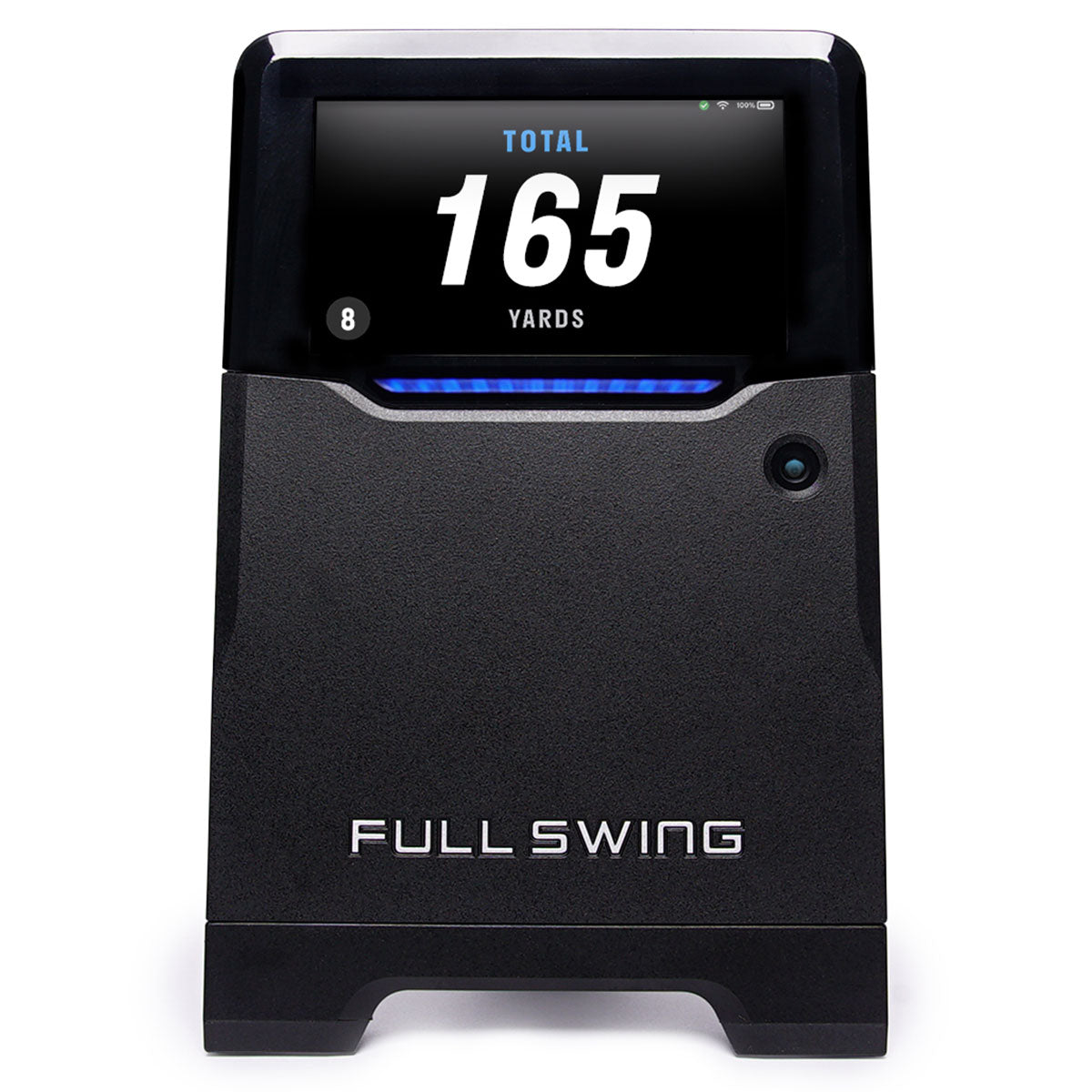
7.9/10Full Swing KIT review: the tape measure decides this, not Tiger
Tour pedigree, TGL on ESPN, and radar good enough to be checked against a Trackman outdoors. It also wants eighteen to twenty feet of room, which rules out most of the garages people buy it for.
Versus
Trackman iO vs Uneekor EYE XO2: the year-one trap
Both mount overhead, both want ten feet of ceiling, and about $3,000 separates them on the shelf. Then Trackman's included first year runs out, and the gap starts growing by $1,100 a year.
Versus
Uneekor EYE XO2 vs Foresight GC3: ceiling or floor?
About $4,000 separates them, but they're not really rivals — one lives in your ceiling forever, the other sits on the floor and travels. The cheaper one is also the one with no subscription.