
Foresight QuadMAX vs Trackman 4: cameras beside the ball, radar that needs the room
The two machines every other launch monitor gets benchmarked against, about 30 per cent apart on the shelf. The number that decides between them is not on either spec sheet — it is the distance from where the ball sits to the wall behind you.
By Marcus Bell · Simulator & Indoor Golf Writer
ifrothgolf earns a commission on purchases made through these links, at no extra cost to you. It never changes what I recommend. Full disclosure.
Part of our guide toBest Premium Launch Monitors 2026The Foresight QuadMAX and the Trackman 4 are the two reference machines in this business. When a review says a launch monitor was checked against a Trackman, this is usually the box it was checked against. When a fitting bay quotes you numbers off four cameras, they are usually Foresight's. Between them they are the closest thing golf has to a standard.
Which means the interesting question is not which one is more accurate. It is which one your room can take, and that is a tape-measure question, not a spec-sheet one.
Cameras beside the ball, radar behind it
This is the whole comparison in one paragraph, so it is worth being precise about it.
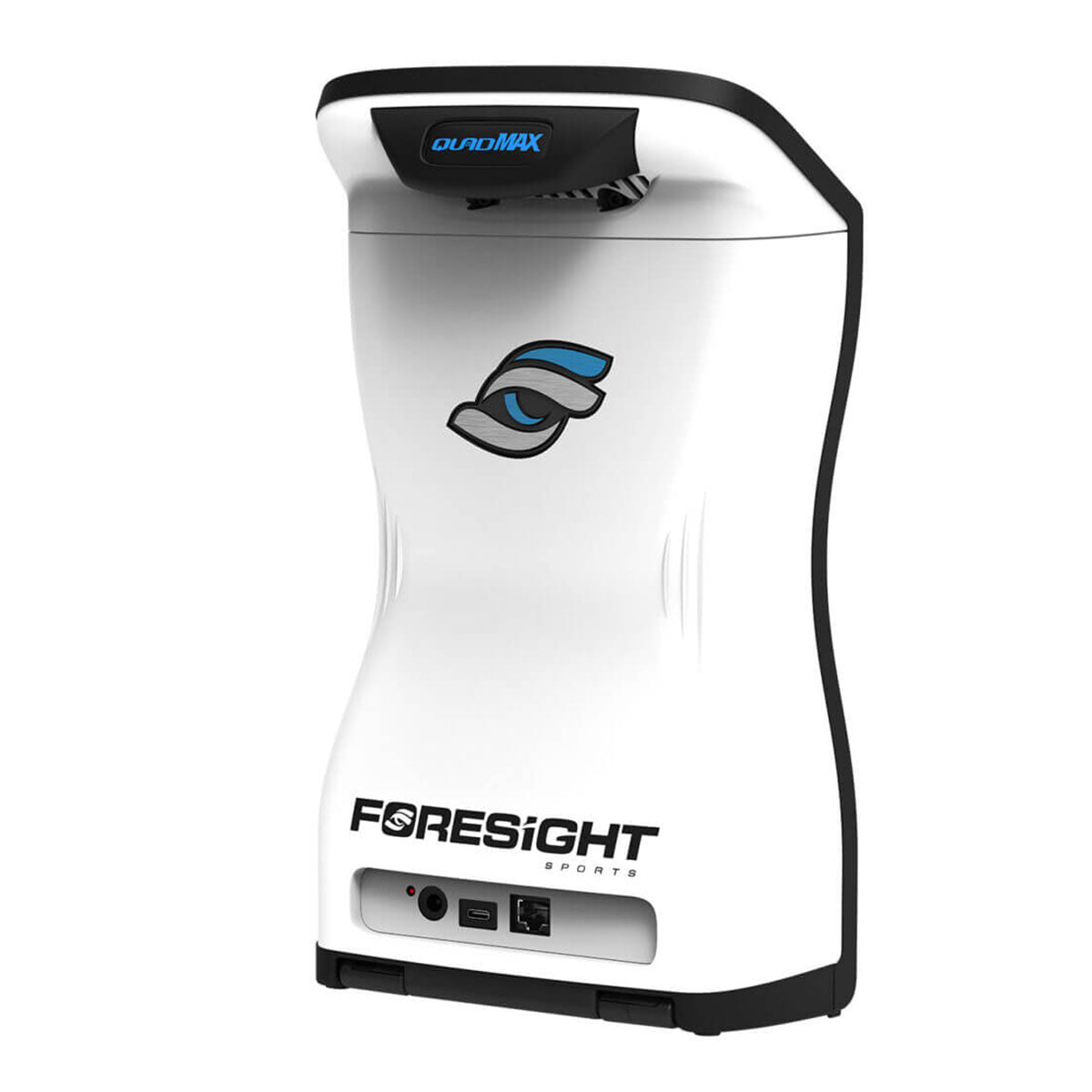
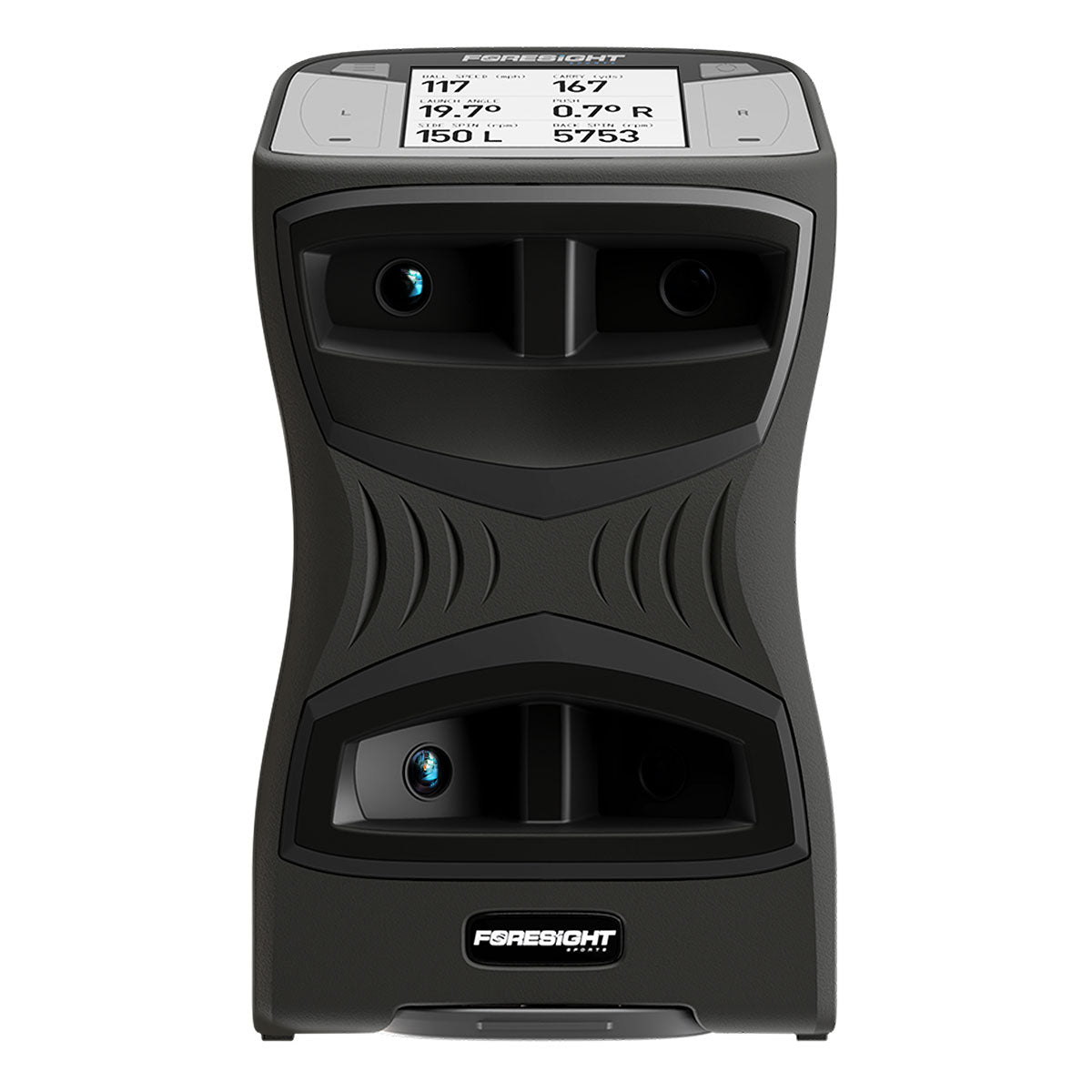
The QuadMAX is photometric. Four high-speed cameras sit beside the ball, off to one side, and photograph the club and ball through impact. That is how it reads club delivery — path, face angle, where on the face you hit it — without needing to watch the ball go anywhere. It reports 18 measured parameters, has an onboard touchscreen with a configurable tile layout so you can read numbers without a laptop in the bay, and carries internal memory Foresight rates at up to two billion shots. FSX Play, FSX 2020 and 25 courses come with it, so it arrives as a simulator rather than a sensor looking for software.
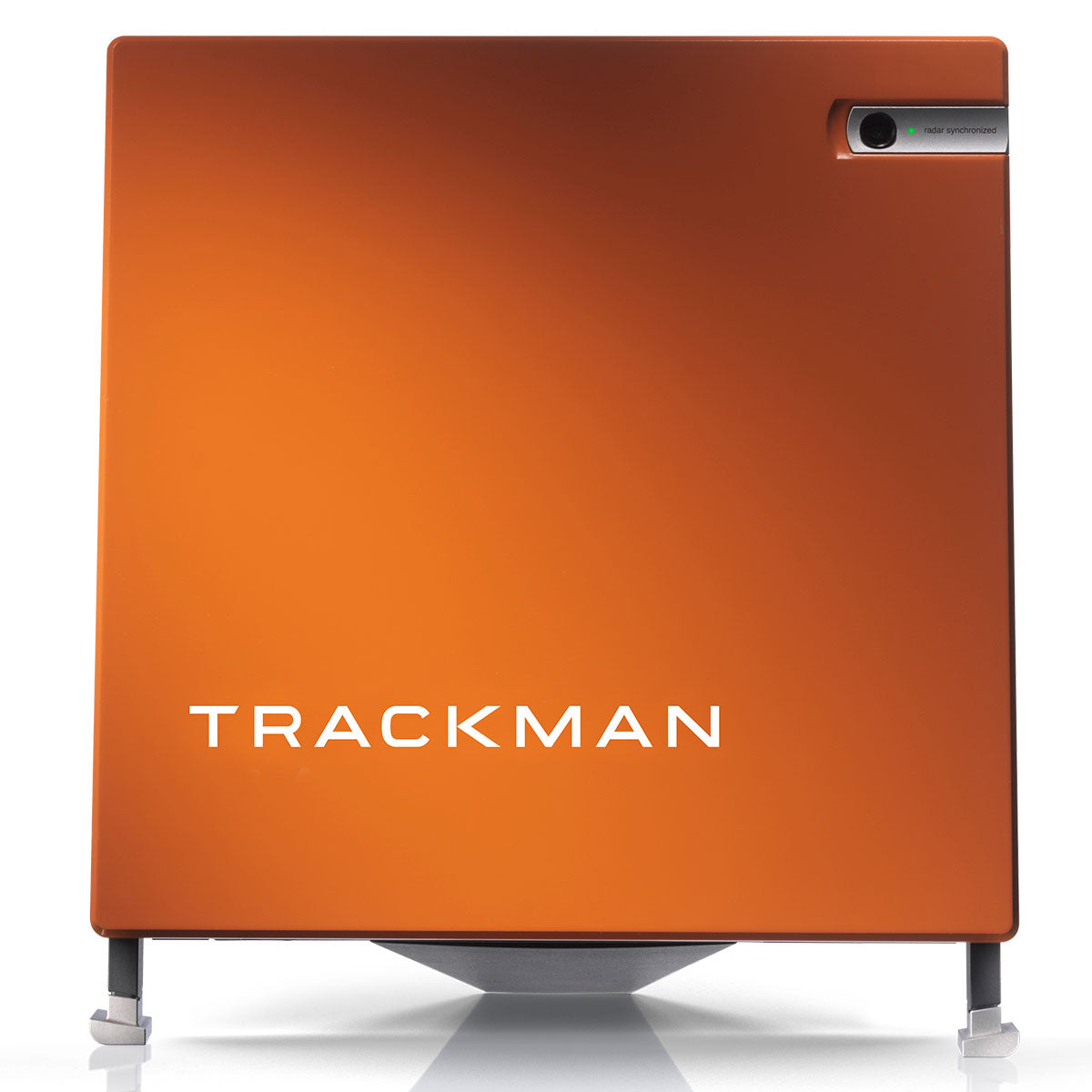
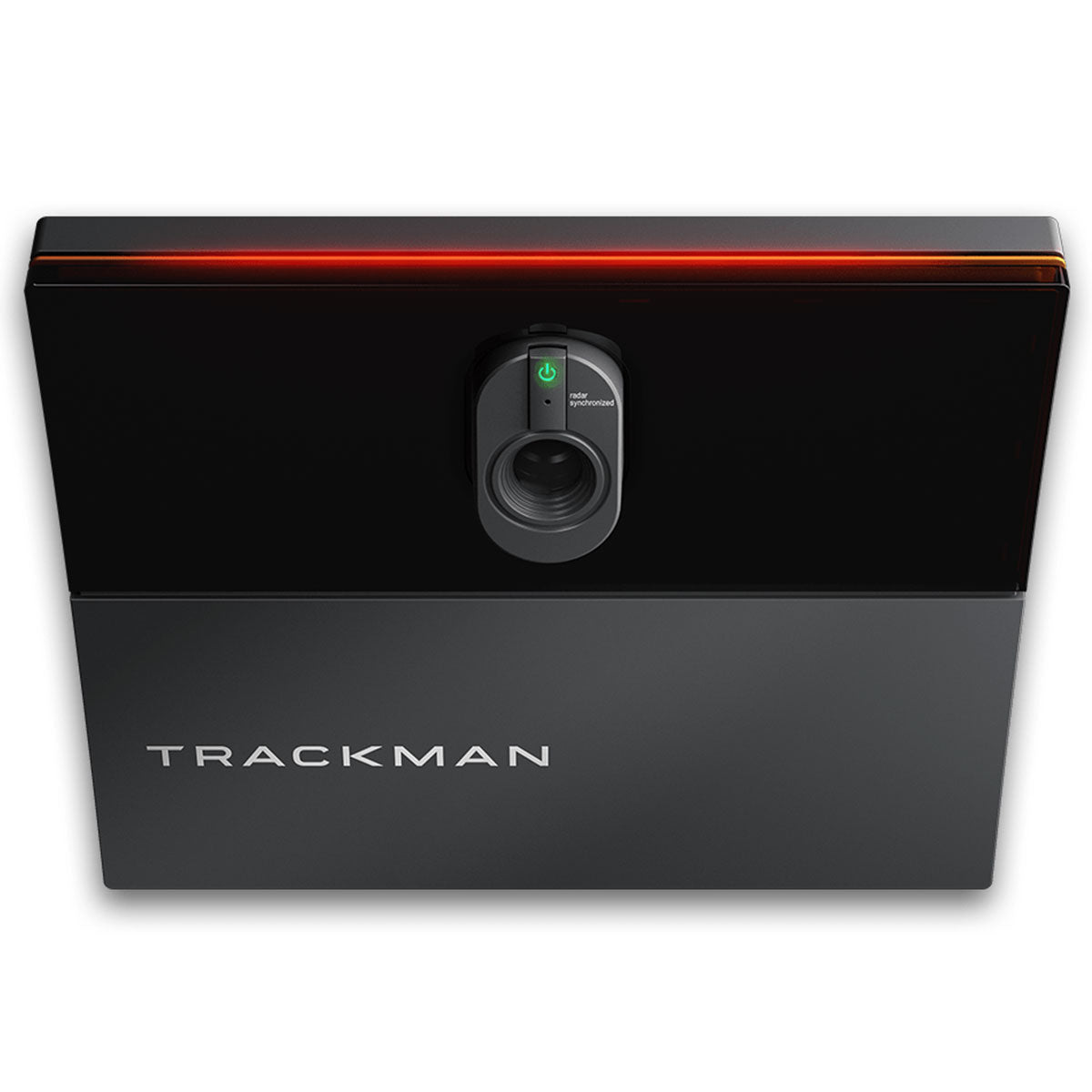
The Trackman 4 is radar, plus. Dual Doppler radar tracks the ball's flight the way radar does, and a synchronised high-speed camera fills in the impact detail radar is weakest at — Trackman calls the combination Optically Enhanced Radar Tracking. The result is more than 40 parameters per shot, the widest data set here by some distance. It is 300 by 300 by 45 millimetres, 3.0 kilograms, and runs four hours-plus off a 10,400mAh battery.
The room decides this before the money does
Radar has to see the ball move to know what it did. Indoors that means real depth: room behind the ball for the unit to sit and see, and room in front for enough flight to measure before a screen stops it. Cameras do not have that problem, because they are not tracking flight — they are photographing the first few inches and computing the rest. A photometric unit reads a full shot in a fraction of the space radar needs.
That is not a criticism of the Trackman; it is a description of physics, and Trackman themselves agree with it. The reason the company also sells the Trackman iO is precisely that a ceiling-mounted camera unit was the only way to serve customers whose golf happens in a garage. If radar worked in a tight room, the iO would not need to exist.
So the honest way to run this decision is to go and measure, before you shortlist anything. Our Sim Room Architect will do the arithmetic with you — hitting area, screen distance, ceiling, the lot. If the answer is a standard single garage, the QuadMAX is the only one of these two that belongs in it, and the Trackman 4's greatest strength becomes a feature you have paid for and cannot use.
What each one gives you
Buy the Trackman 4 if a meaningful share of your golf happens outside. Be clear about what that does and does not mean. Both of these travel: the QuadMAX weighs 2.86 kilograms with a swappable battery Foresight rates at seven to nine hours, and Foresight sells it for the range and the course as well as the studio. The Trackman 4 is 3.0 kilograms with four hours-plus of battery, so on portability alone the QuadMAX is at least its equal. The real separator is what each one measures once it is out there. Radar watches the whole flight, so on a range the Trackman's carry, apex and landing numbers are tracked rather than computed from launch, and that is the data a coach working outdoors leans on. If you coach, if you travel to players, if you want measured full-flight data on a real range and a sim in the winter, this is a coherent purchase and the price makes sense. It is $26,000.
Buy the QuadMAX if the room is the whole point. At $20,000 it is about 30 per cent less, and what you get for it is a machine whose great strength is reading strike to a professional standard, which is exactly what a bay needs. The 18 parameters are fewer than Trackman's 40-plus, but the ones a fitting bay uses to change a club are in there, and the onboard screen means the numbers are in front of you without a second device. It reports apex and descent angle on the unit itself and carries a free-speed training mode. The software being included rather than subscribed is not a small thing at this end of the market, where the second cost after the sticker is the one that catches people — we went through exactly that with the Falcon and the Trackman iO, where the two units load their hidden cost at opposite ends of ownership.
One caveat on the QuadMAX that the spec sheet will not tell you: it is a floor unit that sits beside the ball, so it takes up space in the hitting area and it has a handedness. A right-hander and a left-hander sharing a bay will be repositioning it between shots unless you buy a second. If that sounds like your household, factor it in. And if you are weighing a floor unit against a ceiling mount more generally, that argument is its own piece — we covered where a launch monitor physically lives and why one of those choices is effectively permanent.
For almost everyone, the answer is neither
I should say this plainly, because at this price it needs saying. If your sim room is for playing courses with friends on a Saturday night, both of these are a category error. Not because they are bad — because the half of them you are paying for is the half you will never read.
The QuadMAX is a fitting instrument. Its value is in the club-delivery data a fitter uses to change what is in your bag, and if nobody in the room is going to act on face angle and strike location, that value is theoretical. The Trackman 4's premium is largely its measured full-flight tracking outdoors; if every shot you hit goes into a screen twelve feet away, you are paying a five-figure premium for ball flight the screen stops after a few yards.
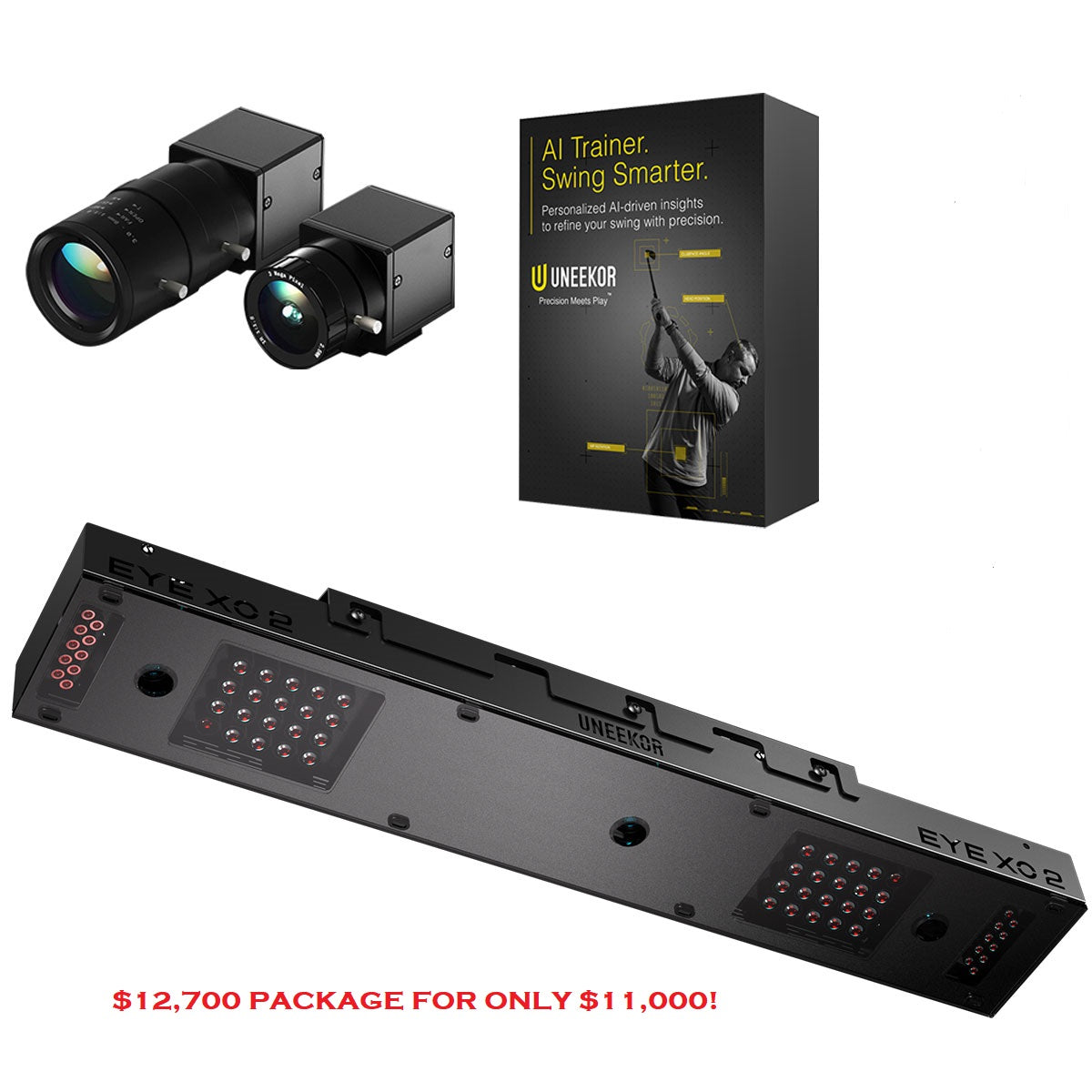
What most people building a room should buy sits a long way down from here and gets them most of the way. The Bushnell Launch Pro is the same photometric approach as the QuadMAX — cameras beside the ball, reads the strike, happy in a small room — at a fraction of the outlay. The SkyTrak ST MAX is the friendliest version of that for a home room that is mostly about playing. The Uneekor EYE XO2 is the one I'd point a serious home improver at, because it gets you into real club data without a professional-bay budget.
The call
If you are choosing between these two specifically, you are either building a fitting business or you have decided money is not the constraint. In the first case the room and the use case decide it for you: a bay that exists to change people's clubs wants the QuadMAX, and a coach who works outdoors as well as in wants the Trackman 4.
In the second case, here is the sentence I would hold onto. The Trackman 4 costs about 30 per cent more and the thing it buys you with that money is measured ball flight outdoors. If you are honest that you will use it out there — not that you might, that you will — it is worth it and it is the more complete instrument. If you are not, you are buying radar for a room that would rather have cameras, and the QuadMAX is the better machine for the golf you are going to play.
Frequently asked
- What is the main difference between the Foresight QuadMAX and the Trackman 4?
- They measure in fundamentally different ways. The QuadMAX is photometric: four high-speed cameras sit beside the ball and photograph club and ball through impact, reporting 18 parameters. The Trackman 4 uses dual Doppler radar plus a synchronised high-speed camera to track the ball through its flight, reporting more than 40 parameters. Radar needs depth behind and in front of the ball to work indoors; cameras do not.
- Does the Trackman 4 work in a small indoor room?
- Not well. Radar has to observe ball flight to measure it, which means real depth behind the ball for the unit and in front of it for the shot. A standard single garage generally does not have enough of either. Trackman sells the ceiling-mounted iO specifically for indoor rooms, which is the clearest indication that the Trackman 4 is not the indoor answer.
- Does the Foresight QuadMAX come with simulator software?
- Yes. FSX Play, FSX 2020 and 25 courses are included, so it works as a simulator out of the box rather than needing a separate software purchase. It also has an onboard touchscreen with a customisable tile layout, internal memory rated to around two billion shots, and reports apex and descent angle on the device itself.
- Is a launch monitor at this price worth it for a home simulator?
- For most home rooms, no. Both of these are professional instruments, and the data that justifies the price is data a fitter acts on rather than data a Saturday-night simulator round uses. A home room that is mainly for playing courses is far better served by a photometric unit several tiers down, such as the Bushnell Launch Pro, the SkyTrak ST MAX or the Uneekor EYE XO2, all of which read the strike in a small room for a fraction of the outlay.
Read next
Review
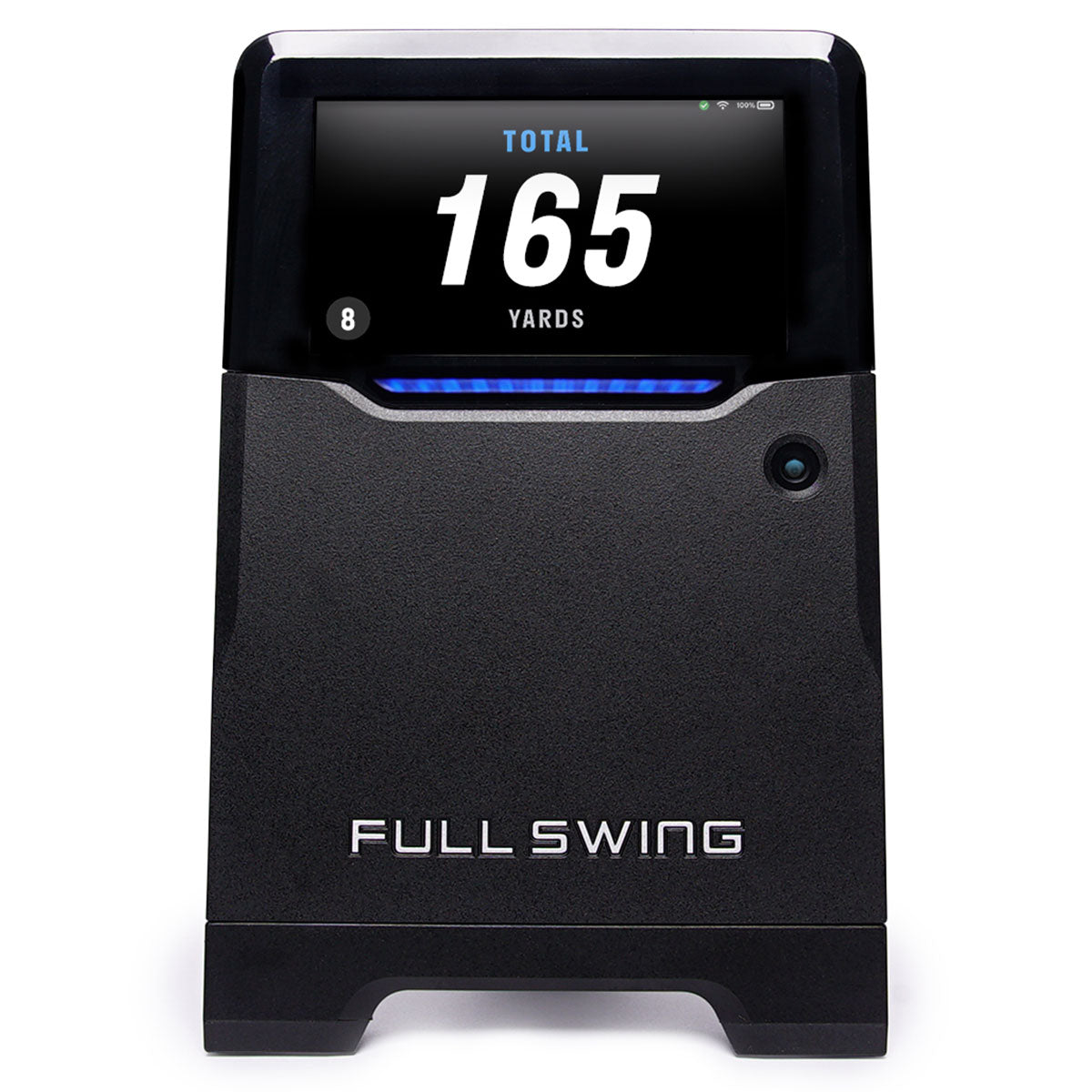
7.9/10Full Swing KIT review: the tape measure decides this, not Tiger
Tour pedigree, TGL on ESPN, and radar good enough to be checked against a Trackman outdoors. It also wants eighteen to twenty feet of room, which rules out most of the garages people buy it for.
Versus
Trackman iO vs Uneekor EYE XO2: the year-one trap
Both mount overhead, both want ten feet of ceiling, and about $3,000 separates them on the shelf. Then Trackman's included first year runs out, and the gap starts growing by $1,100 a year.
Versus
Uneekor EYE XO2 vs Foresight GC3: ceiling or floor?
About $4,000 separates them, but they're not really rivals — one lives in your ceiling forever, the other sits on the floor and travels. The cheaper one is also the one with no subscription.