
Foresight Falcon review: the ceiling is the product, and the gaming PC is not in the box
Nothing sits beside the ball, nothing gets re-aimed, and a left-hander can step in without anyone moving anything. Then it asks for a ceiling you are allowed to drill into and a computer that is sold separately.
By Ben Marsden · Reviews Editor
The verdict
Excellent
What's great
- Overhead mounting solves the three things a floor unit never will: nothing beside the ball, nothing to re-aim, and both handednesses without touching the hardware
- Reads the ball with no marked balls, so a session starts by hitting rather than by preparing; club data runs on small dot markers that ship in the box
- A smaller housing and faster processing than overhead units have traditionally needed, which is what turns a commercial fixture into something you could live with at home
Watch out
- A gaming PC is sold separately, so the sticker is not the finished cost and specifying the machine is your problem
- It needs a ceiling you are allowed to drill and genuine height above the hitting zone, which rules out most garages and nearly every rented room
- Permanent by design: if the bay has to come down between sessions, none of what the money bought survives
Bottom line — The clearest argument for overhead architecture I can point anyone at, priced for a room that is never going to be anything else. If your bay has to come down, buy a floor unit and keep the difference.
Foresight Sports
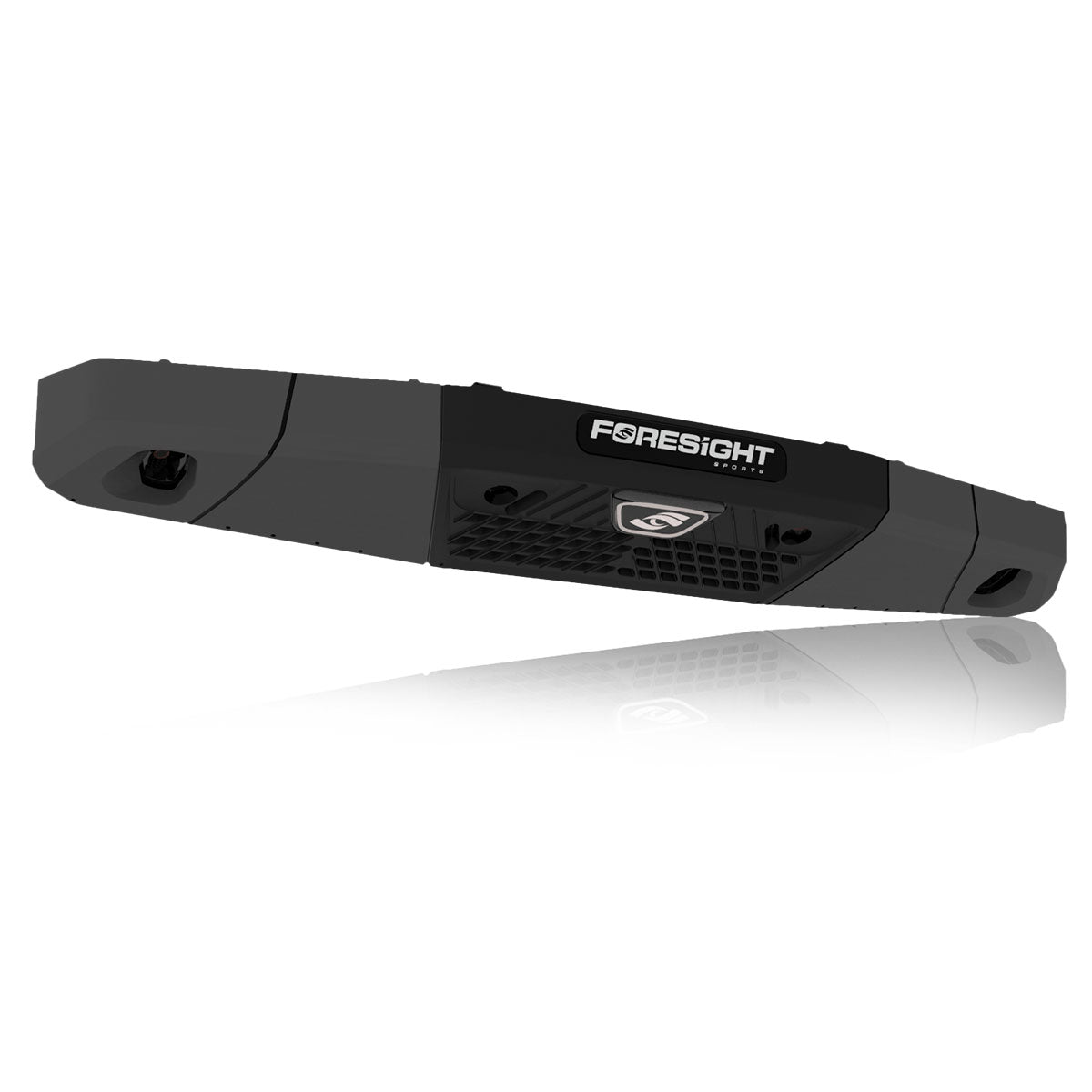
Foresight Falcon Overhead Launch Monitor
ifrothgolf earns a commission on purchases made through these links, at no extra cost to you. It never changes what I recommend. Full disclosure.
Here is the moment that sells overhead units, and it has nothing to do with a number on a screen. Two of you in the bay. One swings left-handed. The floor unit is squared up to the right-hander's ball position, so somebody crouches down, slides it across, squints at the alignment, and gets it wrong by a couple of degrees that nobody will ever notice until the numbers stop making sense. Then the other one wants a turn and the whole ritual runs backwards.
The Foresight Falcon is a very expensive answer to that, and to about four other versions of the same annoyance. It is Foresight's overhead launch monitor, it mounts above the hitting area rather than beside it, and at $17,000 it is the most expensive single object we list. What you are buying is not a data upgrade. It is a decision about where the hardware lives, and that decision is worth far more or far less to you than the spec sheet suggests, depending entirely on the room.
What the mounting position actually removes
Three things, and all three are the kind of friction that quietly decides whether a bay gets used on a wet Tuesday.
The first is the box on the floor. A floor unit has to sit somewhere, and somewhere is always in the way — of a second player, of a left-hander's stance, of the hoover, of whoever walks in carrying something. Overhead, the floor is a floor. Foresight's own framing of the Falcon is that it is installed once and then forgotten, which is exactly why commercial bays went this way years before home builders did.
The second is re-aiming. Every floor unit has an alignment relationship with the ball, and every alignment relationship is something a foot can ruin. Mounted above the hitting zone, there is nothing at ground level to nudge.
The third is handedness, and it is the one I would weigh most heavily. The Falcon reads left- and right-handed players without being moved. If there are two golfers in your house who swing opposite ways, or you host, that single fact will do more for how often the room gets used than any measurement claim anyone makes about anything. We argued the general case for this in overhead against floor mounting, and it has not changed: the architecture question deserves settling before you shortlist a single unit.
It also reads the ball without marked balls. That sounds like a convenience footnote and it is not. Anything that turns the start of a session into a preparation task is a tax on frequency, and frequency is the only thing a home bay is really for. Be clear on the club side, though: Foresight says full club data is enabled with 4-dot club markers stuck to the face, and a dispenser of them ships in the box. They are quick to apply, but they are a consumable, and they need replacing as they wear.
The first gate: the sticker is not the finished cost
The Falcon requires a gaming PC, sold separately. Foresight says so, we say so on the product page, and I want to say it here in the most unhelpful possible place — right next to the price — because this is the line that gets skimmed.
That means two things. It means the real number is higher than the one you have been quoting to yourself, by whatever a machine capable of driving simulation software costs at the time you buy. And it means the specification is on you. A launch monitor that arrives working out of the box is a different kind of purchase from one that arrives as half of a system you now have to assemble competently. If the phrase gaming PC makes you reach for a forum thread rather than a credit card, budget for someone to specify and build it, and put that in the same spreadsheet cell as the unit.
The second gate: a ceiling you are allowed to drill
Now the one that ends the conversation for most people reading this.
An overhead unit needs a ceiling you may fix into, and enough height above the hitting zone to mount it where it needs to be. Not ceiling height in the abstract — height above the hitting zone, after the mat has raised you and after whatever a light fitting, a garage door mechanism, a beam or a sloped section has taken back. That is a narrower number than the one on your tape measure, and it is the number that rules out most garages and effectively every rented room.
Then the harder half, which is not physical at all. This is a permanent-installation product. You are committing a room to being a golf room, indefinitely, and you are making holes in a ceiling to do it. If you rent, that is somebody else's ceiling. If you might move in two years, you are buying a fixture you will either leave behind or make good. If the space has another job at Christmas, it does not have this job.
Marcus made the general version of this argument in space, not cost, using a survey that found space rather than money is the primary barrier to owning a home setup. The Falcon is that finding with a price tag attached. It is the single least forgiving product in the category on the constraint that stops most people, and no amount of budget moves the constraint.
One more piece of sequencing, because September is the month it matters: the room takes longer to build than the sensor takes to arrive. Enclosures are made to order, the physical work needs an empty garage and a dry weekend, and that calendar is unforgiving in a way a delivery estimate is not. If you are installing a Falcon this winter, the ceiling work is the thing on the critical path, not the shipping.
Who should not buy this
Anyone whose bay has to come down. That is the whole rule and it is worth stating without softening, because every feature the Falcon has is a feature of being installed. A unit that lives above the hitting zone cannot be packed away, cannot go outside, cannot go to a friend's garage, and cannot follow you to the next house without a conversation about plasterboard. If the room is shared, rented, temporary, or doubles as anything, you are paying five figures for architecture you are not allowed to keep.
Add two smaller groups. If your practice is genuinely split between winter indoors and summer on grass, one portable unit doing both jobs beats a fixture doing one. And if the money is finite — which it is for almost everyone — a Falcon-shaped hole in the budget is a screen, a mat, a projector and a decent enclosure you can no longer afford, and a bay is not better than the sum of its worst component.
Where I would put the money instead
Two honest alternatives, and I would recommend both more often than I would recommend this.
If the room is not permanent, the Foresight GC3 with LINK, which lists at around $7,000 and was cut to about $4,000 in October 2026, keeps you inside Foresight's own camera-based family, sits on the floor, sets up in seconds, packs into a bag and goes outdoors. It runs on the same Foresight+ memberships as the Falcon, so the saving is in the hardware, not the software. It is the unit I would buy if there were any chance of the space changing, and there usually is.
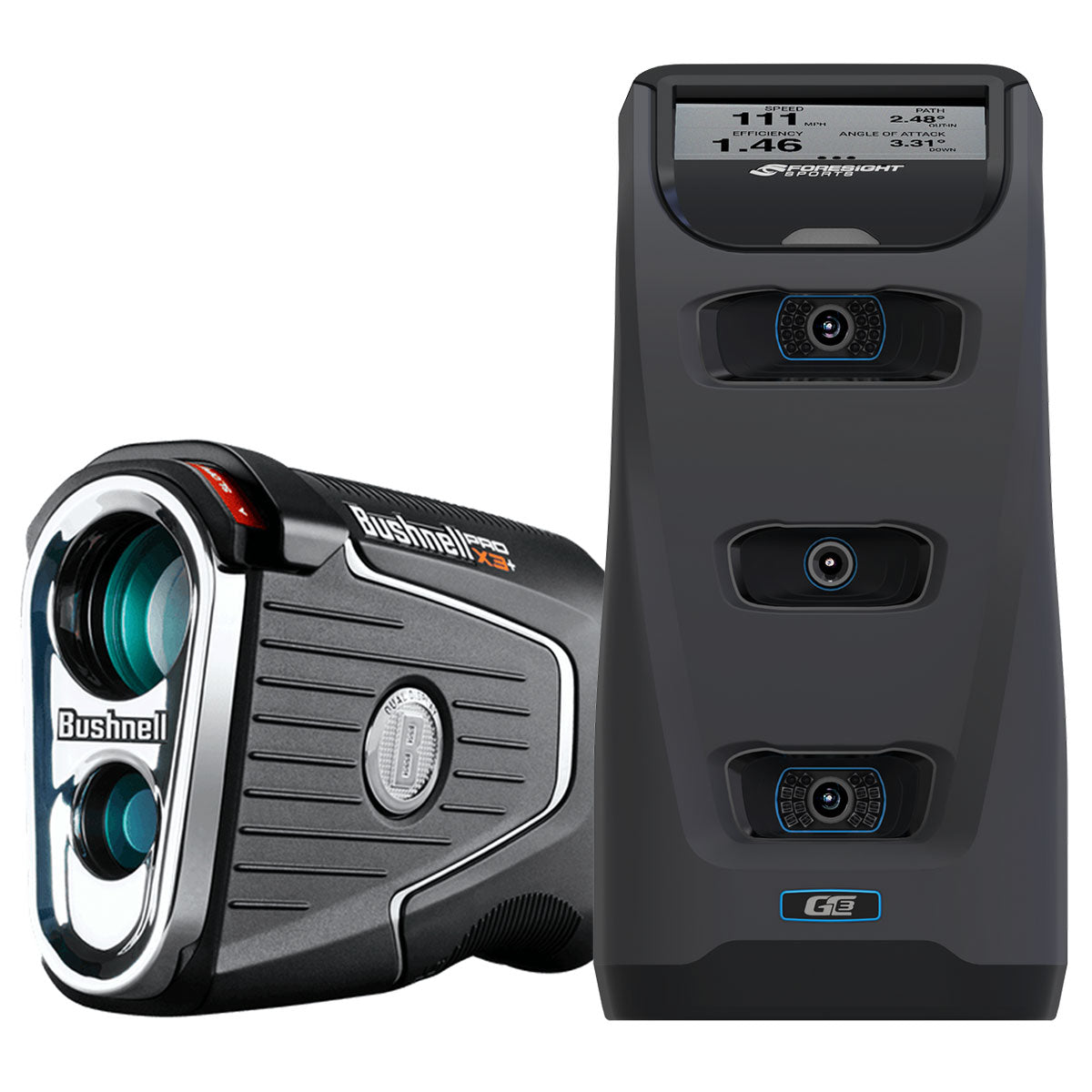
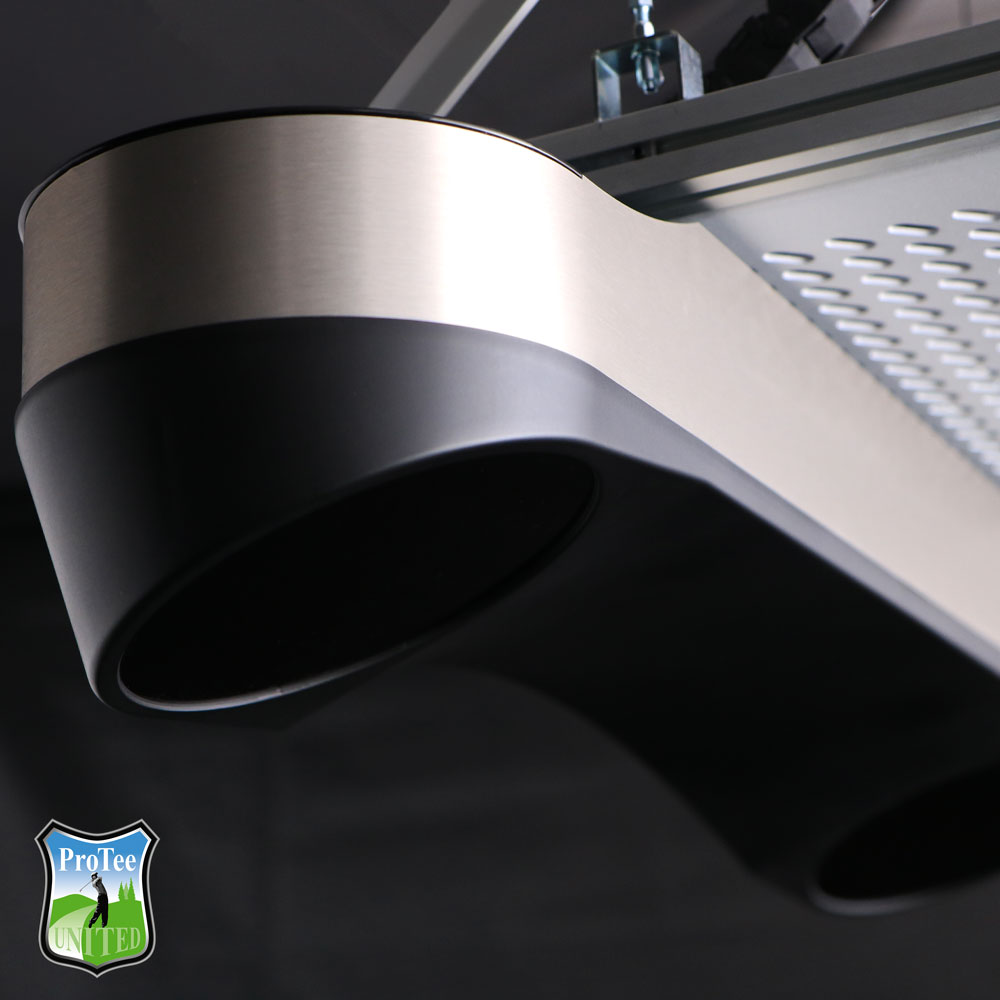
If you have decided the room is permanent but the Falcon's number is not happening, the ProTee VX at around $7,900 is the cheapest honest route into overhead tracking: two high-speed cameras watching from above, no marked balls or stickers, and both handednesses read without repositioning. It buys the architecture, which is the part of this piece that actually matters, at a fraction of the entry cost. The price ladder sets out the rungs between the two if the number is what you are working on.
The decision
I would buy the Falcon in exactly one situation, and I would buy it without hesitating in that situation: a dedicated room that is never going to be anything else, a ceiling I own and am allowed to fix into, two golfers who swing opposite ways, and a budget that has already absorbed the PC as a line item rather than a surprise. That is a real person. It is a much rarer person than the marketing for this category implies.
For everybody else the honest answer is that the Falcon is not too expensive, it is too permanent, and those are different objections with different solutions. Measure the height above where the ball will sit, in socks, on the mat you intend to use. Then ask whether the room will still be a golf room in five years. If both answers are yes, this is a superb way to build a bay. If either is no, the money belongs somewhere it can move.
Products mentioned in this article
ifrothgolf earns a commission on purchases made through these links, at no extra cost to you. It never changes what I recommend. Full disclosure.
Frequently asked
- Does the Foresight Falcon need a computer?
- Yes. It requires a gaming PC, sold separately, so the purchase price is not the finished cost of the setup. Budget for a machine capable of running simulation software, and for someone to specify and build it if that is not work you want to do yourself.
- What ceiling do you need for an overhead launch monitor like the Falcon?
- One you are allowed to fix into, with enough height above the hitting zone to mount the unit properly. Measure the usable height where the ball will sit rather than the room's nominal ceiling height, because a mat raises you and light fittings, beams and garage door mechanisms all take some of it back.
- Can the Foresight Falcon be used by left-handed and right-handed players?
- Yes, without being moved. That is one of the main practical advantages of overhead mounting. A floor unit sits on one side of the ball and has to be physically repositioned and re-squared to swap handedness, which is both a nuisance and a chance to introduce an alignment error.
- Who should not buy the Foresight Falcon?
- Anyone whose bay has to come down. It is a permanent-installation product, so a rented room, a shared garage, a space with another job, or a house you may leave within a couple of years all argue against it. A floor-standing camera unit keeps almost everything that matters and can be packed away or taken outdoors.
Read next
Review
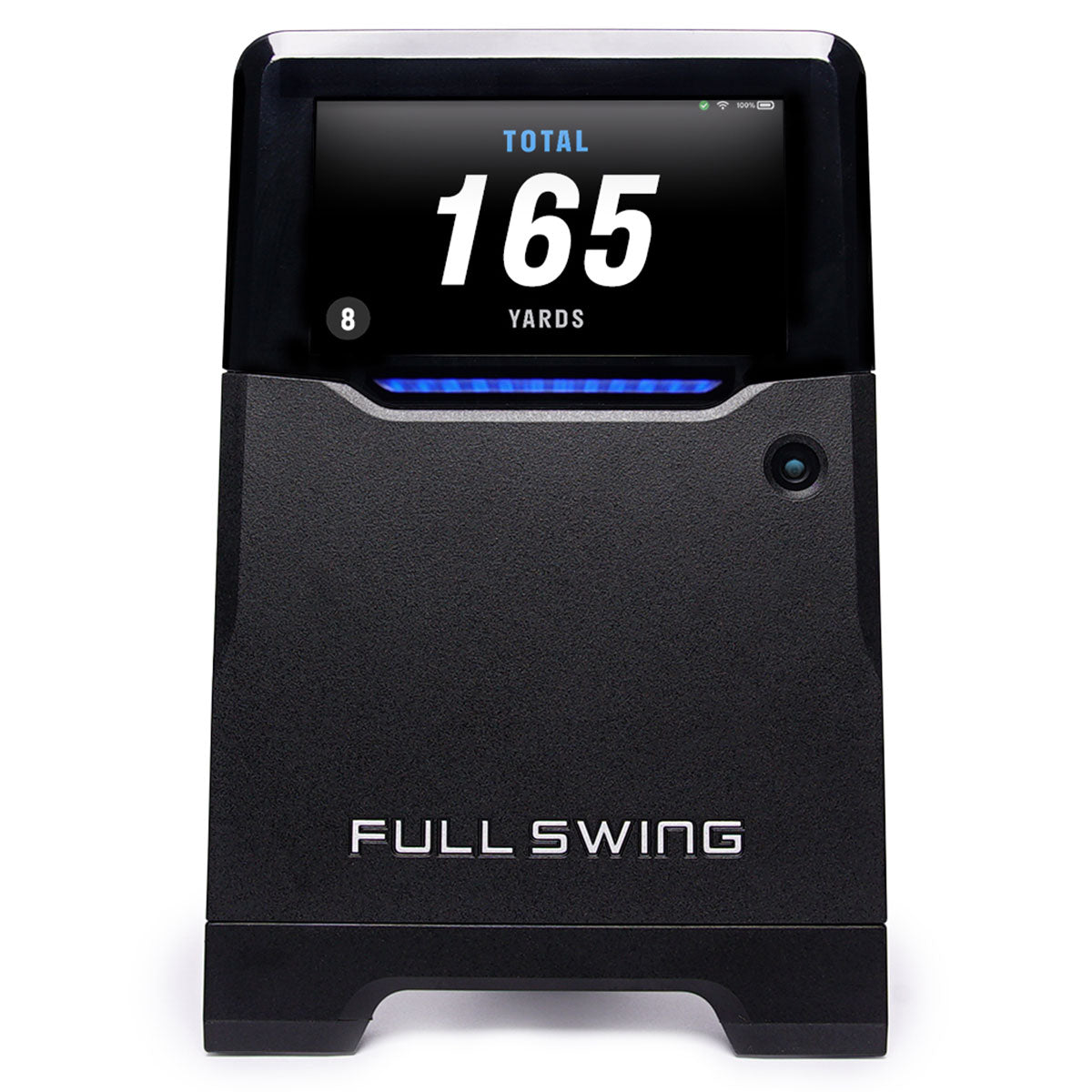
7.9/10Full Swing KIT review: the tape measure decides this, not Tiger
Tour pedigree, TGL on ESPN, and radar good enough to be checked against a Trackman outdoors. It also wants eighteen to twenty feet of room, which rules out most of the garages people buy it for.
Versus
Trackman iO vs Uneekor EYE XO2: the year-one trap
Both mount overhead, both want ten feet of ceiling, and about $3,000 separates them on the shelf. Then Trackman's included first year runs out, and the gap starts growing by $1,100 a year.
Versus
Uneekor EYE XO2 vs Foresight GC3: ceiling or floor?
At least $4,000 separates them, but they're not really rivals — one lives in your ceiling forever, the other sits on the floor and travels. Both now charge a yearly fee for the software most home builders want.