
Home simulators are sold as practice and used as a cinema: spend on the projector or on club data, not half on each
Every brochure in this category promises a better swing. The rooms I hear about are four people, a speaker and a famous course on a Tuesday night in February. Both are good reasons to build one. They are not the same build.
By Ben Marsden · Reviews Editor
Uneekor
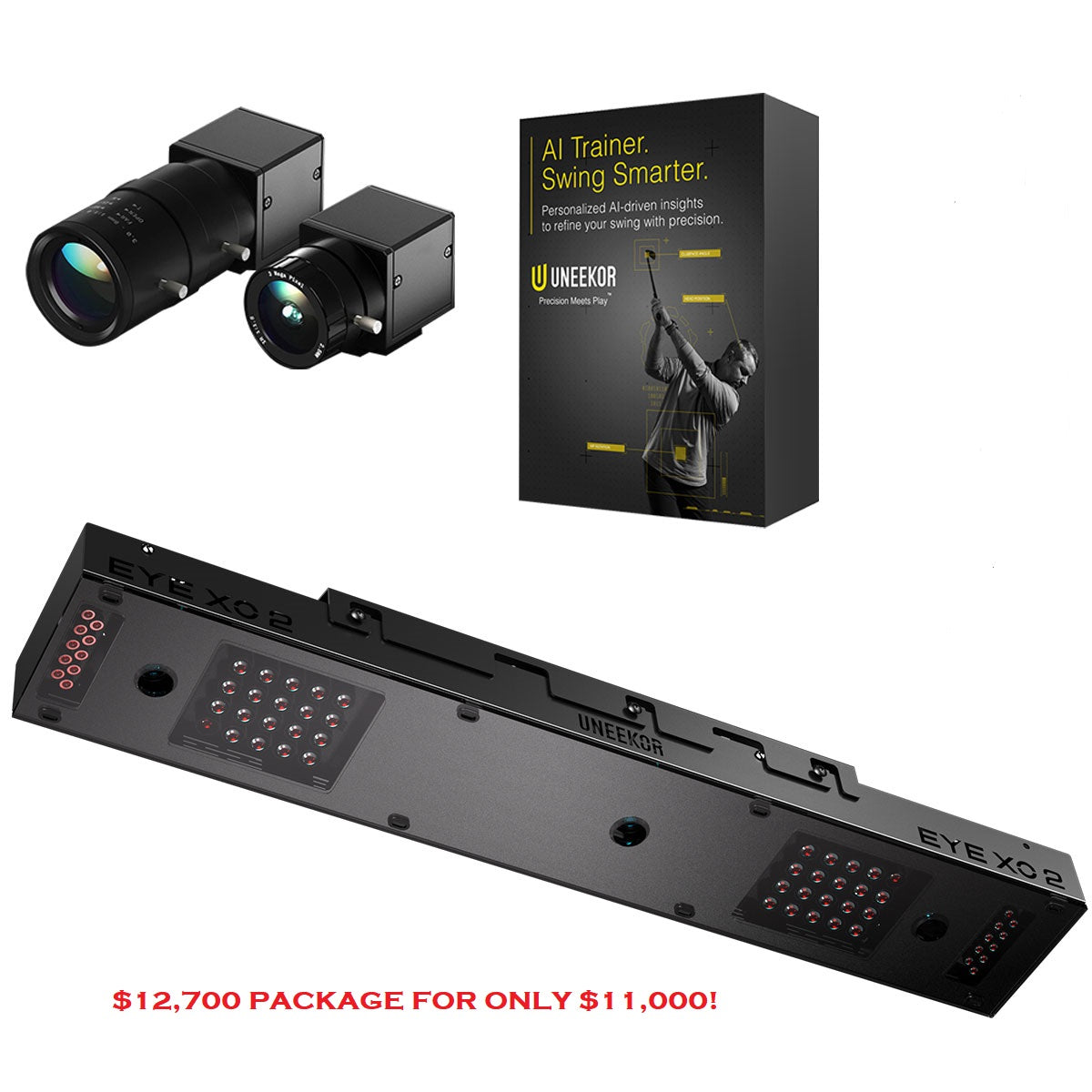
Uneekor EYE XO2
ifrothgolf earns a commission on purchases made through these links, at no extra cost to you. It never changes what I recommend. Full disclosure.
A garage in February, three friends, a fourth one somewhere behind the car with a beer, and a famous par three on the screen. Nobody in that room is working on a swing change. Nobody is going to look at the data afterwards. Everybody is having a very good evening, and the whole thing will happen again next Tuesday.
That is what a home simulator is for, most of the time, in most of the houses that have one. It is not what the category sells. Read the marketing for any launch monitor at the serious end of this category and it is all improvement — dispersion, tightened gapping, a winter that finally changes something. The word used most is practice. The thing most often done is play.
I have no problem with that at all. I do have a problem with buying a room for one of those and then using it for the other, because the two want different hardware and the halfway build is the one people end up disappointed by.
The two halves are not the same purchase
If a simulator is going to be entertainment, the product is the experience: how big and bright the picture is, how quickly the ball appears on the screen, how good it sounds, whether four adults can stand in the room without queueing. Almost none of that lives in the sensor.
If a simulator is going to change your golf, the product is what the sensor sees at impact and how honestly the mat reports a bad strike. Almost none of that lives in the picture.
Those are two shopping lists with very little overlap, and the category sells them as one object.
The line that separates them is ball data and club data
This is the most useful technical distinction in the whole category and it is buried in every spec sheet.
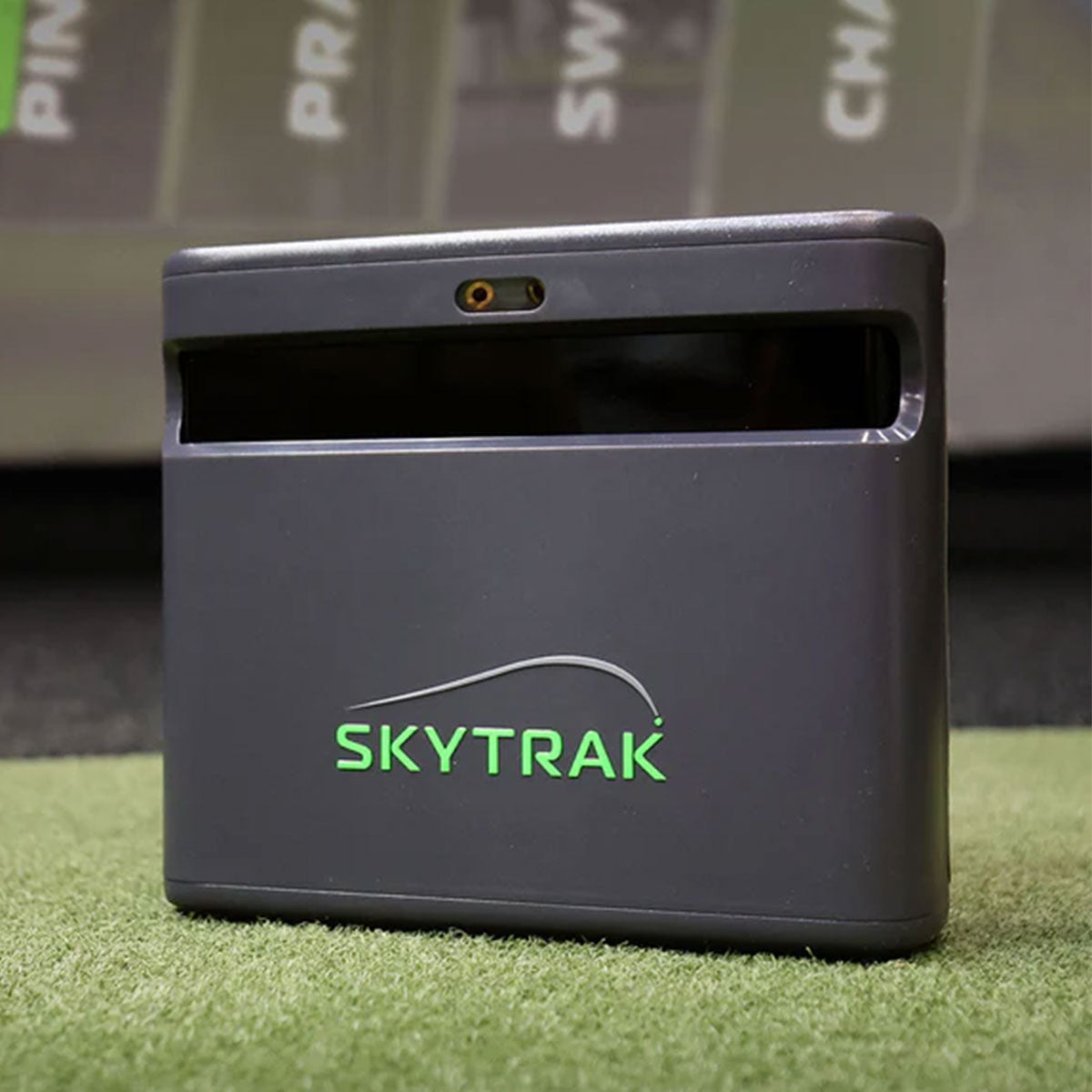
A ball-reading unit measures what left the face. The SkyTrak ST MAX is the best-known example: photometric tracking, fifteen performance metrics, and around $2,000. For playing golf on a screen it is excellent and I would happily put one in a room I intended to enjoy. What it is pointed at is the ball, and the ball can only tell you what happened after the fact.
A club-reading unit measures what you did to get there — path, face, where on the face you caught it. The Uneekor EYE XO2 at $11,000 is the domestic top of that market: three overhead cameras reading ball and club with nothing stuck to either, and at the time of writing two Swing Optix video cameras in the box, which is what turns a measuring device into something you can coach from. It also wants a gaming PC and a mounting job you cannot fudge.
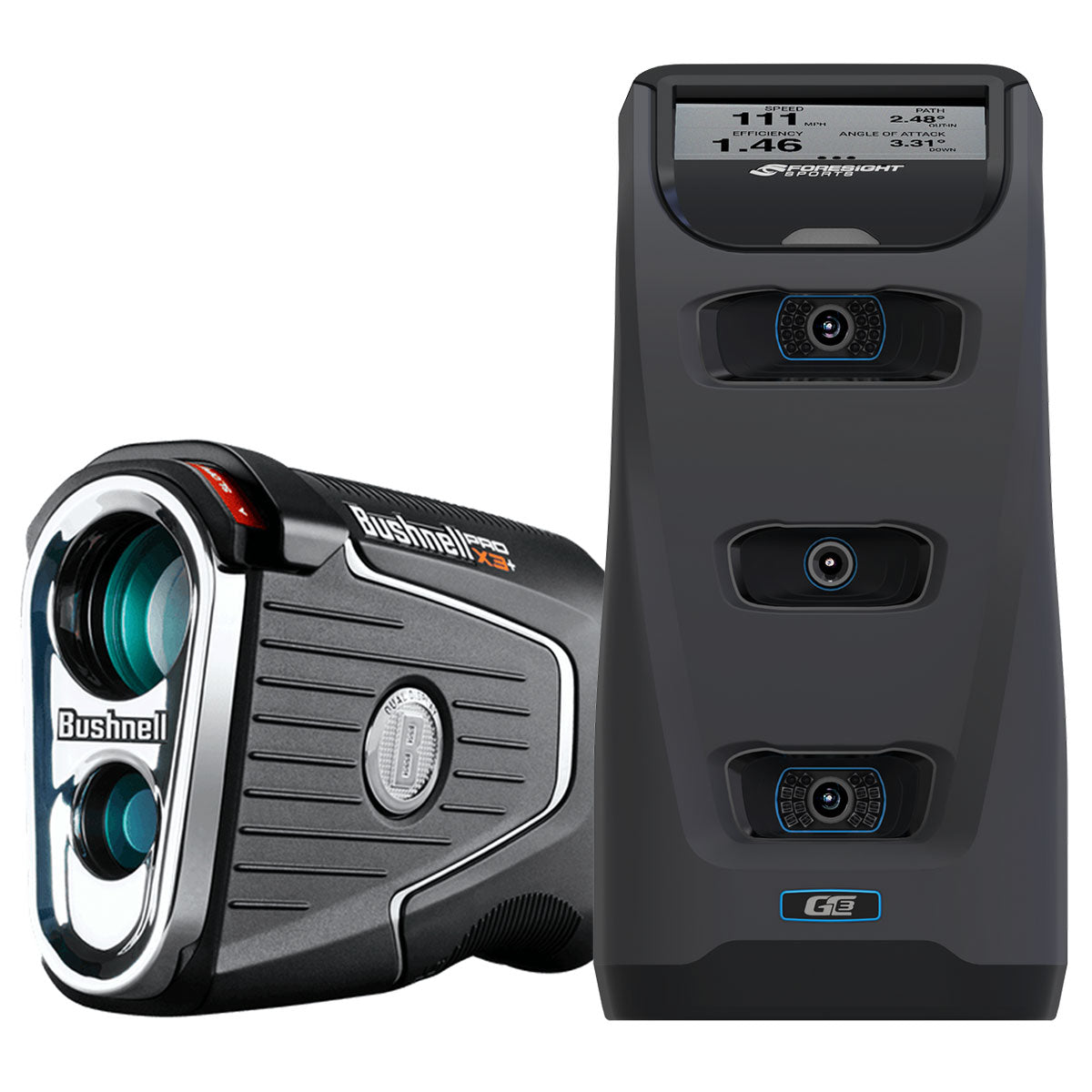
There is a middle, and it is worth naming precisely rather than vaguely. Foresight's GC3 with LINK, which lists at $7,000 and was cut to about $4,000 in October 2026, uses three high-speed cameras to read the ball directly, and the numbers it produces are trusted in fitting bays. But it is still reading the ball. Accuracy and diagnosis are not the same axis, and a lot of buyers spend up the accuracy ladder believing they are buying the other thing.
The point is not which is best. The point is that a golfer who intends to play courses is choosing between these on the wrong axis entirely, and paying several times over for information they will never open.
The entertainment half is where the money is under-spent
Here is the inversion that annoys me. The person building an entertainment room usually over-buys the sensor and under-buys the picture, because the sensor is what the category talks about and the projector is treated as an accessory.
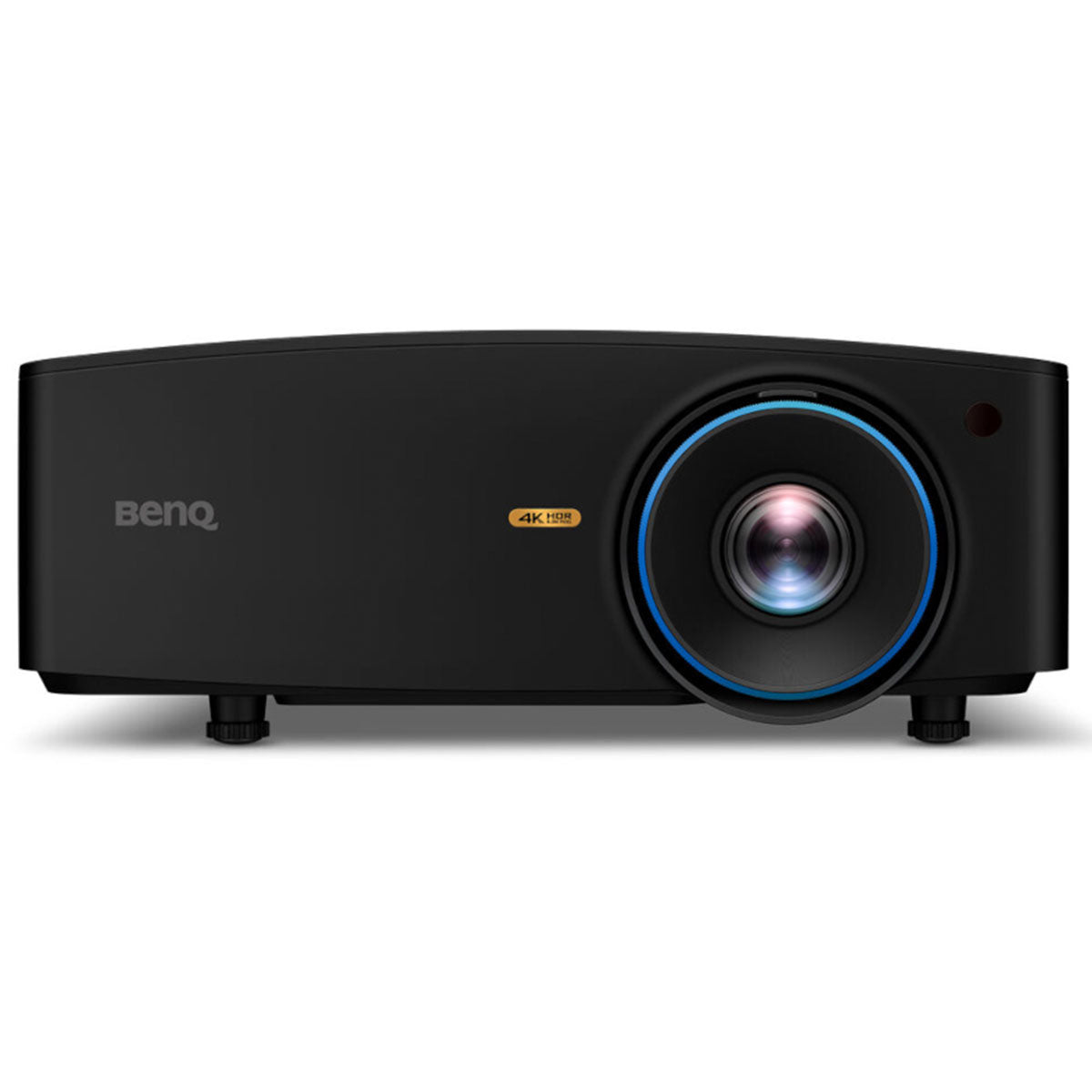
It is not an accessory. It is the entire product. At 5,100 ANSI lumens the BenQ LK936ST exists for one specific problem — a room with daylight in it, which describes most garages and every conservatory conversion — and the difference it makes is the difference between a course that looks like a course and one that looks like a projection. It is $4,900, and for a room that genuinely cannot be blacked out that is money doing more visible work than the same money spent moving from ball data to club data.
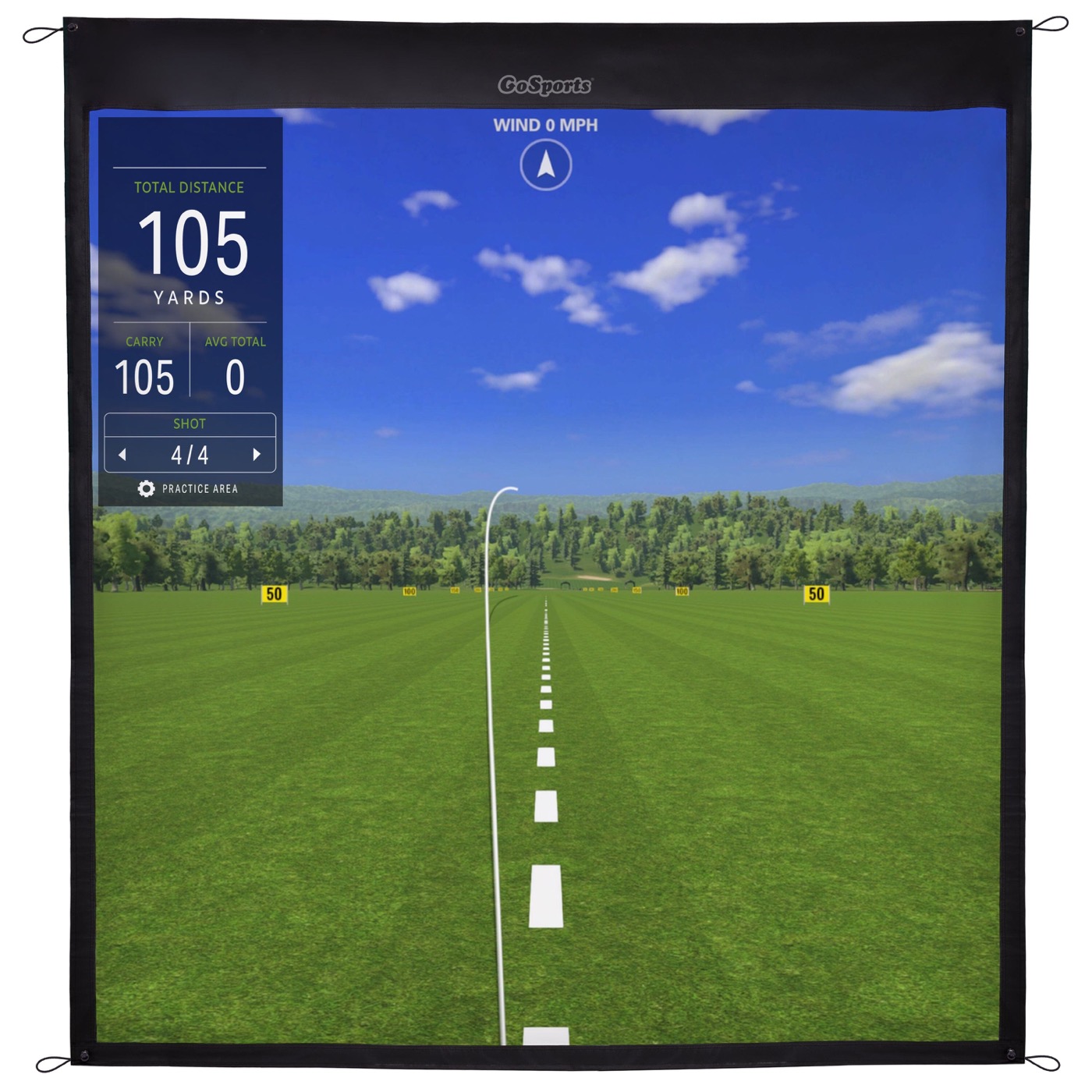
The screen is the cheap half of that. A GoSports impact screen is around $150 and will take real golf balls, with the caveat that a bare screen is loud and bouncy until it is hanging inside a frame with proper standoff behind it. Nobody has ever left a sim session complaining about the screen brand. Plenty have left squinting.
Who is buying the wrong half
Two people, and I want to be careful about where the blame sits, because it is not with either of them.
The first bought the unit that reads the club, then used the room to play courses with friends. They were sold improvement and they bought it in good faith. They would have had a better room, and a happier one, with a mid-tier ball-reading unit and the difference spent on the projector, the seating and the sound.
The second has a beautiful picture, a cheap ball-reading unit and a thin mat, and tells anyone who asks that the room is for getting better over the winter. It is not, and it cannot be, because nothing in it can see what the club did or tell them when they hit it fat.
Neither of those is a stupid purchase by a stupid person. Both are the predictable result of a category that markets one use case and delivers another, and then lets the buyer work it out in March.
The mat is where the two halves touch
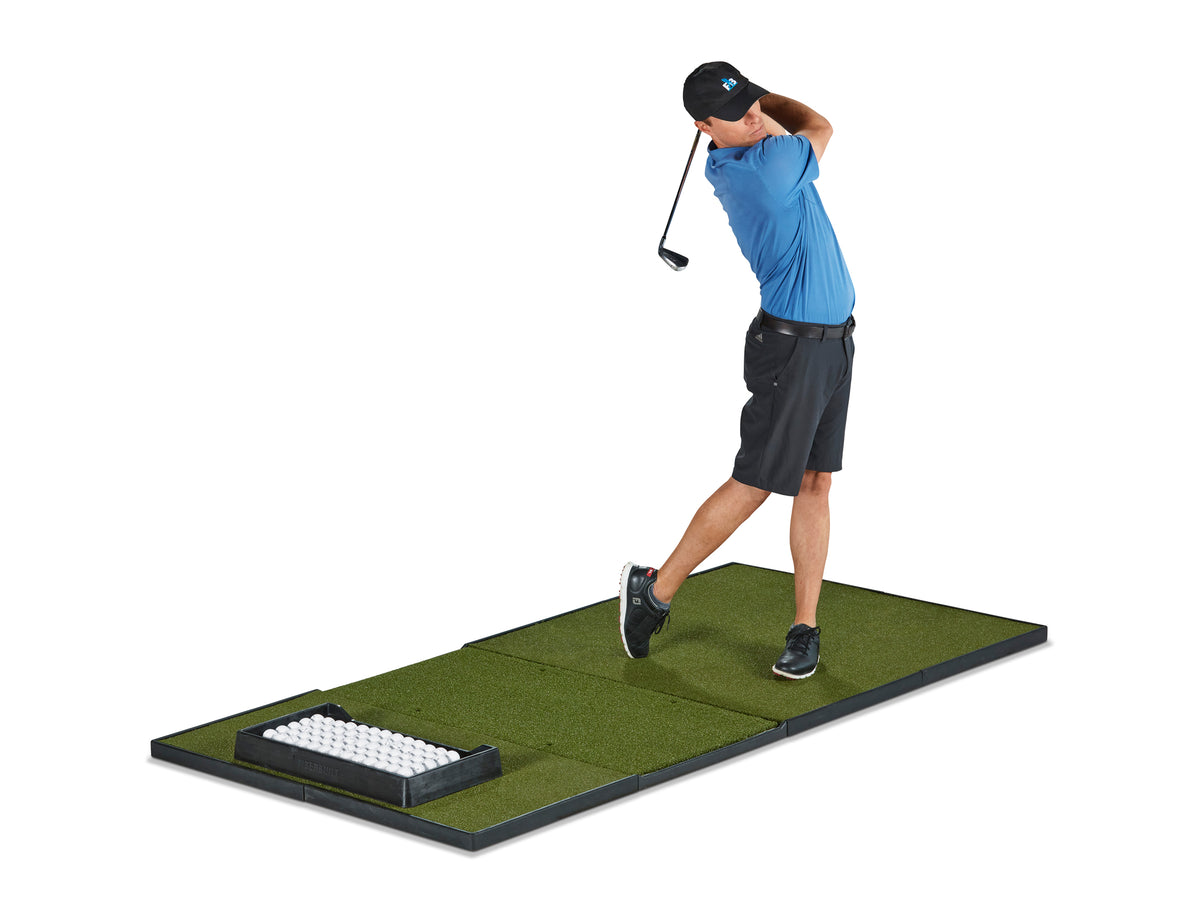
One component genuinely matters to both, for opposite reasons. For entertainment you want a mat that is comfortable and survives being stood on by four people. For improvement you want one that tells the truth — a Fiberbuilt Player Preferred type of build, where a fat shot feels fat instead of skipping off a hard surface and producing a perfectly acceptable number.
That is the quiet killer in a practice room. A forgiving mat launders your worst strike into decent data, and you spend the winter being told you are fine. I made the full case for mat spending in an earlier column and will not repeat it here, except to say the argument gets stronger, not weaker, if the room is meant to improve you.
The counter-argument, which is real
The strongest objection to everything above is that entertainment produces practice by accident. Someone playing two rounds a week on a screen in January hits several hundred balls they would otherwise not hit, and arrives in April swinging more freely than the golfer who did nothing. That is true, and it is the most underrated benefit of the whole category.
But it is volume without direction, and it does something specific and slightly harmful: unlimited mulligans, no consequence, and a mat that lets you get away with it. What genuinely survives the walk back onto grass is a shorter list than most owners assume, and it does not include the habits a games-console room quietly teaches.
What I would actually do
Decide which one you are, out loud, before anything is ordered, and then be ruthless about it.
If the answer is entertainment — and for most people it is, and there is nothing to apologise for — buy a good ball-reading unit, put the saved money into the brightest projector your room actually needs, a proper frame and screen, and somewhere for people to sit. You will use it more.
If it is improvement, buy the club data and the mat that punishes you, accept a smaller picture, and book the coach you are going to send the video to. The room without a coach on the other end of it is a very expensive way of confirming what you already do.
What I would not do is split the difference. A room that is mediocre at both is the one I keep hearing about being sold two winters later, and the reason is never the hardware.
Products mentioned in this article
Uneekor
Uneekor EYE XO2
The improvement buy: overhead cameras that read the club as well as the ball, with two swing-video cameras included at the time of writing.
Foresight Sports
Foresight GC3 with LINK
Camera-grade ball accuracy without a permanent mount — the honest middle, as long as you know it reads the ball and not the club.
SkyTrak
SkyTrak ST MAX
Photometric ball tracking and fifteen metrics — the best-value way to play courses, and a hard limit on what it can see.
BenQ
BenQ LK936ST
The entertainment half of a budget in one box, and the only sensible answer to a room with daylight in it.
GoSports
GoSports Golf Simulator Impact Screen
The cheap half of a good picture, provided it hangs inside a frame with standoff behind it.
Fiberbuilt
Fiberbuilt Player Preferred Studio Golf Mat
The improver's mat, because a fat shot has to feel fat or the session teaches you nothing.
ifrothgolf earns a commission on purchases made through these links, at no extra cost to you. It never changes what I recommend. Full disclosure.
Frequently asked
- Do I need club data in a home golf simulator?
- Only if the room is genuinely for improvement. Club data means the unit measures path, face angle and strike location rather than inferring everything from the ball, which is what makes a session diagnosable. If the room is mainly for playing courses with friends, a ball-reading unit gives you the same enjoyable round for a fraction of the money.
- What is the difference between a ball-reading and a club-reading launch monitor?
- A ball-reading unit measures the ball after impact and derives flight from it. A club-reading unit also tracks the head through impact, so it reports path, face angle and where on the face you struck it. Both can play simulated golf; only the second can reliably tell you why a shot went wrong.
- Should I spend more on the projector or the launch monitor?
- It depends on what the room is for. If it is entertainment, the projector and screen are the product and a mid-tier ball-reading unit is plenty, so weight the budget towards the picture. If it is practice, the sensor and the mat decide whether the room works at all and the picture can be modest.
- Is a home simulator good practice?
- It can be, but not automatically. Volume indoors builds speed and keeps a swing moving through winter, and putting and short-game work transfers well. What does not transfer is anything learned from a forgiving mat that disguises a fat strike, or from unlimited retries with no consequence. A room set up for improvement needs honest strike feedback and, ideally, someone to send the video to.
Read next
Versus
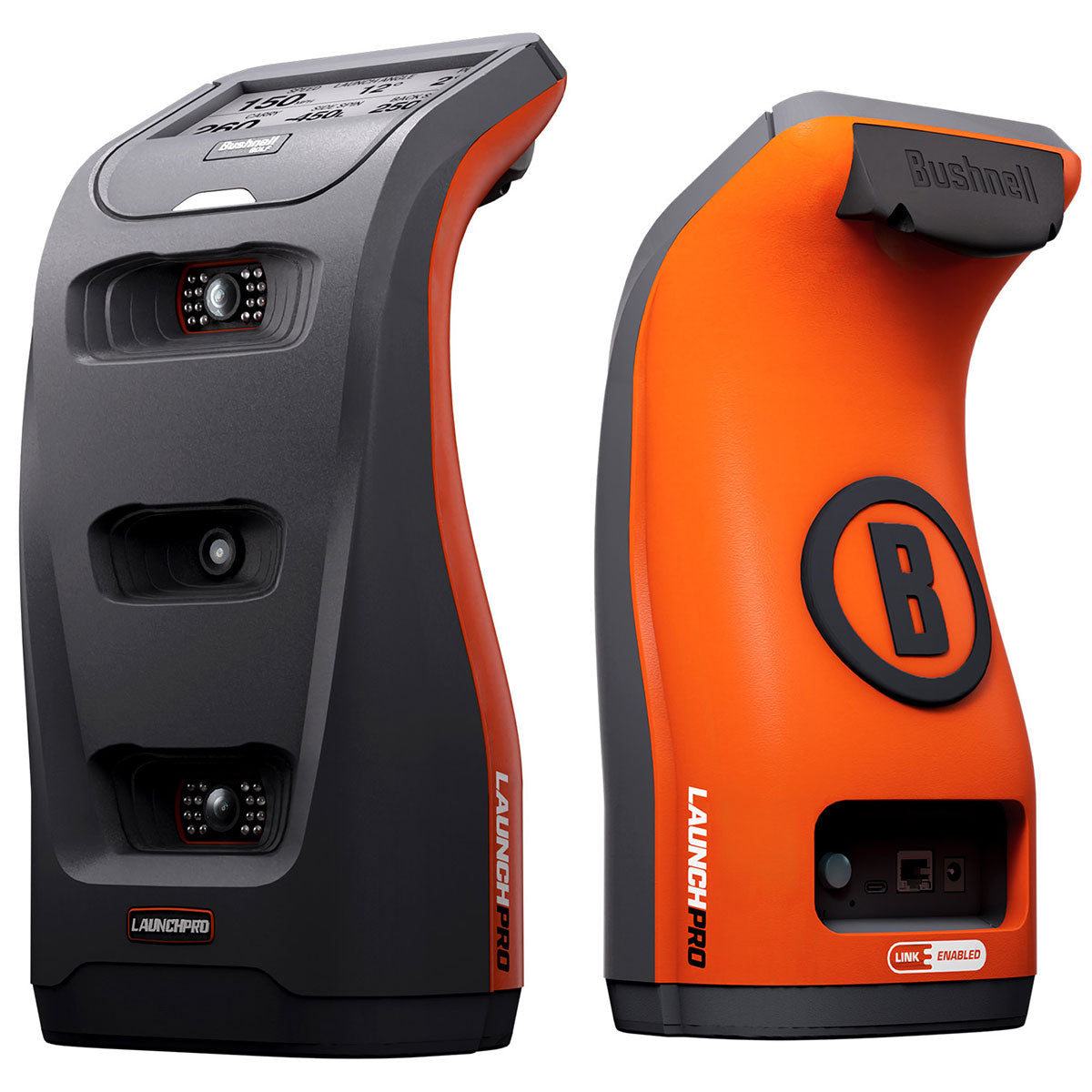
Launch Pro vs SkyTrak ST MAX: the subscription decides it
Two of the most-recommended home-sim units, about $1,000 apart on the sticker. Run the software costs for three years and the gap gets much wider — in one specific direction.
Explained
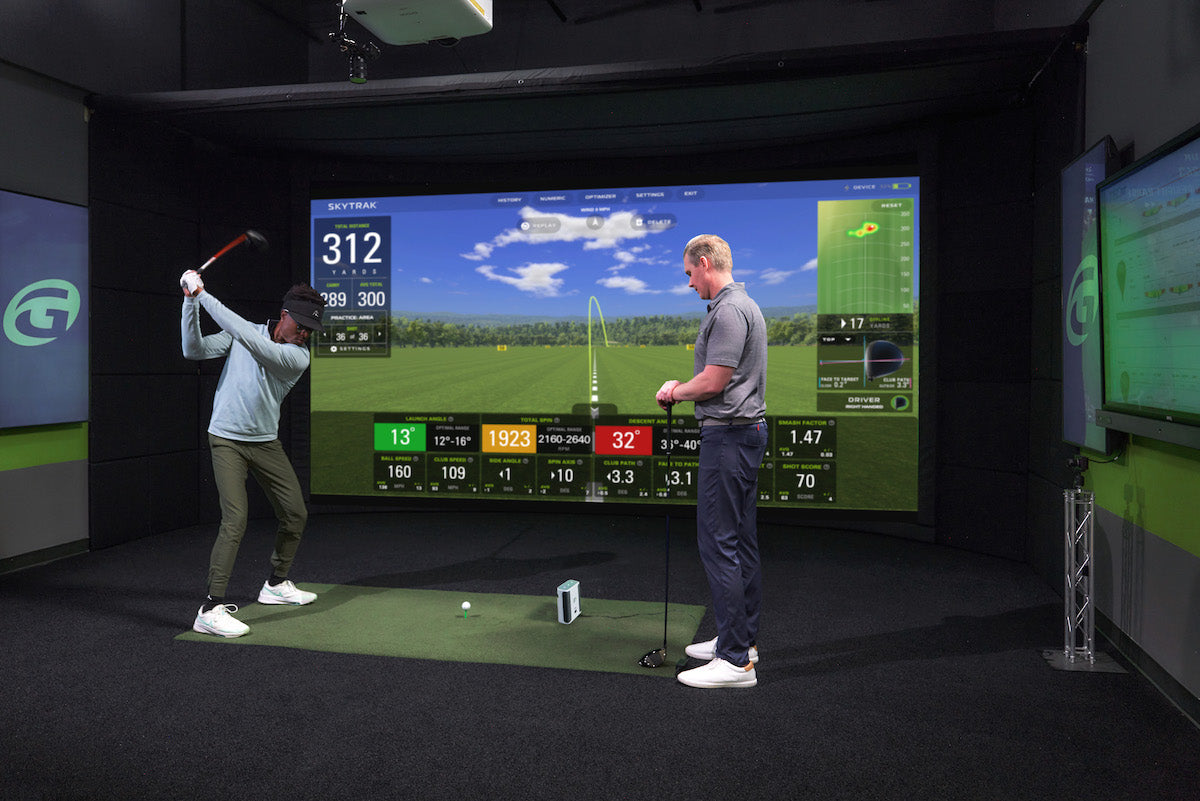
The four home golf simulators: what each budget threshold actually unlocks
Spend twice as much and you don't get twice the simulator — you cross into a different kind of room. Here's what genuinely changes at each tier, and the exact point where more money stops buying you more golf.
Opinion
Your garage practice doesn't die in February because you lost motivation
It dies because of a small, stupid, entirely fixable thing: bending down. Twenty minutes of home practice contains about four minutes of golf and sixteen of picking balls up — and that ratio, not your willpower, is what kills the habit.