
Wilson DUO Soft review: how soft is too soft?
At 37 compression it's about the softest ball you can buy. But soft isn't a performance stat, it's a feel — so here's what that daft-low compression actually does for your game, and what it quietly costs you.
By Ross Hamilton · Staff Writer
The verdict
Excellent
What's great
- About the softest feel on the shelf at 37 compression
- Straight, forgiving, low-spin flight that genuinely helps sub-95mph swings
- Cheap enough that losing one barely stings
Watch out
- Limited greenside grab — releases rather than checks on delicate shots
- Little shot-shaping; the wrong ball for faster, skilled players who spin wedges
Bottom line — For slower swingers who want soft, straight and cheap, the DUO Soft delivers exactly that — just know you're trading away the greenside spin better players rely on.
Wilson
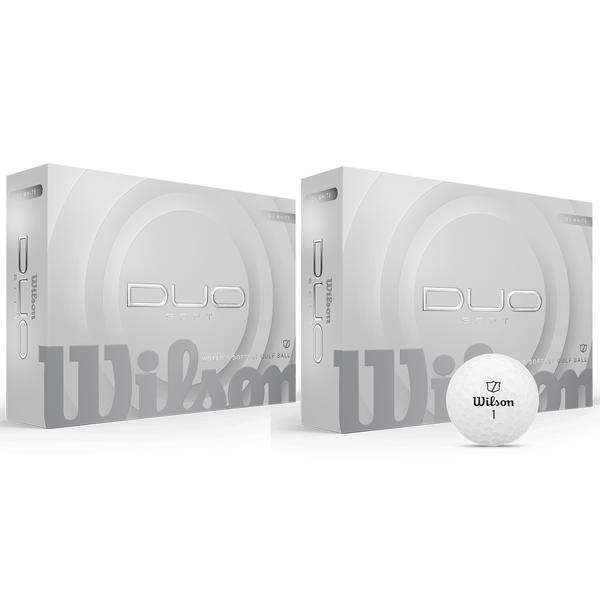
Wilson DUO Soft
ifrothgolf earns a commission on purchases made through these links, at no extra cost to you. It never changes what I recommend. Full disclosure.
The Wilson DUO Soft is one of the softest golf balls on the shelf — a two-piece ball with an ultra-low 37 compression, tuned to fly high, straight and low-spinning off the long clubs. And if you swing under about 95mph and want a soft, straight, cheap ball that just gets on with it, it's one of the best value picks out there, around $30 a dozen. But 'soft' is the most misunderstood word in golf-ball marketing, so this review is really about one question: what does that extreme softness actually buy you, and what does it quietly cost? For the right golfer the answer is 'plenty, and not much.' For the wrong one, it's the reverse.
First, what soft is and isn't. Compression is essentially how much the ball squashes at impact; a low number like 37 means it deforms easily, which is what your hands read as 'soft' off the face and the putter. What soft is not is a synonym for longer, better or more controllable — those are separate properties, and conflating them is how golfers end up with the wrong ball. So let's take the DUO Soft's softness at face value and look at what actually comes with it.
What the low compression really does
Two genuine benefits flow from that 37 compression, and they're the reason to buy it. The first is feel: it's genuinely lovely and soft off irons and putter, and for a lot of golfers that soft, muted sensation breeds confidence over the ball, which is worth more than any launch-monitor decimal. The second is real performance help for slower swings — a low-compression ball is easier to compress at moderate speeds, so sub-95mph players get efficient energy transfer and a ball that launches high and holds a straight line rather than exaggerating a slice. Wilson tunes it for low long-game spin deliberately, and low spin off the driver means straighter, which for the target buyer means more balls in play. There's also a full 360-degree alignment stripe for lining up tee shots and putts, which is a small but genuinely handy touch.
The honest trade-off: greenside control
Here's what soft quietly costs you. That low-spin, ionomer-cover recipe that keeps the ball straight off the tee is the same recipe that limits greenside grab — the DUO Soft won't check and bite on delicate pitches and chips the way a urethane ball does; it lands and releases. It also gives up the workability a better player uses to shape shots on demand. That's not a defect, it's the deal: you're trading spin and control for feel, forgiveness and price. If you're a low-handicap shotmaker who scores by spinning wedges to a stop and bending shots around trouble, this is simply the wrong ball for you, and you should be playing urethane.
How it compares to a balanced value ball
It's worth knowing where the DUO Soft sits against its value rivals, because 'softest' isn't automatically 'best value.' It's more single-mindedly soft and low-spin than an all-rounder like the Srixon Soft Feel, which chases a bit more of a balance between feel and greenside performance — so if you specifically prize the softest possible feel and dead-straight flight, the DUO Soft is your ball, whereas if you want a touch more versatility for similar money the Soft Feel is worth a look. Our Callaway Supersoft vs Titleist TruFeel comparison covers the other soft-ball heavyweights, and the best value golf balls and best soft-feel golf balls guides map the whole soft-and-cheap end of the market.
Who it's for, who should skip
Buy the DUO Soft if you swing under 95mph, you want the softest feel and the straightest flight you can get for the money, and you'd rather have forgiveness and confidence than greenside spin you might not use anyway. For that golfer — a big chunk of weekend players, improvers and slower swingers — it's spot-on and superb value. Skip it if you're a low-handicap player who shapes shots and relies on wedge spin to score, or if you swing fast enough to compress a firmer ball, in which case a urethane option gives you control the DUO Soft deliberately trades away. Beginners and value-hunters weighing up the field should also see our best golf balls for beginners guide.
The verdict
So, how soft is too soft? Not this soft — for the golfer it's built for. The DUO Soft delivers exactly what its compression promises: a lovely soft feel, an easy, straight, forgiving flight for moderate swing speeds, and a price that makes losing one hurt a lot less. The catch is the greenside spin and shot-shaping you give up, and that only matters if you're good enough and fast enough to use them. Most golfers aren't, and for them this is one of the smarter cheap balls going. Play urethane if your short game demands it; play this if soft, straight and cheap is what you're really after. See how it stacks up in our balls hub.
Where to buy
8.0/10Wilson
Wilson DUO Soft
Daft-soft, low-spin two-piece ball that hands slower swingers easy distance and a buttery feel without emptying the wallet.
ifrothgolf earns a commission on purchases made through these links, at no extra cost to you. It never changes what I recommend. Full disclosure.
Frequently asked
- Does a softer golf ball actually go further?
- Not automatically — soft and long are separate things. A low-compression ball like the DUO Soft is easier for slower swingers to compress, which can help distance and gives a straighter flight, but at higher swing speeds a firmer ball may go as far or further. Soft mainly buys you feel and, for moderate speeds, forgiveness.
- Who should play the Wilson DUO Soft?
- Golfers who swing under about 95mph and want the softest feel and straightest flight for the money — a big share of weekend players, improvers and slower swingers. It's forgiving, low-spinning off the tee and inexpensive, which suits that player well.
- What's the downside of the DUO Soft?
- The low-spin, ionomer-cover recipe that keeps it straight off the tee also limits greenside grab, so it releases rather than checks on delicate chips and pitches, and it's harder to shape on demand. That trade-off only hurts skilled, faster players who rely on spin and workability.
- DUO Soft or Srixon Soft Feel?
- The DUO Soft is more single-mindedly soft and low-spin with dead-straight flight; the Srixon Soft Feel chases a bit more balance between feel and greenside performance. Pick the DUO Soft for the softest feel and straightest ball flight, the Soft Feel for slightly more all-round versatility at a similar price.
Read next
Review
7.9/10Full Swing KIT review: the tape measure decides this, not Tiger
Tour pedigree, TGL on ESPN, and radar good enough to be checked against a Trackman outdoors. It also wants eighteen to twenty feet of room, which rules out most of the garages people buy it for.
Versus
Trackman iO vs Uneekor EYE XO2: the year-one trap
Both mount overhead, both want ten feet of ceiling, and about $3,000 separates them on the shelf. Then Trackman's included first year runs out, and the gap starts growing by $1,100 a year.
Versus
Uneekor EYE XO2 vs Foresight GC3: ceiling or floor?
About $4,000 separates them, but they're not really rivals — one lives in your ceiling forever, the other sits on the floor and travels. The cheaper one is also the one with no subscription.