
How many wedges do you actually need? (Wedge gapping made simple)
Three? Four? And what lofts? The simple way to set up your scoring clubs so there are no awkward in-between yardages.
By Ross Hamilton · Staff Writer
 Explained
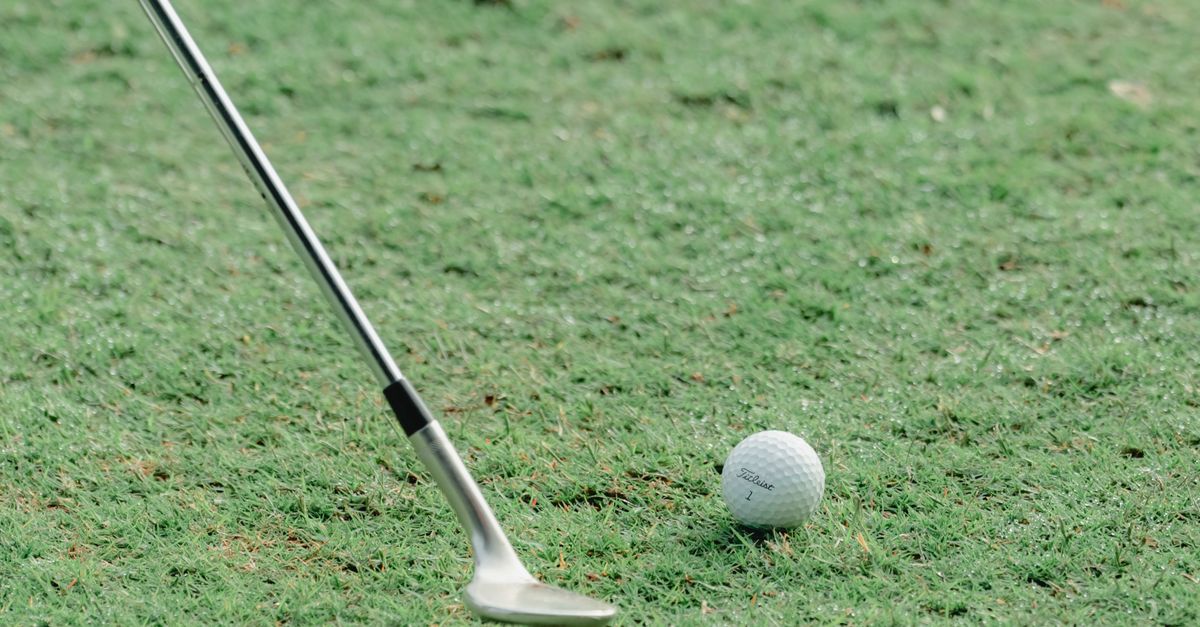
Most golfers want three wedges beyond their pitching wedge, gapped about 4–6° apart so the distances step down evenly — typically a gap wedge (~50°), a sand wedge (54–56°) and a lob wedge (58–60°). Get the gaps even and the bounce right and you've fixed one of the quietest scoring leaks in golf, without buying a single yard of clubhead speed. Here's the simple version, and how to set yours up from your own clubs rather than a tour pro's.
The gapping problem nobody checks
Wedges are where amateurs leak the most shots, and a surprising share of those losses come down to a boring, invisible setup fault: gaps. Distance gaps between clubs should be even, so that every yardage you face has a club you can swing fully and commit to. The trouble starts at the top of the wedge set, where modern iron lofts have crept ever stronger. If your pitching wedge is a strong 43–44° and your sand wedge is 56°, that's a 12–13° canyon with nothing in it — and a string of three-quarter, in-between distances you can never quite commit to. A full pitching wedge might fly 120, a full sand wedge 85, and everything between 85 and 120 becomes a guess-and-hope partial swing. Even gaps close that canyon so each distance has a club you can hit with a full, confident motion.
How many wedges, and what lofts
The professional answer is three, and it is not close. We counted the wedge setups in the 49 current tour bags we track; 45 of them record lofts in full. Of those 45, the median bag carries three wedges beyond the pitching wedge, 39 carry three or more, and 16 carry four. Only a handful get by with two. The advice below is not a compromise for club golfers, then. It is the same number the best players in the world land on when they have a fitter, a full set of gapping data and no reason to guess.
The four bags left out are ones where our own records list a wedge without its lofts, so we excluded them rather than guess. Every bag behind the count is linked and sourced.
Three beyond the pitching wedge suits most golfers; plenty of players do perfectly well with two, and a few shotmakers carry four. The method is the same regardless of the number. Write down your set's actual pitching-wedge loft — don't assume, look it up, because modern game-improvement sets are strong and often run 43–44° where a classic set was 47–48°. Then work down in even steps of roughly 4–6°. From a 44° pitching wedge, that's a clean 48–49°, 54° and 58–60° three-wedge setup; from a weaker 46° pitching wedge you might run 50°, 54° and 58°. The single biggest mistake is copying a tour pro's lofts off a YouTube WITB video — their pitching wedge and yours start in completely different places, so their gaps are meaningless for you. Start from your own pitching wedge, because that's where your gapping actually begins.
Two, three or four? Match it to your game
The right number depends on the gaps you need to fill and the shots you actually play. A higher-handicap golfer who rarely hits a full lob shot and wants simplicity is often better with two wedges — a pitching wedge plus one sand wedge around 54–56° — keeping the set easy and avoiding a 60° that, for most amateurs, costs more shots than it saves. The classic three-wedge setup (gap, sand, lob) suits the broad middle: anyone who faces a real range of greenside distances and wants a full-swing club for each. Four wedges is for low-handicap players and shotmakers who have a genuine, repeatable use for every loft and the precision to exploit it — most golfers carrying four would score better trading one for a club they hit better at the top of the bag. Be honest about which of these is you.
The wedge you carry decides a club elsewhere
There's a knock-on most golfers forget: every wedge you add is one club you can't carry somewhere else, because the rules cap you at fourteen. Stuff the bottom of the bag with four wedges and you've given up a hybrid, a long iron or a fairway wood that might do more for your scoring than a fourth precisely-gapped loft you rarely swing fully. This is the real argument for restraint at the top of the wedge set. If you're a higher handicapper, the honest maths usually favours an extra forgiving long club over a lob wedge you struggle to control — the shots you face off the tee and into long par-4s come up far more often than the delicate flops a 60° exists for. Decide your wedges with the whole fourteen in mind, not in isolation.
Bounce and grind matter as much as loft
Loft sorts your distances, but it's only half the setup — bounce and grind decide whether each wedge actually performs on your turf, and they matter most on the sand and lob wedges that hit the trickiest lies. Higher bounce (roughly 10°+) suits soft turf, fluffy bunkers and steeper, diggier swings; lower bounce (around 4–8°) suits firm turf, tight lies and sweepers. Get this wrong and even a perfectly gapped, premium wedge chunks or skulls — the full breakdown of how to read your divots and pick a grind is in wedge bounce and grind explained. A fitting bay sorts it in minutes, and it's the cheapest meaningful improvement you can buy.
The practical move
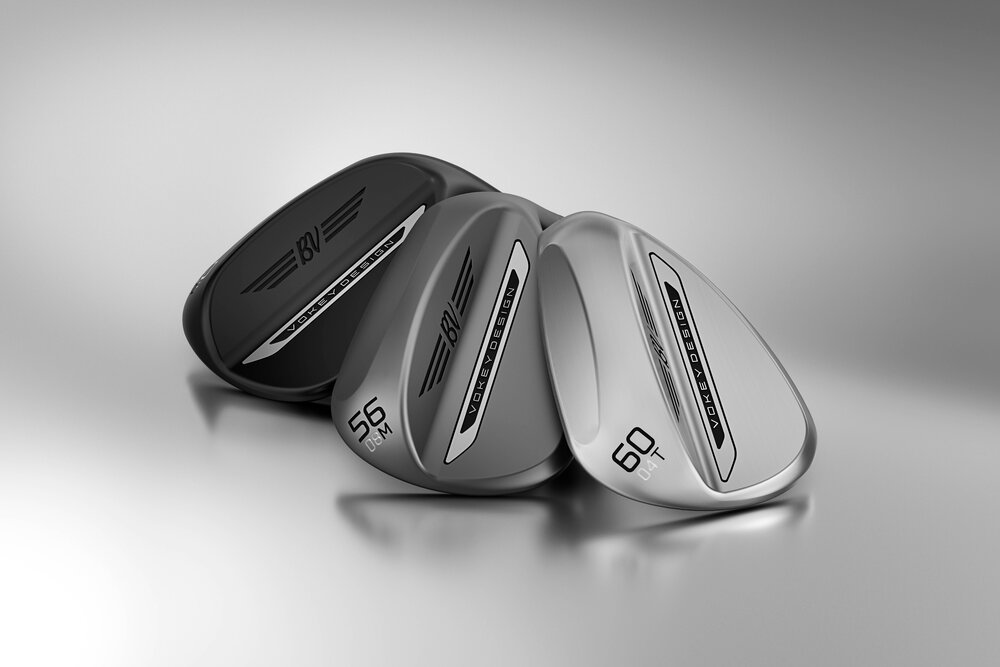
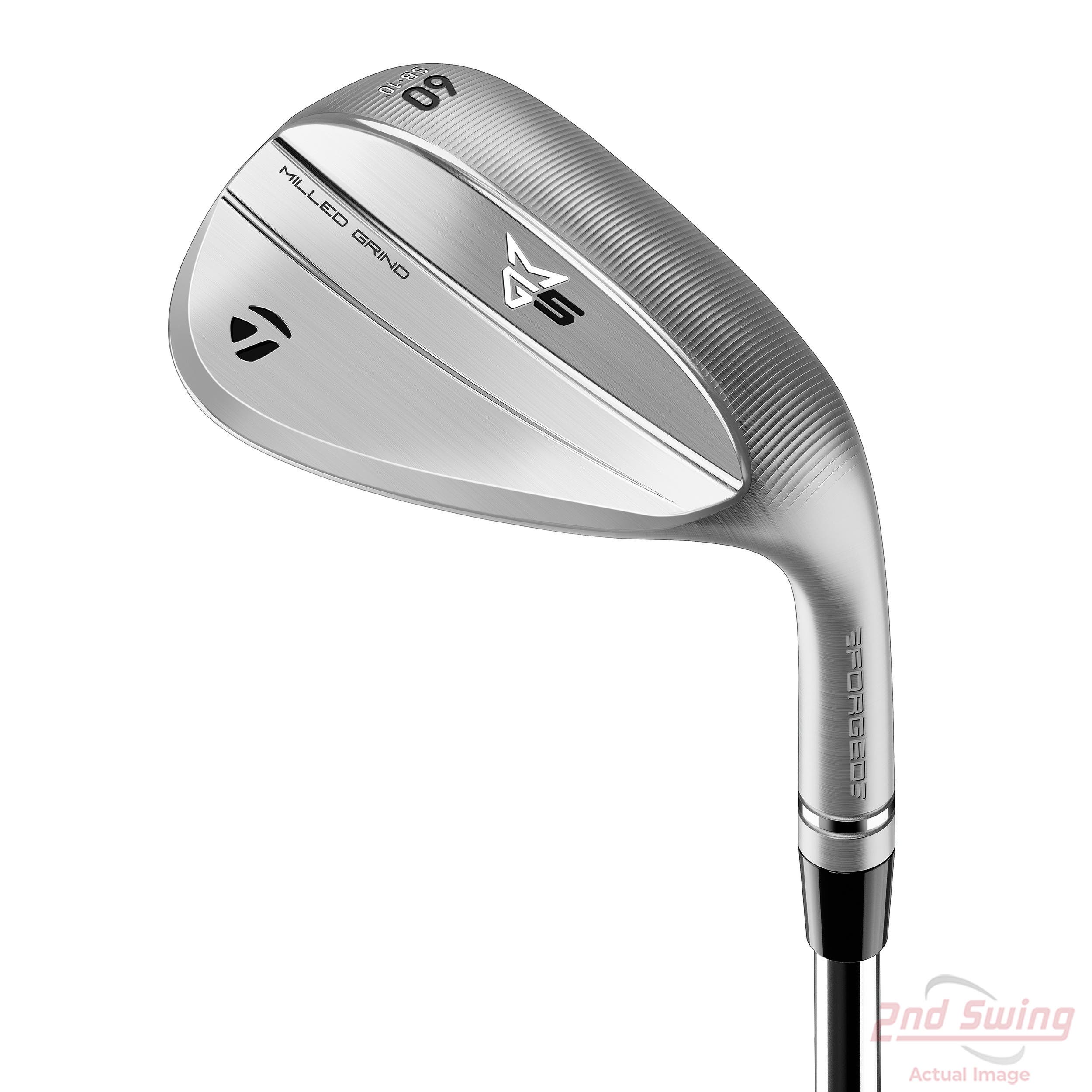
Do this in order. Write down your wedge and pitching-wedge lofts, check the gaps are even, and fill any canyon you find at the top of the set — that's where the easy shots are hiding. Then get the new wedge's bounce and grind fitted to your turf and swing, whether that's a fitting-led Vokey SM11 or a spin-forward TaylorMade MG5. And if you're tempted to make the highest-lofted wedge your default around the green, read your 60-degree wedge is costing you shots first — for most golfers, the 54–56° is the smarter everyday club. Even gaps plus the right grind beats buying the priciest wedge and hoping. See our irons & wedges guide for the picks.
Products mentioned in this article
ifrothgolf earns a commission on purchases made through these links, at no extra cost to you. It never changes what I recommend. Full disclosure.
Frequently asked
- How many wedges do tour players carry?
- Three, in most cases. Of the 49 current tour bags we track, 45 record wedge lofts in full, and among those the median bag carries three wedges beyond the pitching wedge. Thirty-nine carry three or more and 16 carry four. So the three-wedge setup most club golfers are advised toward is the same one the best players land on with a fitter and full gapping data.
- How many wedges should I carry?
- Most golfers are best with three beyond the pitching wedge — a gap (~50°), sand (54–56°) and lob (58–60°). Two is plenty for higher handicappers who want simplicity; four is for low-handicap shotmakers. The key is even gaps, not a magic number.
- What lofts should my wedges be?
- Work down from your set's actual pitching-wedge loft in even ~4–6° steps. Modern pitching wedges are strong (often 43–44°), so look yours up and don't copy tour lofts — gap from your own pitching wedge, because that's where your gapping starts.
- Why is there a gap between my pitching wedge and sand wedge?
- Because iron lofts have got stronger over the years while sand-wedge lofts haven't, leaving a 12°-plus canyon in many sets. A gap wedge (around 50°) fills it so you're not left guessing on three-quarter swings between your two full-swing distances.
- What's more important, loft or bounce?
- Both, and in order. Loft gives you even distance gaps so every yardage has a full-swing club; bounce and grind decide whether the wedge performs on your turf and swing. Sort the gapping first, then get the bounce and grind fitted.
Read next
Review
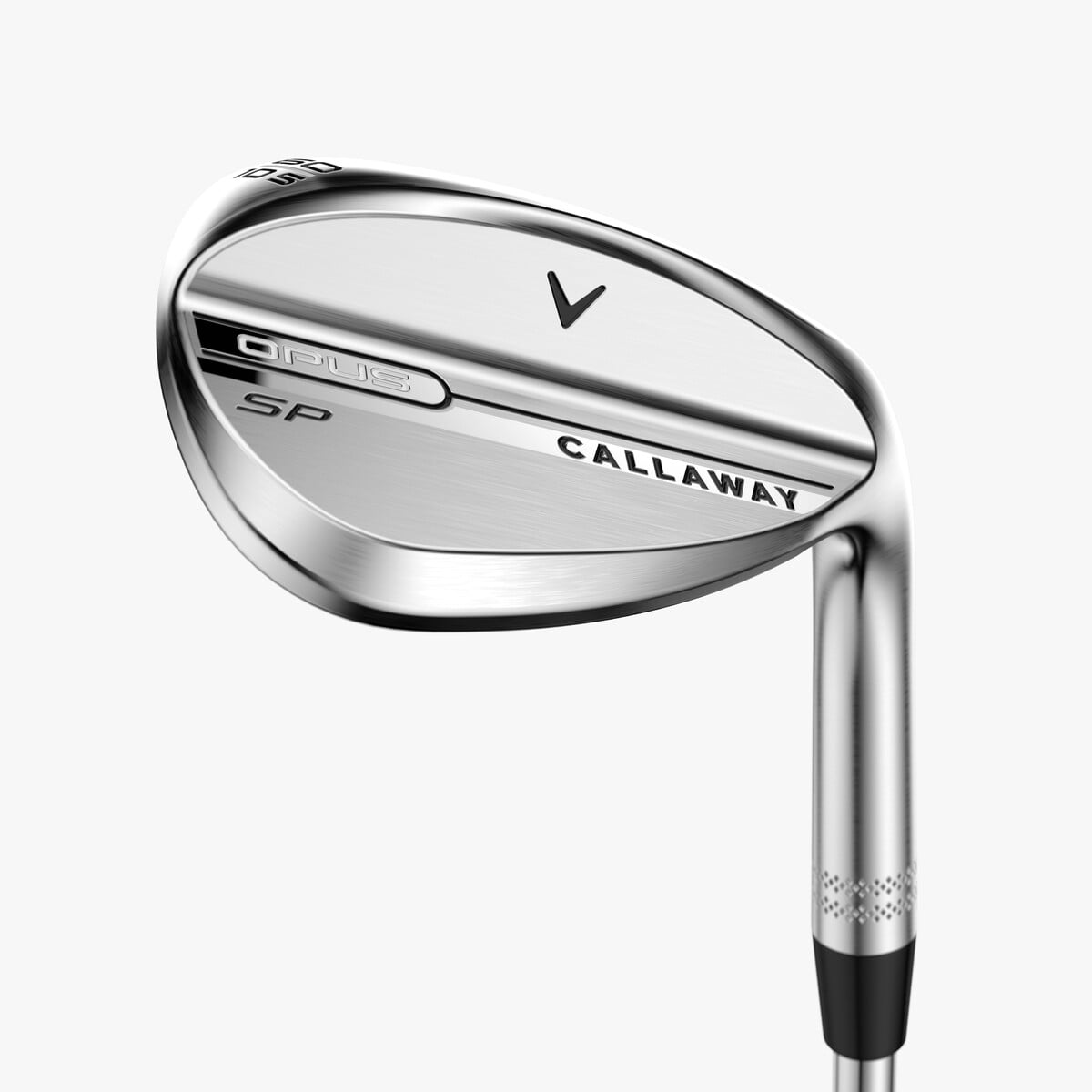
8.4/10Callaway Opus SP review: the wedge in four tour bags while everyone buys Vokey
Callaway's Spin Pocket wedge lands a lower, spinnier flight for about the same money as a Vokey. It is the one I would buy for firm turf and full shots, and the wrong call if your short game lives in soft sand.

Explained
Wedge bounce and grind, explained
The two numbers that decide whether your wedge digs, glides or skips — in plain English, with how to pick yours.
Review
8.8/10Takomo 101 MKII review: the irons quietly embarrassing the big brands
Half the price of a name-brand set, and good enough that you'll feel a bit silly for not trying them sooner. The direct-to-consumer irons reviewed.