
Titleist GTS2 review: the forgiving head that tour bags play at 9 degrees
Titleist sells this as the stability model, and the four bags on our roster that carry one are all set at ten degrees or under. That gap between how it is marketed and how it is actually used is the most useful thing about it.
By Ben Marsden · Reviews Editor
The verdict
Excellent
What's great
- Spin consistency across the face is the real gain — Plugged In Golf measured most strikes inside a 400 rpm band
- Independently good at wildly different speeds: the same review produced 287 yards of carry at 106 mph and around 220 at 81 mph
- Front and rear interchangeable weights mean a fitter can move launch and spin without changing head
Watch out
- The year-on-year gain over the GT2 is small, and the GT2 has been cut by roughly 30 per cent
- It is the forgiveness model for a player who already has speed, not the slow-swing Titleist — the brand's own answer there is the carried-over GT1
- Off the rack it ships in a setting chosen for someone else, and almost nobody moves the weights afterwards
Bottom line — The best-rounded driver Titleist currently sells and the one most of its buyers should be hitting, but only fitted and only if you are not replacing something recent. If the badge is not the point, the GT2 at 30 per cent off does most of this for a lot less.
Titleist
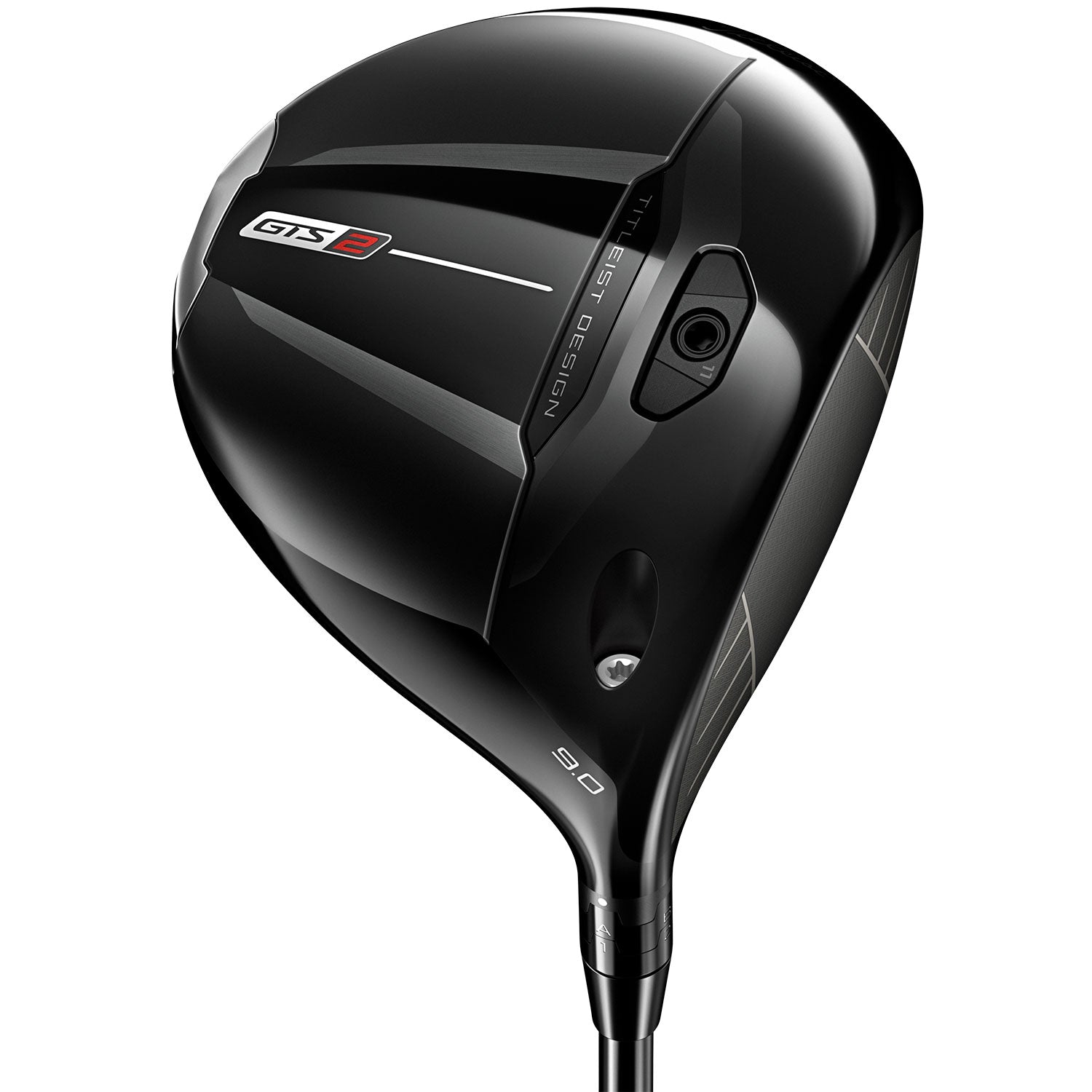
Titleist GTS2 Driver
The Titleist GTS2 is the driver most Titleist buyers should be looking at, and it has been on shelves since June, which is long enough that the launch coverage has burned off and what is left is the club. At $800 it is not cheap and it is not trying to be. What it is trying to be is the head that makes the good strike normal rather than the great strike possible, and on the evidence it mostly succeeds.
Titleist announced the GTS range on 13 May 2026 and put it in shops on 11 June — the dates are in the company's own newsroom release, which also confirms the family is three heads and not four. There is a GTS2, a GTS3 and a GTS4. There is no GTS1, which matters more than it sounds and we come back to it.
What is actually new, as opposed to newly named
The structural change is the Split Mass Frame: a thermoformed body that lets Titleist put mass deliberately both forward and back in the same head rather than choosing. On the GTS2 that buys stability, and the head is longer front to back than the GT2 it replaces, which is the shape language of a forgiveness club. The face is a reworked Speed Sync design, and the pitch for it is spin consistency rather than a headline ball-speed number — which is refreshing, and also the thing amateurs actually need, because inconsistent spin is what turns two decent swings into two different distances.
One correction worth making, because our own catalogue copy has it slightly wrong and so does a lot of the coverage. The GTS2's adjustability is a dual weighting system — interchangeable front and rear weights — rather than the sliding track. Titleist's launch release attaches the track weight to the GTS3 and the GTS4. For a buyer that distinction is not pedantry: it tells you the GTS2 is adjusted at a fitting and then left alone, whereas the two better-player heads are designed to be fiddled with.
On the numbers, the most useful independent read is Plugged In Golf's, because two reviewers hit it at genuinely different speeds. Matt Saternus swung it at 106 mph for 159 mph of ball speed and 287 yards of carry. Matt Meeker swung it at 81 mph and got around 220 yards of carry with a high flight. And across strikes spread over the face, only a few shots fell outside a 400 rpm spin band. That last figure is the one to remember — it is the mechanism behind everything else the club is praised for.
What the bags say, and it is not what the marketing says
We maintain 69 tour bags and re-verify them against named sources. Counting drivers only, deduping per player, and anchoring the model match so the GT280 mini driver cannot sneak in: 13 of the 69 carry a Titleist GT- or GTS-family driver, and nine of those 13 have already moved to the GTS generation — three and a half months after it reached retail. Four are still on a GT head.
Split by model, the nine GTS bags go five to the GTS3 and four to the GTS2. The four GTS2 bags are Justin Thomas, Jordan Spieth, Robert MacIntyre and Dustin Johnson. Now look at how they have them built. Thomas is at around 9.5 degrees, MacIntyre at 9, Johnson at 10, and Spieth has a 10-degree head set down to 9.25. Every GTS2 on our roster is at ten degrees or below, and two of the four are set under 9.5.
That is the review, really. The head Titleist markets as the stability model is being used at the top of the game as a low-loft driver, which tells you the forgiveness is not coming from launch — it is coming from the face and the frame holding ball speed when you miss. Which in turn tells an amateur something practical: the GTS2 does not add launch for you, so if you need launch you need loft, and the fitting matters more than the model name.
The usual and necessary caveat: that is the 69 bags we maintain and re-verify, not a census of professional golf, and bags change week to week.
The head this is not for
Titleist has been unusually clear about this and almost nobody reads it. The company's own guidance points moderate swing speeds at the GT1 — a carried-over club from the previous generation, still in the range, still the lightweight easy-launch option, and deliberately not part of the 2026 launch. There is no GTS1 because Titleist did not build one. So if you are swinging in the low eighties and somebody across a counter has handed you a GTS2 because it is the forgiving one, you are being sold the right adjective and the wrong club. We took that argument apart at length against the club that does serve that golfer in Ping G440 K vs Titleist GTS2, and the short version is that the decision sits in the shaft column rather than in the head.
The GT2 problem
Here is the awkward arithmetic. The Titleist GT2 this replaces topped a full-field distance test in its day and took a Hot List gold, and Titleist cut it by roughly 30 per cent when the GTS2 landed. It is now around $650. The GTS2 is $800 and the year-on-year gain is real but modest — a better frame, a more consistent face, different adjustability.
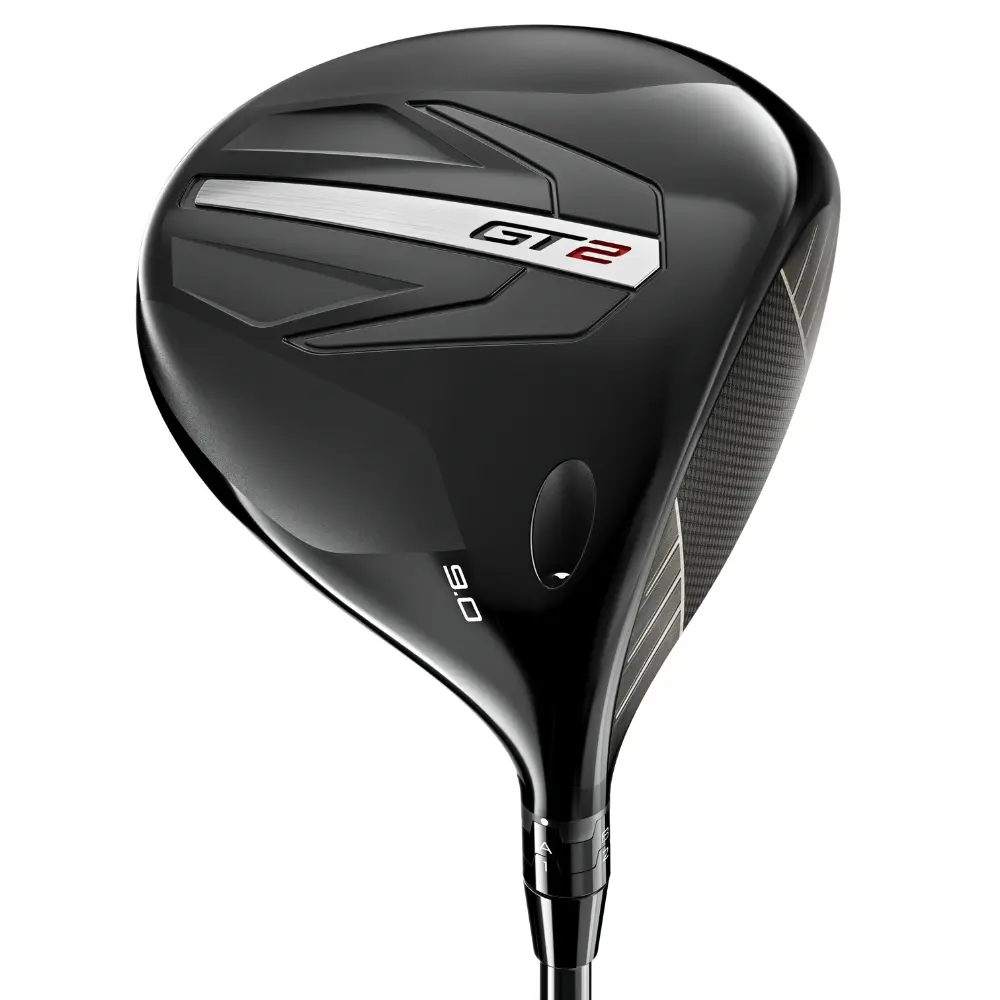
A superseded head loses nothing on the tee the day its successor ships. If you were about to buy a GTS2 without a fitting, buy the GT2 and spend the difference on the fitting, which will do more for your driving than the badge will. Our GT2 review makes that case in full and it has only got stronger as the discount has settled in. Buy the GTS2 when you have been fitted into it specifically, when the spin consistency showed up in your own numbers on the day, or when you intend to keep a driver for five years and want the current frame. Those are all legitimate reasons. "It is the new one" is not.
Who should skip it
Three groups, and between them that is most people reading this. Anyone with real speed chasing the lowest spin and a workable flight wants the GTS3 or the GTS4 — the whole point of a three-head family is that the wrong one behaves like a different club in the same hands. Anyone swinging under about ninety wants the conversation above, not this head. And anyone whose current driver is two or three years old and properly fitted should keep it; the gain here is small and the discount on last year's is not, which is the argument we make in full in buy last year's driver.
Everyone else — the broad middle, decent speed, a miss that is more about strike location than shape — this is a genuinely excellent driver and the most complete thing in Titleist's current range. Get it fitted, get the loft checked on a monitor rather than defaulting to what you have always played, and see where it sits against the field in our best drivers guide.
Where to buy
8.5/10Frequently asked
- Is the Titleist GTS2 a new driver?
- Not any more. Titleist announced the GTS range on 13 May 2026 and it reached golf shops on 11 June 2026, so it has been on sale for roughly three and a half months. It is the current generation and the successor to the GT2, but it is no longer a launch product, and the previous generation has had time to settle at a discount.
- How many tour players use a Titleist GTS driver?
- Across the 69 tour bags we maintain and re-verify, 13 carry a Titleist GT- or GTS-family driver, and nine of those have already moved to the GTS generation while four are still on a GT head. Among the nine GTS bags the split is five GTS3 to four GTS2, with Justin Thomas, Jordan Spieth, Robert MacIntyre and Dustin Johnson on the GTS2. That is the roster we track rather than a census of professional golf, and bags change week to week.
- What loft do tour players use in the Titleist GTS2?
- Low, which is the surprising part for a head marketed on forgiveness. On the bags we track, every GTS2 is built at ten degrees or under: Robert MacIntyre at nine, Justin Thomas at around nine and a half, Dustin Johnson at ten, and Jordan Spieth in a ten-degree head set down to 9.25. The forgiveness comes from the frame and the face holding ball speed on a miss rather than from added launch, so an amateur who needs height needs loft rather than this model.
- Titleist GT2 or GTS2?
- The GTS2 is the better club, with a new Split Mass Frame, a reworked face and more consistent spin across the strike. The gap is modest and the price gap is not: Titleist cut the GT2 by roughly 30 per cent when the GTS2 launched, and the GT2 topped a full-field distance test in its own generation. Buy the GTS2 if a fitting put you in it specifically. Otherwise buy the GT2 and spend the saving on the fitting.
- Is the Titleist GTS2 good for slow swing speeds?
- No, despite being the forgiving model. Titleist's own guidance points moderate swing speeds at the GT1, a lightweight easy-launch head carried over from the previous generation, and there is no GTS1 in the 2026 family at all. The GTS2 is the stability head for a player who already generates speed, and it is neutral rather than draw-biased, so it will make a miss cost less without changing its shape.
Read next
Versus
TaylorMade Qi4D vs PING G440 Max: the 2026 driver decision most golfers get backwards
Two of the year's biggest drivers, cross-shopped in every fitting bay — and most players walk in chasing the wrong thing. One wins the robot test outright; the other quietly saves more rounds. Here's which head actually belongs in your bag, and why the answer probably isn't the one you'd guess.
Opinion
What the 'longest driver of 2026' number won't tell you
Every year a chart crowns one driver the longest, and every year thousands of golfers buy the wrong club because of it.
Opinion
The most overrated gear in golf (and what to buy instead)
Golf is spectacularly good at selling you the wrong thing. Here's where the money quietly leaks out of your bag — and the unglamorous stuff that actually drops shots.