
Tour Edge Exotics Milled vs PING S259: the cheaper line starts at 50 degrees, and your gap wedge decides this
One of these lines runs from 46 to 62 degrees and changes its groove design as the loft climbs. The other starts at 50, puts one milled face across all 17 configurations and spends its variety on bounce instead. Where the top of your wedge set sits settles it.
By Ross Hamilton · Staff Writer
Buy the Tour Edge Exotics Milled Wedge if the clubs you are replacing live between 54 and 60 degrees, your turf is ordinary parkland and you are buying more than one of them. Buy the PING S259 if the first specialist wedge in your bag is a 46 or a 48, if you want one model running the whole scoring set, or if you need a sole shape that three profiles cannot reach.
That is a different comparison from the one everybody is having about these two clubs. The Exotics line reached retail on 14 September at roughly half the money, and the obvious question is whether the cheap one is good enough. The more useful question is whether it covers the clubs you are actually shopping for, because these two lines do not span the same bag.
The ranges do not overlap where you think
The S259 runs from 46 degrees to 62 across six sole grinds, in Chrome or Raw. The Exotics line runs from 50 to 60, across 17 loft-and-bounce configurations in three named profiles. Ten degrees of that is shared ground. The parts that are not shared are the parts that decide this.
At the bottom end it barely matters. The 62 exists, PING gives it the tightly spaced MicroMax groove pattern, and the honest position on lofts above 60 is one we have already set out with the bag data in where the lob wedge stops in the tour bags we track. Almost nobody needs that club.
The top end is a different story, and it is the one nobody puts on a comparison table. Iron sets have crept strong for fifteen years, and the pitching wedge at the bottom of a modern game-improvement set is frequently a lower number than the one stamped on it implies. If your set wedge is in the low-to-mid forties, the first specialist club you need is somewhere around 48, and the Exotics line does not begin until 50. You would be gapping around a hole rather than into one. The S259 starts at 46 and gives those lofts their own groove treatment, which is a genuine advantage and has nothing to do with how either wedge performs around a green. If you have never written your set down, how many wedges you actually need is the piece to read before either of these.
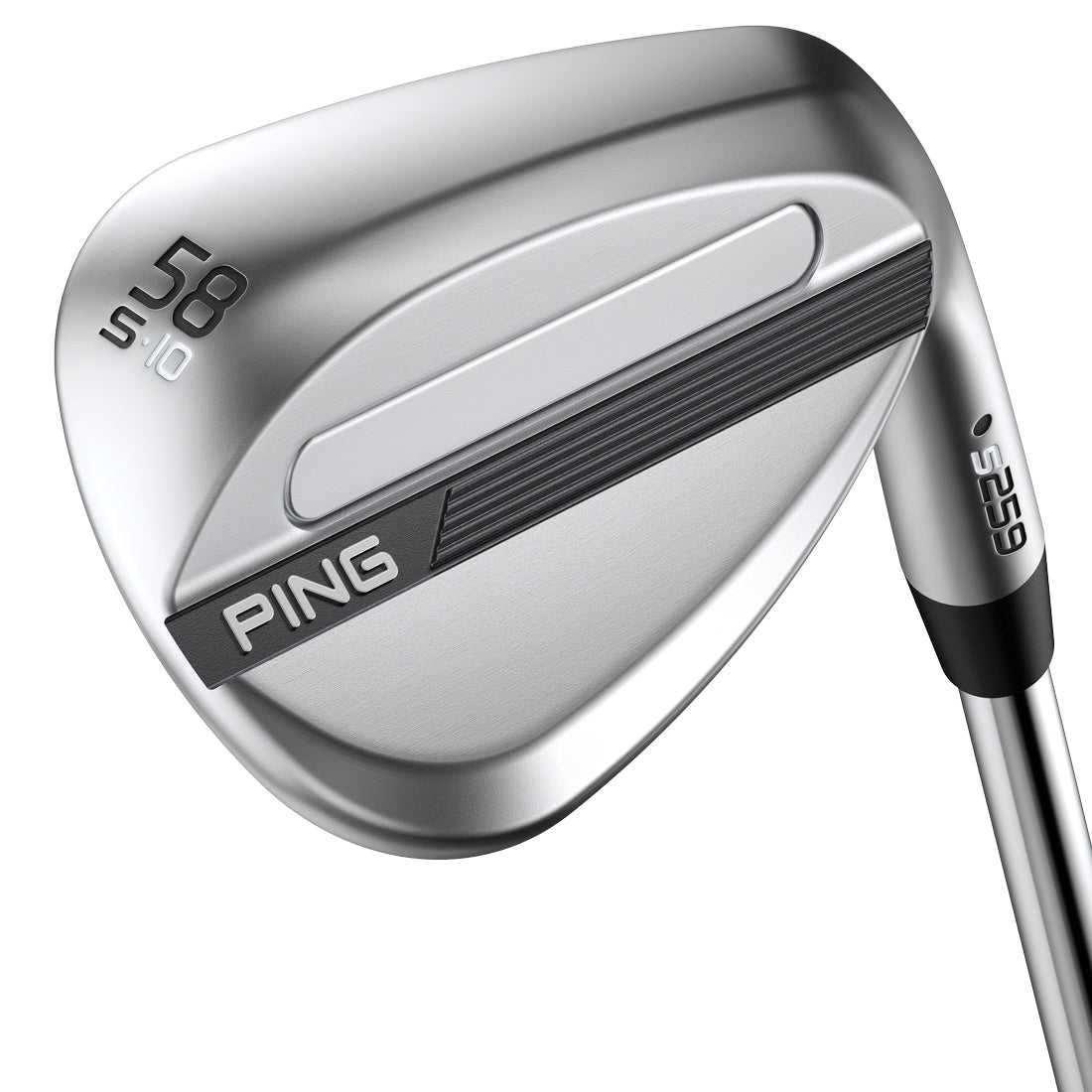
PING spends its engineering on loft. Tour Edge spends it on bounce
Once you are inside the shared range, the two lines are built on opposite convictions about where variety belongs.
PING varies the club by loft. From 54 to 62 degrees the face carries MicroMax grooves, tightly spaced so more edges engage the ball on the partial, greenside shots those lofts are asked to play. From 46 to 52 it goes the other way, a 20-degree sidewall maximising groove volume for full shots out of a fairway. The head is investment-cast 8620 carbon steel with a larger elastomer insert behind the face, and the fitting variable is the grind: six of them, letters, chosen for how your delivery meets your turf.
Tour Edge varies the club by bounce. One CNC-milled SuperSpin groove pattern across the line, one sole concept — the three-part TriGrind, with a chamfered leading edge to stop the club digging at turf entry, a flat, low-camber sole for consistent contact from square, and heavy trailing-edge relief so the face opens properly around the green. The variety is in the 17 configurations and the three profiles: Low, Mid and High Bounce. We made the case for that as a way of selling a wedge in our Exotics launch review, and it stands. What is worth saying here is the trade underneath it. Three profiles are a coarser instrument than six grinds. Coarser is fine, and for most golfers it is better than an alphabet they will not decode, but it is not the same thing as more choice.
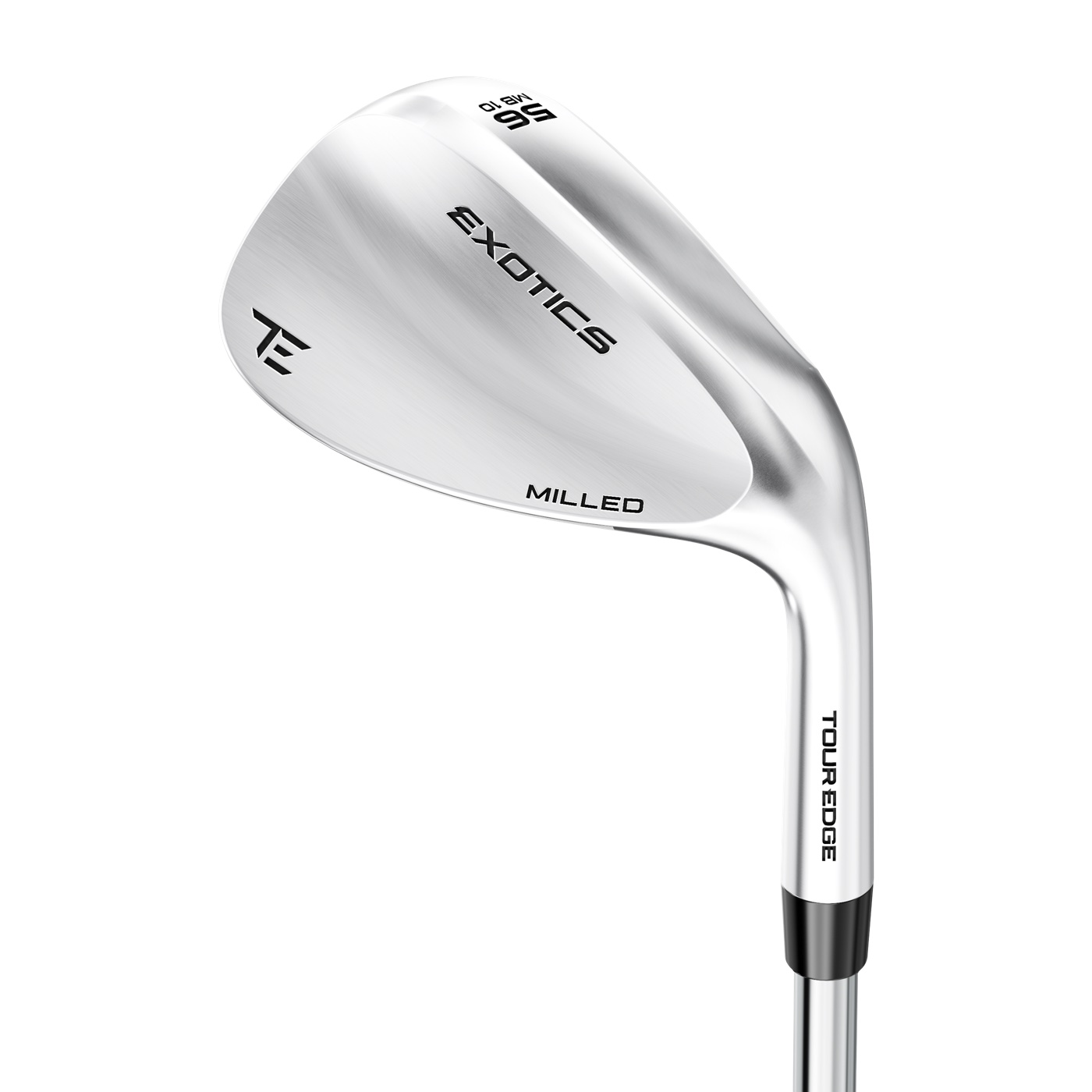
Where each one spent the money
The Exotics is $120. What has not been cut is unusual at that number: a milled face rather than a cast or stamped one, a KBS Hi-Rev 2.0 115g shaft, a Golf Pride Tour Velvet 360 Black grip. Those two components are normally the first things to vanish at the value end of a category, replaced by parts that make a club feel cheap the moment you pick it up.
The S259 is $200, and the money is in the head and the system: cast 8620 with the enlarged elastomer insert that makes it feel far softer than cast usually does, two finishes, the loft-split groove architecture, and six grinds you can be measured into rather than guessed into. Reviewers have consistently placed it alongside the category benchmarks rather than below them.
The arithmetic that matters if you are buying more than one: three Exotics come in under the price of two S259s, in either market. For a golfer rebuilding a worn set of three, that is a real gap rather than a rounding error — and it buys a consistent sole across all three, which is worth more than most rack-bought sets ever achieve.
Neither of those paragraphs is a verdict on turf interaction, and it would be dishonest to pretend otherwise. A wedge is decided by how the sole enters the ground under your delivery, and that is felt, not specified.
Left-handed, the argument ends early
The Exotics is available left-handed in 52, 56 and 60 degrees, all in the Mid Bounce profile. Three clubs, one sole. If you are left-handed and you dig, or sweep, or want anything at 50, the line has no answer and no amount of value makes it one — which ends this comparison early for a chunk of readers.
What neither of them will fix
Two things, and they are the reason most wedge purchases disappoint.
The first is groove condition. Wedge faces are consumable and they fail quietly, which we went through in wedges wear out long before they look worn. If your 56 stopped checking on the second bounce some time last summer, either club will feel like a revelation and it will mostly be the grooves. If your wedges are two seasons old and still gripping, neither will do anything you can measure.
The second is bounce that suits the ground you are standing on right now. Bounce is a relationship between the sole and the turf, and only one side of it changes in autumn — the full argument, including why a wet bunker wants less bounce rather than more, is in wet turf wants more bounce, wet sand wants less. Buying either of these clubs without knowing which way your delivery errs is buying the one feature you have specifically declined to use. If the words are unfamiliar, twenty minutes on wedge bounce and grind, explained is worth more than the difference in price between these two wedges.
Which one to buy
Buy the Exotics if you are replacing the scoring end of the set. A worn 56 and a worn 60, ordinary parkland turf, a strike you would describe as normal: order Mid Bounce and stop reading. This is the group the wedge industry pretends is smaller than it is, and for them the milled face and the named shaft at this money are the easiest recommendation in the category right now.
Buy the S259 if the decision starts at the top of the set. A strong pitching wedge and a hole at 48, a preference for one model and one feel running through every scoring club, or a fitting appointment already in the diary. The 46 to 52 end is engineered as a full-shot club rather than treated as a shorter version of a lob wedge, and that is the single clearest thing PING does here that Tour Edge does not attempt.
Buy the S259 if you have been fitted and the answer was specific. A very wide sole for soft sand, a heavily relieved low-bounce for hardpan and open-faced work. Three profiles will not contain your answer, and the right grind in a dearer wedge beats the wrong grind in a cheaper one every time — which is the whole reason the alphabet exists, however annoying it is.
Buy neither if your grooves are fine. Boring, correct, and the only advice on this page that reliably saves money.
Start at the top of the set, not the sand wedge
Almost every wedge conversation begins with the 60, because that is the club people enjoy imagining themselves using. It is the wrong end to shop from. The gap between your set wedge and your first specialist wedge is where full shots go missing, it is the slot most affected by iron lofts you never chose, and it is the one place these two lines genuinely differ rather than simply costing different amounts.
So work out what sits at the top of your wedges first. If the answer is 50 or above, both are live and the Exotics is the value pick by a distance. If it is 46 or 48, one of them is not in the conversation at all — worth knowing before the price does your thinking for you.
Frequently asked
- What lofts does the Tour Edge Exotics Milled Wedge come in?
- The line runs from 50 to 60 degrees across 17 loft-and-bounce configurations, split between three named profiles: Low Bounce, Mid Bounce and High Bounce. Left-handed players get 52, 56 and 60 degrees, all in Mid Bounce.
- How is the PING S259 different from a cheaper milled wedge?
- The S259 changes its groove design with loft rather than using one face across the line. From 54 to 62 degrees it uses tightly spaced MicroMax grooves aimed at greenside spin, and from 46 to 52 it uses a 20-degree sidewall to maximise groove volume for full shots. It also offers six sole grinds and two finishes, where the Tour Edge line offers three bounce profiles and one sole concept.
- Is three bounce profiles enough, or do I need a grind letter?
- Three profiles cover most golfers with an ordinary strike on ordinary turf, and they are far easier to shop for without a fitter. They are a coarser instrument than six grinds. If you have been fitted and the answer was something specific, such as a very wide sole for soft sand or a heavily relieved low-bounce for firm ground and open-faced shots, a three-profile line may not contain it.
- When should I replace a wedge at all?
- When the grooves have stopped gripping, which usually shows up as shots releasing further past the flag than they used to from lies that look fine. Model year is not a reason. A wedge that is two seasons old and still checking on the second bounce will not be improved by either of these clubs.
Read next
Review
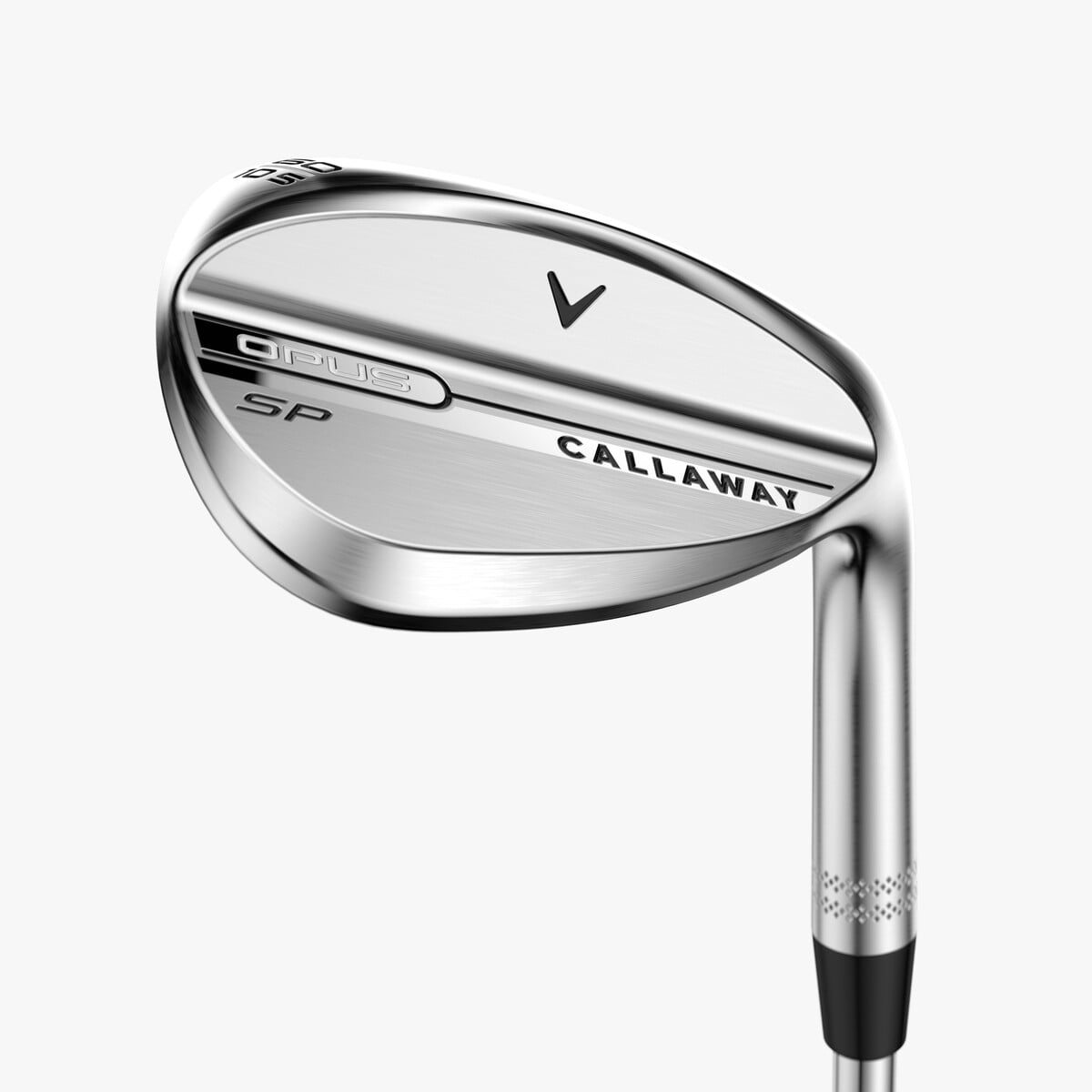
8.4/10Callaway Opus SP review: the wedge in four tour bags while everyone buys Vokey
Callaway's Spin Pocket wedge lands a lower, spinnier flight for about the same money as a Vokey. It is the one I would buy for firm turf and full shots, and the wrong call if your short game lives in soft sand.
Explained
Wedge bounce and grind, explained
The two numbers that decide whether your wedge digs, glides or skips — in plain English, with how to pick yours.
Review
8.8/10Takomo 101 MKII review: the irons quietly embarrassing the big brands
Half the price of a name-brand set, and good enough that you'll feel a bit silly for not trying them sooner. The direct-to-consumer irons reviewed.